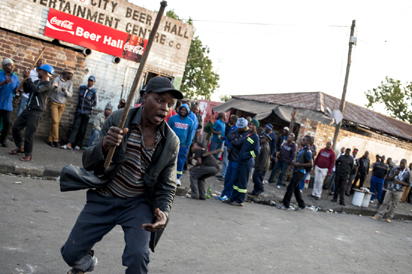
Professor Charles Ukeje, a senior lecturer in International Relations at Obafemi Awolowo University (OAU) in Ile‑Ifẹ, called on the Nigerian federal government to adopt a sympathetic stance toward South Africa amid the recent wave of xenophobic attacks, urging “help” rather than punitive measures. His remarks were delivered at a press conference marking the 50th anniversary of OAU’s Department of International Relations.
Ukeje described the violence as “very regrettable,” noting that South Africa is a country that “the rest of the continent, particularly Nigeria, helped to midwife in the context of apartheid.” He argued that, in the post‑apartheid era, South Africans should be “more and better disposed to the rest of Africans” given the sacrifices made by Nigeria and other African nations to end the regime.
The professor blamed the attacks in part on “generations of South African leaders” who, after achieving the end of apartheid, “did not adequately educate their citizens on the role the whole of Africa played.” He suggested that proper education about Africa’s contributions could have fostered a stronger sense of brotherhood and possibly prevented the current hostility.
Regarding Nigeria’s response, Ukeje emphasized that “Africa has always been the centrepiece of Nigeria’s foreign policy” and that the country should continue to see itself as a continental leader. He urged the government “not really wielding the big stick against South Africa, but to actually acknowledge that the country and its citizens are facing very difficult circumstances at this time and we need to be more sympathetic to them, even with the amount of disdain that the ordinary citizens harbour towards Nigeria.”
The anniversary event also featured Professor Victoria Akinyemi, head of the International Relations Department, who highlighted the department’s five‑decade contribution to Nigeria’s foreign‑policy manpower. She said the celebration was an opportunity to “grasp, appreciate, and proactively confront the realities of a changing world,” noting the shift from the Cold War environment of the 1960s to today’s “fluid world” marked by complex interdependence, geopolitical realignments, climate politics, and emerging security challenges.
<small>Source: Vanguard News — read the original story there.</small>
