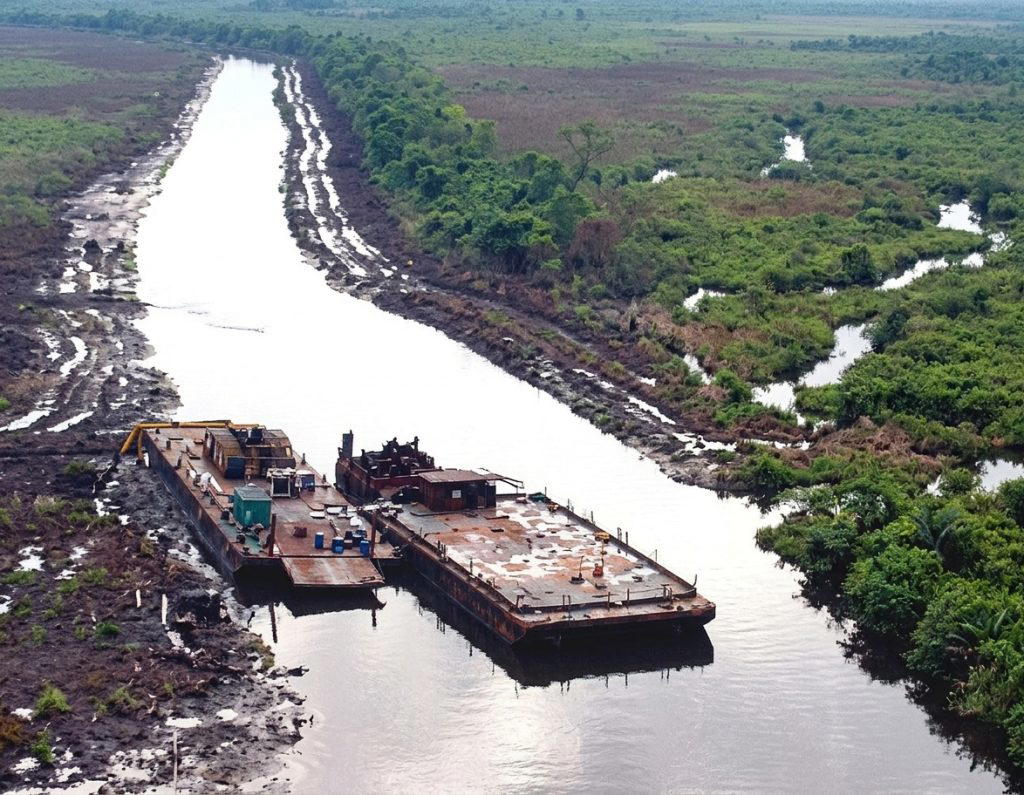
For seven months after a rupture on 19 February 2026, the 28‑inch Trans‑Forcados pipeline at the Kantu‑Odidi axis in Warri South‑West Local Government Area has continuously discharged crude oil and associated gas into the creeks of the Niger Delta, creating a black tide that community leaders say now engulfs more than 216 villages.
A joint investigation visit (JIV) conducted by the National Oil Spill Detection and Response Agency (NOSDRA) on 20‑21 February 2026 concluded that the spill resulted from corrosion and equipment failure, ruling out sabotage. Under Nigerian environmental law, the pipeline operator, Heritage Energy Operational Services Ltd (HEOSL), therefore bears full liability for cleanup and compensation, a position reinforced by a Federal High Court injunction (Suit No. FHC/PH/CS/132/2026) ordering an immediate halt to the discharge and full remediation of the affected ecosystems.
Local residents, however, dispute the technical verdict. Comrade Justin Gbenekama, chairman of the Odidi Federated Community, told reporters that “the operator has not done anything properly to contain the spill” and described the ongoing recovery efforts as “an exercise in futility,” noting that oil scooped from the creeks is simply returned to the same pipeline at the company’s Isoko station. He warned that the spill has travelled “six hours flow… to the Escravos area,” reaching the Forcados River and Escravos Bar, contaminating drinking water, destroying fishing and farming, and posing health risks without any medical assistance or adequate relief supplies.
The Ijaw Youth Council (IYC), led by President Dr Doubra Collins Okotete, has threatened to shut down OML 42, OML 30 and the Forcados Terminal, condemning the operators as “heartless, wicked” and dismissing sabotage claims as “pure equipment failure.” The council’s statement linked the Odidi disaster to similar crises in Alakiri and Bille, urging President Bola Tinubu and Minister Heineken Lokpobiri to intervene and demanding that oil companies cease exploiting the environment.
Environmental monitor Zik Gbemre of the Niger Delta Peace Coalition offered a contrasting perspective, attributing the ongoing degradation to “illegal bunkering” that has plagued the Odidi axis for over 25 years. He explained that repeated “hot‑taps” on the pipeline weaken its structural integrity, causing leaks that re‑appear even after repairs. Gbemre, who has flown with Shell’s spill response team over the site, warned that without addressing the root cause of sabotage, any cleanup will be short‑lived.
The protracted spill underscores the broader vulnerability of the Niger Delta—Nigeria’s oil‑rich southern region that supplies the bulk of the nation’s petroleum output but has long struggled with environmental damage and community unrest. As legal and community pressures mount, the fate of the Trans‑Forcados pipeline and the livelihoods of hundreds of residents hang in the balance.
<small>Source: Vanguard News — read the original story there.</small>
