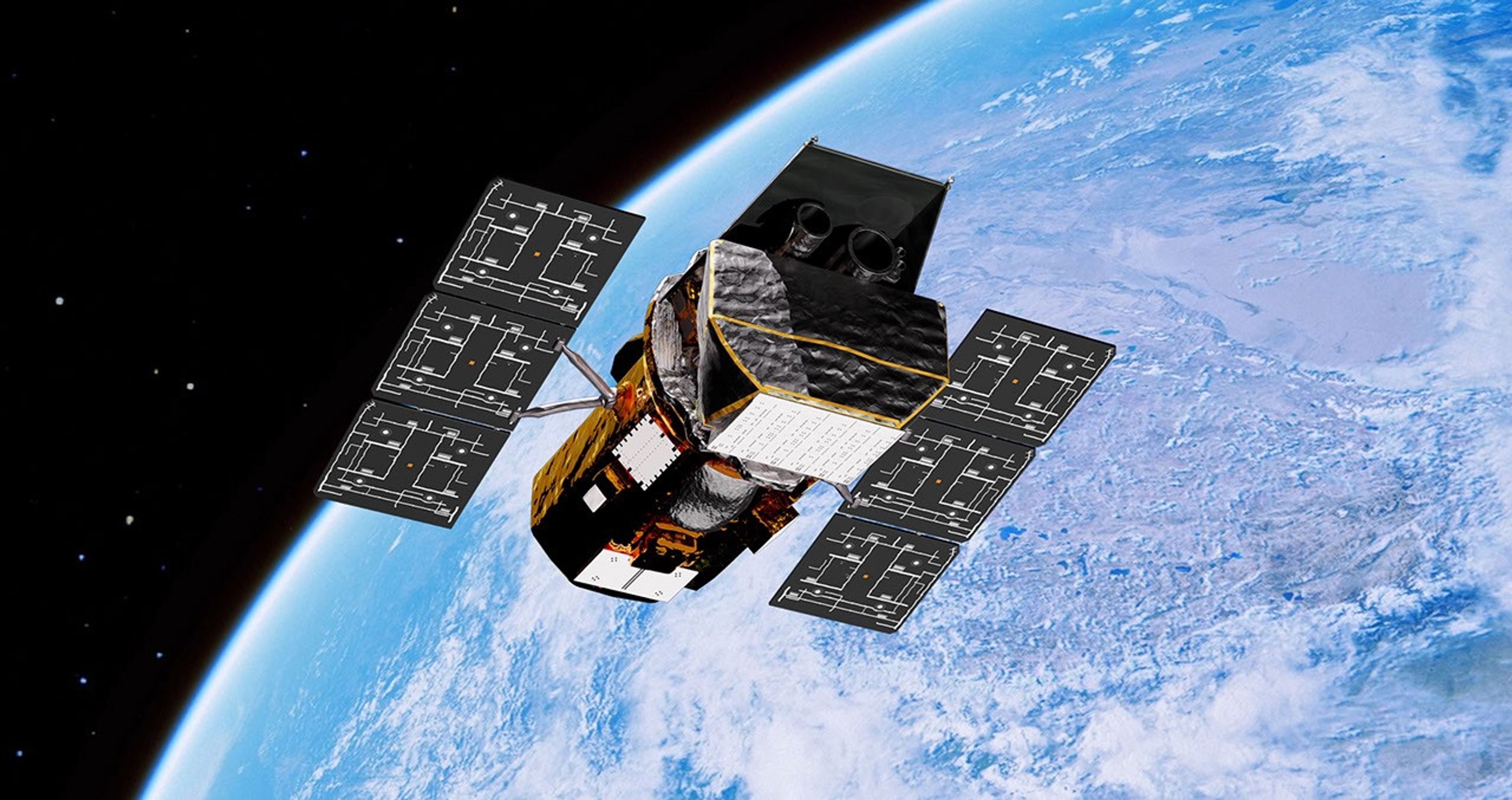
NASA's Swift Observatory Mission: Lessons Learned and Future Prospects
NASA's Neil Gehrels Swift Observatory mission has concluded, but the space agency and its partner company, Katalyst Space, have gained valuable insights and experience for future collaborations.
Mission Timeline and Challenges
- NASA contracted Katalyst Space to boost the spacecraft's altitude in April 2026
- The mission faced a tight timeline, with Swift's altitude reduction projected to occur in fall 2026
- Swift Observatory's mission was deemed successful, despite not achieving its primary objective of boosting the spacecraft's orbit
The Swift mission, launched in 2004, has been instrumental in advancing our understanding of the universe. Its primary role was to study gamma-ray bursts, supernovae, and other high-energy phenomena.
Katalyst Space's Role and Achievements
- Katalyst Space successfully attached the LINK spacecraft to Swift Observatory on April 28, 2026
- The company's engineers worked closely with NASA engineers to test the satellite’s ion thruster and robotic arm systems in a simulated space environment
- Katalyst Space demonstrated its expertise in developing and operating a commercial space robotics solution, showcasing its capabilities in a challenging mission environment
Katalyst Space’s CEO, Russell Carpenter, expressed satisfaction with the mission’s outcome:
"We are thrilled with the outcome of the Swift Observatory mission. Our engineers and scientists have gained valuable experience, and our partnership with NASA has strengthened our company's reputation and capabilities."
The commercial space robotics vendor has now confirmed its ability to operate a robotic arm in a simulated space environment, and its expertise in developing a commercial space robotics solution.
NASA and Katalyst Space Collaboration
The collaboration between NASA and Katalyst Space has been a success, with the LINK spacecraft's mission serving as a stepping stone for future in-orbit servicing missions.
Russell Carpenter, Katalyst Space's CEO, said:
"The Swift Observatory mission has proven that public-private partnerships can achieve important scientific goals within a compressed timeline. We look forward to further collaborations with NASA and other partners to advance space robotics technology and deepen our understanding of the universe."
Swift Observatory Mission's Lessons Learned
The Swift Observatory mission has provided valuable lessons for future space missions, including the importance of thorough planning, testing, and preparation.
Shawn McClure, NASA's Mission Operations Manager, said:
"The Swift Observatory mission has shown us the importance of thorough planning, testing, and preparation. We have learned valuable lessons for future missions, including the need for quick decision-making and the ability to work with commercial partners to achieve scientific goals."
LINK Spacecraft's Performance
Katalyst Space's LINK spacecraft demonstrated its capabilities, including its robotic arm and ion thruster systems, in a real-world environment.
Russell Carpenter, Katalyst Space's CEO, said:
"The LINK spacecraft's performance in the real-world environment has exceeded our expectations. The robotic arm and ion thruster systems worked flawlessly, and we are excited to apply these lessons learned to future space missions."
Katalyst Space's Role in the Mission
Katalyst Space, a commercial space robotics vendor, played a crucial role in the Swift Observatory mission, advancing space robotics technology and demonstrating the value of public-private partnerships.
Russell Carpenter, Katalyst Space's CEO, said:
"Katalyst Space's contribution to the mission has proven the value of public-private partnerships. Our engineers and scientists have gained valuable experience, and we are proud of our team’s achievements."
NASA's and Katalyst Space's Lessons Learned
NASA and Katalyst Space have learned valuable lessons from the Swift Observatory mission. The spacecraft's performance in the real-world environment has shown that thorough planning, testing, and preparation are essential for space missions.
Russell Carp<small>Source: NASA — read the original story there.</small>


