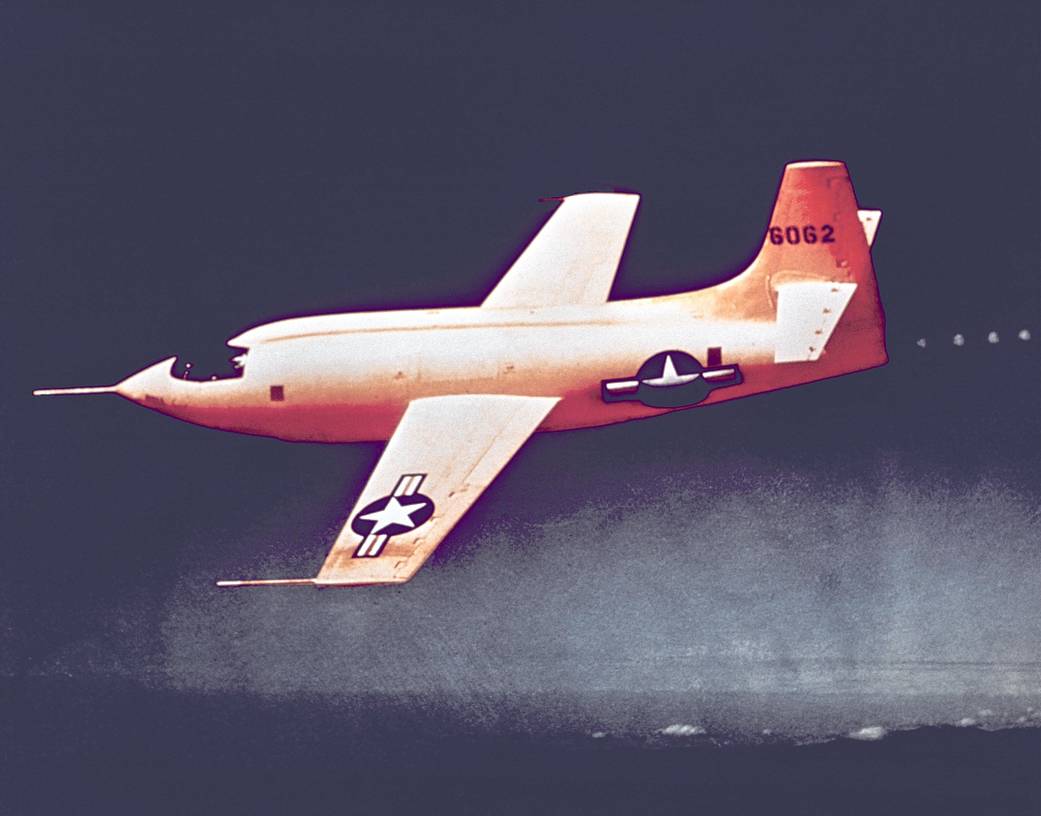
On 30 September 1946, five engineers from the National Advisory Committee of Aeronautics (NACA) arrived at Muroc Army Airfield in California’s high desert to push the limits of speed. Within two years the X‑1 aircraft broke the sound barrier, marking a landmark moment in aviation history. That same airfield, now the NASA Armstrong Flight Research Center in Edwards, California, is celebrating 80 years of flight innovation as it flies the X‑59 supersonic X‑plane in the same skies, proving that supersonic flight can be quiet and safe.
Armstrong’s 80‑year legacy spans a wide range of milestone missions, from space shuttle landings to SR‑71 reconnaissance flights. The centre has shaped the evolution of aeronautics and space research, and it is now poised to lead the next era of flight with technologies that will define the future of both commercial and human spaceflight.
NASA Administrator Jared Isaacman recently designated Armstrong as the agency’s Center of Excellence for Flight Test and Aircraft Operations, recognising its unmatched rigor in executing unique missions. The centre supports the Artemis program with research aircraft such as a 737 for astronaut suit testing, a G‑III for Artemis II heat‑shield data collection, and an F/A‑18 that tested the autopilot for the Space Launch System (SLS) rocket.
The X‑59 is undergoing rigorous testing at Armstrong, with a series of flights planned to demonstrate quiet supersonic flight over U.S. communities. The centre’s work on digital fly‑by‑wire technology and other advanced systems continues to transform both commercial and military aviation, making flight safer, more autonomous and more efficient.
Beyond aeronautics, Armstrong plays a vital role in global science. Aircraft such as the ER‑2, C‑20A and Gulfstream G‑III/IV/V fly missions that collect critical data on wildfires, glacier melt, pollution, minerals and more. The achievements are driven by the engineers, pilots, technicians and mission‑support teams who keep pushing the boundaries of what’s possible.
For more information about NASA Armstrong, visit https://www.nasa.gov/armstrong.
<small>Source: NASA — read the original story there.</small>


