James Webb Telescope Discovers Ice in Beta Pictoris' Debris Disk
A team of astronomers led by Sarah Betti, an astronomer at the Space Telescope Science Institute in Baltimore, has made a significant discovery using the James Webb Space Telescope. The study, published in the journal Science, focuses on the Beta Pictoris star system.
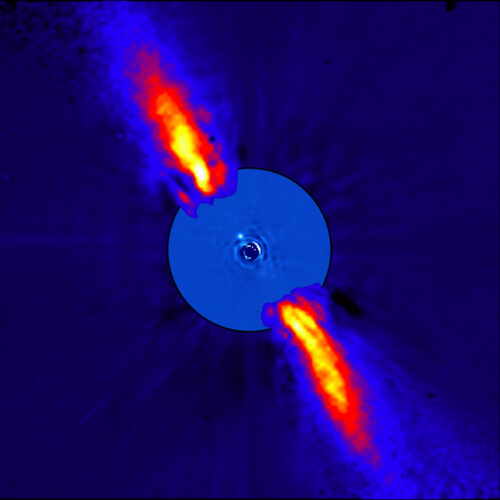
Beta Pictoris is a young star, estimated to be around 20 million years old. It is surrounded by a vast disk of dust and rubble, a debris disk, where planets are still forming. The star is located about 64 light-years away from Earth.
The James Webb Telescope has been instrumental in the discovery of ice in this debris disk. Specifically, the telescope detected water and carbon dioxide ice, which are mixed in roughly the same proportions as we see in comets within our own Solar System.
Beta Pictoris' debris disk is particularly well-suited for study due to its nearly edge-on orientation, making it a natural laboratory for examining the formation of planetary systems.
Implications for Planet Formation
The discovery of ice in Beta Pictoris' debris disk has significant implications for our understanding of planet formation. The presence of water and carbon dioxide ice, which are essential components for the formation of water-rich planets, suggests that such planets might be more common around young stars like Beta Pictoris.
Sarah Betti, one of the study's authors, commented on the findings:
"The discovery of water and carbon dioxide ice in the Beta Pictoris system is a significant step forward in our quest to understand how planets form around young stars like Beta Pictoris."
This discovery could help researchers better comprehend how planets form around other stars, and how the presence of ice affects the formation of planets around these young stars.
The Beta Pictoris System
- Beta Pictoris is a young star, estimated to be around 20 million years old.
- It is surrounded by a vast disk of dust and debris, known as a debris disk, where planets are still being formed.
- The system is located about 64 light-years away from Earth.
The James Webb Space Telescope has provided new insights into the Beta Pictoris system, revealing the presence of water and carbon dioxide ice.
This discovery reveals a significant step toward understanding how planets form around young stars like Beta Pictoris.
Planet Formation and Icy Compositions
The discovery of water and carbon dioxide ice in the Beta Pictoris system could help researchers better comprehend how planets form around other young stars and how the presence of ice influences the formation of planets around these stars.
Sarah Betti, one of the study's authors, commented on the findings:
"The discovery of water and carbon dioxide ice in the Beta Pictoris system is a significant step forward in our quest to understand how planets form around young stars like Beta Pictoris.
The James Webb Space Telescope has provided new insights into the Beta Pictoris system, revealing the presence of water and carbon dioxide ice.
These findings shed light on the process of planet formation around young stars like Beta Pictoris and the role that ice plays in shaping the composition of these planets.
Implications for Planet Formation and Ice Compositions
The discovery of water and carbon dioxide ice in the Beta Pictoris system offers valuable insights into how planets form around other young stars and how the presence of ice influences the compositions of these planets.
Sarah Betti, one of the study's authors, commented on the findings:
"The discovery of water and carbon dioxide ice in the Beta Pictoris system is a significant step forward in our quest to understand how planets form around young stars like Beta Pictoris and the role that ice plays in shaping the compositions of these planets.
The James Webb Space Telescope has provided new insights into the Beta Pictoris system, revealing the presence of water and carbon dioxide ice.
These findings shed light on the process of planet formation around young stars like Beta Pictoris and the impact that ice has on the compositions of these planets.
<small>Source: Ars Technica — read the original story there.</small>

