After years of fighting to curb toxic pollution in communities of color, Illinois activists are celebrating a step forward.
A
bill expanding the state’s regulatory obligations over industrial air polluters in environmental justice communities passed the state legislature last week and is expected to go into effect at the start of next year.
The bill amends the Illinois Environmental Protection Act and will require the state’s Environmental Protection Agency to consider cumulative pollution and other burdens when evaluating certain air emission permits for construction. It also allows the agency to consider an applicant’s past environmental violations when approving permits, and to enact stricter requirements for air monitoring and pollution prevention.
For Jen Walling, chief executive officer of the Illinois Environmental Council, this legislation has been a long time coming.
“It’s more relief than joy to have it passed,” Walling said. “We’re taking a step in the right direction.”
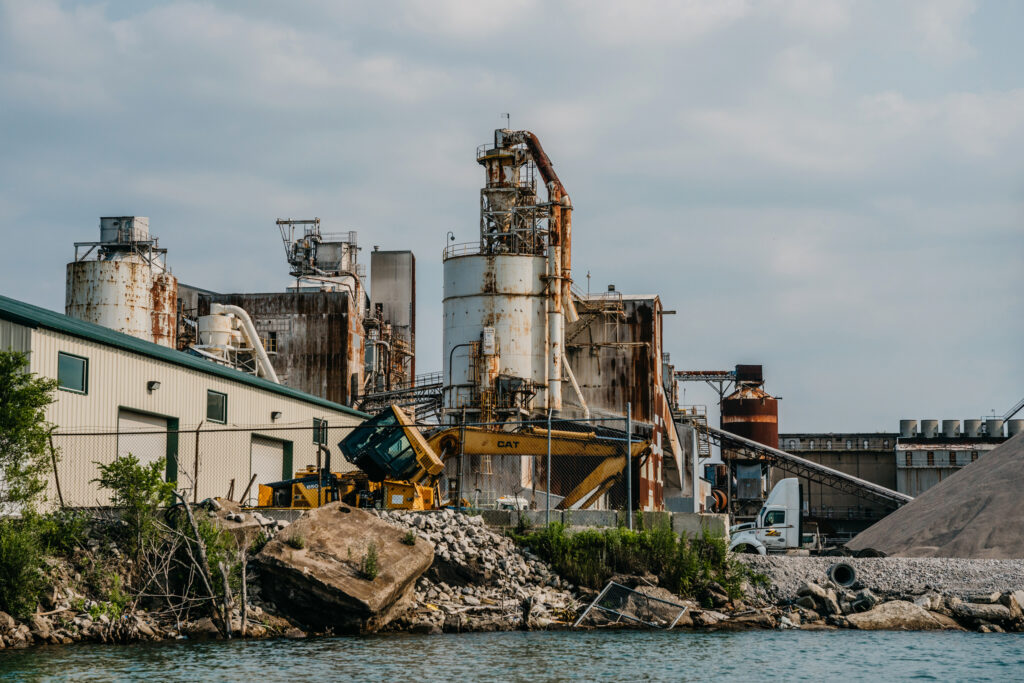
The bill was born out of years of high-profile community activism in Chicago against a proposal to move General Iron, a metal scrapping facility, from the predominantly white and affluent neighborhood of Lincoln Park to the Southeast Side, a majority Black and Latino area
nationally recognized as overburdened by industrial pollution.
In 2020, the Illinois EPA approved a permit for the move, but residents fought back by staging protests, investigating local pollution, filing a federal civil rights complaint and completing a
month-long hunger strike. The movement successfully stopped General Iron’s relocation and led to settlements with the U.S. Department of Housing and Urban Development and the U.S. Environmental Protection Agency and a resolution agreement requiring the Illinois EPA to reform its permit review process.
“I didn’t really know how broken the state permitting process was until the General Iron fight,” said Gina Ramirez, director of Midwest environmental health at the Natural Resources Defense Council. A resident of the Southeast Side, she’s hopeful about the newly passed bill.
“I’m excited about this because it’s going to put more mechanisms in place so other families who live in environmental justice communities in Illinois don’t have to go through what we went through,” she said.
State Sen. Celina Villanueva, a co-sponsor of the bill, represents a district that includes Little Village, a majority Latino neighborhood that has long been
disproportionately harmed by environmental hazards.
“This bill will save lives in my district,” Villanueva, a Democrat, said
in a statement. “While there is so much more work to do to protect public health in our neighborhoods, we’ll all breathe a little easier knowing that we finally took this important first step.”
The bill identifies “areas of environmental justice concern,” by combining environmental metrics like average air pollution, vehicle traffic, drinking water violations and hazardous facilities with social vulnerabilities like poverty, race, employment and English proficiency. The bill also creates an office of environmental justice within the state EPA.
The final bill doesn’t include everything communities were pushing for, Walling said. For example, she wanted to see a more inclusive definition of environmental justice areas and said some communities downstate could end up overlooked. But overall, she sees it as a positive first step.
In Chicago, some environmental groups hope the measure will help push forward the Hazel M. Johnson Cumulative Impacts Ordinance, a city-level initiative to curb industrial pollution in environmental justice neighborhoods that has been
continuously delayed.
“Hopefully this lights a fire under City Council to do the right thing,” Ramirez said.
Illinois activists also say the landscape of rollbacks by the Trump administration, from environmental justice staffing cuts to weaker enforcement, makes state progress even more important.
Ramirez said the bill is an affirmation that the disproportionate burdens faced by communities like hers are real.
“The federal government is shying away from these words and these communities,” she said. “Illinois is doubling down.”
About This Story
Perhaps you noticed: This story, like all the news we publish, is free to read. That’s because Inside Climate News is a 501c3 nonprofit organization. We do not charge a subscription fee, lock our news behind a paywall, or clutter our website with ads. We make our news on climate and the environment freely available to you and anyone who wants it.
That’s not all. We also share our news for free with scores of other media organizations around the country. Many of them can’t afford to do environmental journalism of their own. We’ve built bureaus from coast to coast to report local stories, collaborate with local newsrooms and co-publish articles so that this vital work is shared as widely as possible.
Two of us launched ICN in 2007. Six years later we earned a Pulitzer Prize for National Reporting, and now we run the oldest and largest dedicated climate newsroom in the nation. We tell the story in all its complexity. We hold polluters accountable. We expose environmental injustice. We debunk misinformation. We scrutinize solutions and inspire action.
Donations from readers like you fund every aspect of what we do. If you don’t already, will you support our ongoing work, our reporting on the biggest crisis facing our planet, and help us reach even more readers in more places?
Please take a moment to make a tax-deductible donation. Every one of them makes a difference.
Thank you,
<small>Source: Inside Climate News</small>