From our collaborating partner Living on Earth,
public radio’s environmental news magazine, an interview by Jenni Doering with author Kevin Trenberth.
El Niño is a phenomenon every few years in which a tropical region of the Pacific experiences unusually warm ocean surface temperatures, affecting weather patterns across the world.
A 2026 El Niño is now officially underway, according to the National Oceanic and Atmospheric Administration, or NOAA, which also said this one has a greater than 50 percent chance of turning into a “super” El Niño.
Combined with the ongoing rising temperatures from the climate crisis, a “super” El Niño could spell major disruption of weather patterns and ocean circulation worldwide.
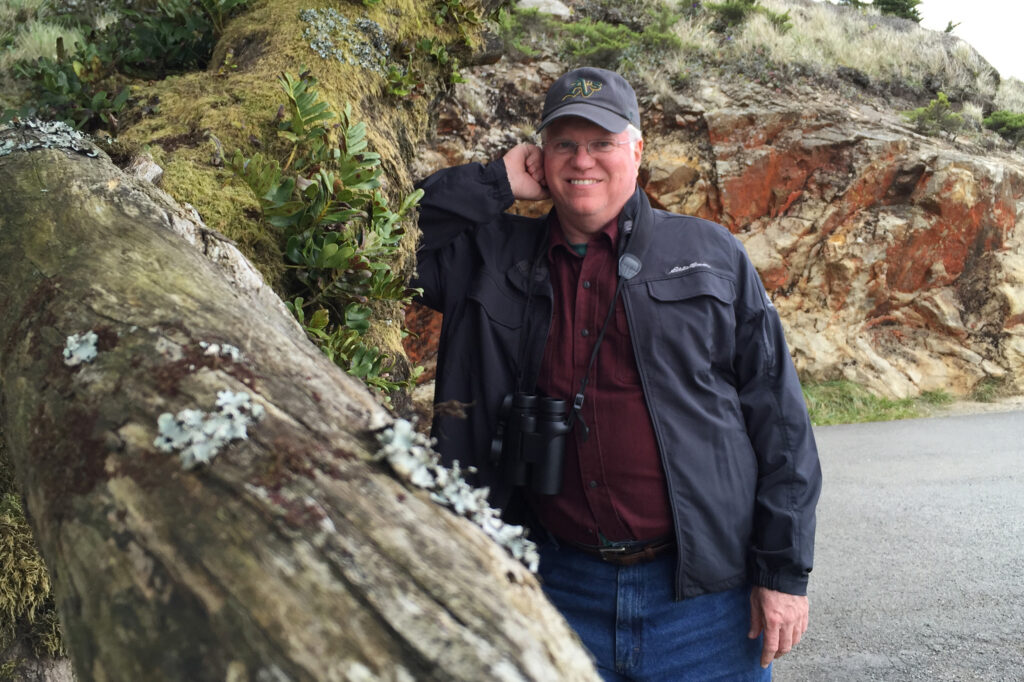
Kevin Trenberth is a scientist at the University of Auckland as well as a distinguished scholar at the National Center for Atmospheric Research in Boulder, Colorado. This interview has been edited for length and clarity.
JENNI DOERING: For those of us who don’t remember from high school Earth science, what is an El Niño?
KEVIN TRENBERTH: An El Niño refers to an exceptional warming of the central and eastern tropical Pacific Ocean. El Niño can be thought of as a way of regulating the temperatures. The reason is the Pacific Ocean is huge in the tropics, and it extends more than a quarter of the way around the globe. The sun is beating down. It heats up the surface of the ocean, but there are trade winds, easterly trade winds in the tropics, and along the equator. It picks up all of that warm water and dumps it in the Western Pacific, and it forms a huge deep pool of warm water. It gets to a point where so much heat is stored up there, the Pacific sort of says, “I can’t stand it anymore. I’m going to have an El Niño.” And all of that warm water starts to surge across to the Eastern Pacific, which it has done this year already, and it influences the atmosphere as it goes.
At some point during the year, usually after September, it changes the atmospheric circulation. It changes where all of the rains occur in the tropical Pacific. It’s already beginning to do that, but the annual cycle is working against it at the moment, and it tends to pick up in the Northern Hemisphere winter. The strongest effects occur late in the year, typically peaking around December, and that’s in the Pacific. Globally there is a mini global warming, which tends to peak around February of the following year, so that would be February 2027.
DOERING: What makes an El Niño a super El Niño?
TRENBERTH: We monitor a particular index, a tropical region in the Pacific, and if it gets to be above 2 degrees Celsius over this extensive area above the overall average, then we call it a very strong El Niño. We have these different grades of strong, moderate, weak El Niño, and very strong. There are no very strong La Niñas, which is the other phase where it’s very cold, but there are these big El Niño events. There have been about three of them.
DOERING: Why is it important to understand how this El Niño is working this year? And what were the impacts of previous strong El Niños?
TRENBERTH: El Niños have strong tally connections—huge wave patterns that extend into both hemispheres. They change the distribution of tropical storms substantially where they occur, and the risk of hurricanes.
In an El Niño event, there tends to be a greater risk that there will be strong storms coming into Southern California and throughout the southern parts of the United States, but probably less action in the northern parts of the U.S. and southern Canada, so it has a big influence on rainfall patterns.
It also can have a big influence, then, on the risk of things like wildfire, and in the western parts of the United States, it’s been very warm, very dry, and the risk of wildfire is already quite high. So it’s very important, actually, to get the rains in parts of this region, but there are some regions, maybe Northern Colorado, for instance, that might be at considerable risk for things like wildfire.
DOERING: That’s some of the impacts in the U.S. What about in the Global South? I understand that in previous years we have seen pretty significant impacts from El Niño.
TRENBERTH: It depends a little bit on how quickly this thing develops, but already this is the time of year when the Southeast Asian monsoon tends to develop, and having more action out in the Pacific, more convection, more rainfall, tends to detract from the rainfall in the monsoons. So it means that there’s a real risk that the monsoons may be much weaker than normal, less rainfall all throughout Southeast Asia, and of course this has very profound influences, because eight months of the year it’s dry. They’re very dependent upon the monsoon rains for all of their agriculture and growth of crops, so this is a major concern for that region.
DOERING: What do different parts of Africa see in an El Niño year?
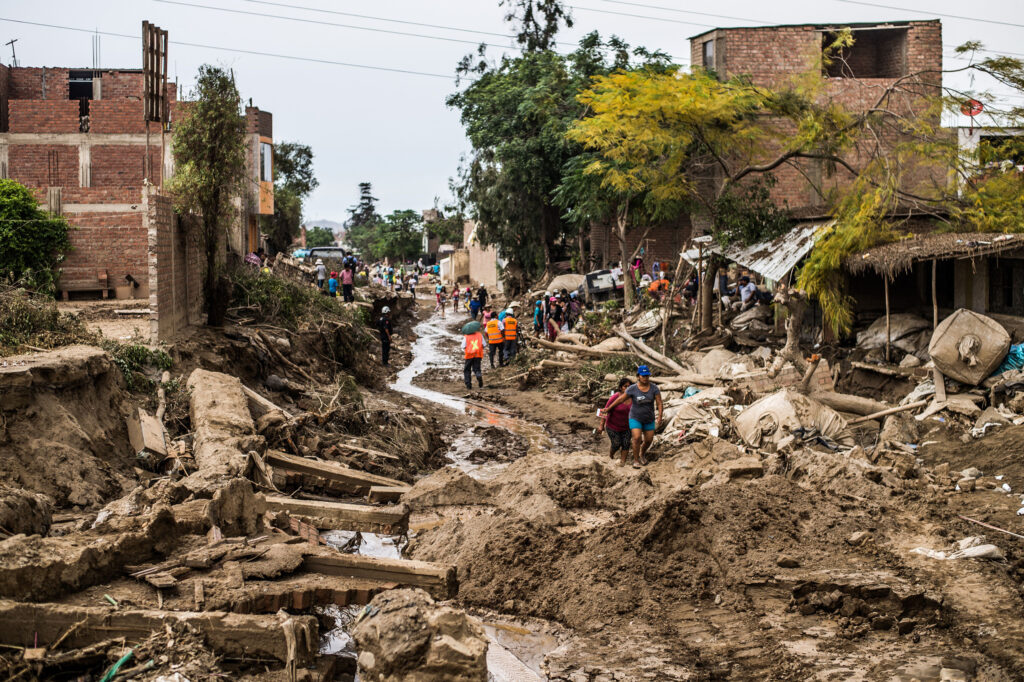
TRENBERTH: Normally, warm water from the Pacific flows into the tropical Indian Ocean, and this has an influence in Eastern Africa, in particular, and it can affect drought and flooding, and also outbreaks of various kinds of diseases and insects that can cause problems, but each El Niño tends to be somewhat individual in … just how this plays out.
DOERING: This is incredibly complex. Would it be accurate to say that no matter what, this El Niño is going to bring variability and instability, and it’s hard to predict exactly how that will play out in different regions?
TRENBERTH: These things tend to occur, let’s say, once every four years, or every two to seven years. That means that during the El Niño, which tends to last overall for about a year, the weather patterns are quite different than most of the time.
If you can plan for that, you can take advantage of it. You can change the crops that you’re growing, or the way in which you’re going about your activities, like fishing, and what kind of fish you expect to get, then maybe you can take advantage of it. But otherwise, if you keep doing things the way you always do, then you could well run into major difficulties. So pay attention to all of the information that’s coming available from NOAA, for instance, or from other national weather services, including through the WMO, the World Meteorological Organization, and maybe take advantage rather than suffer the consequences.
This story is funded by readers like you.
Our nonprofit newsroom provides award-winning climate coverage free of charge and advertising. We rely on donations from readers like you to keep going. Please donate now to support our work.
Donate Now
DOERING: At this time when climate science is, in the U.S. at least, under attack, there have been attempts to dismantle ocean monitoring systems, dismantle the research done by your professional home, the National Center for Atmospheric Research. How prepared do you think the U.S. and the world is for this year’s El Niño?
TRENBERTH: It’s a major concern. The key monitoring system in the tropical Pacific Ocean is a series of moored buoys. They’re actually moored to the bottom of the ocean, and they have to be in the tropics, in the equatorial region, because otherwise they drift away. Those are maintained by NOAA in conjunction with contributions from other nations, but if the NOAA contribution weakens, then the information flow also weakens. That happened during the pandemic, for instance, and there have been other instances where ship time was not available to service these and make sure that they’re all up to snuff. It’s very important to monitor what is going on well and disseminate that information.
DOERING: We’re tracking this El Niño at the same time that we’re also tracking the ongoing climate crisis, and global temperature continues to rise because of our greenhouse gas emissions. In the short term, what does an El Niño year mean in terms of the global temperature?
TRENBERTH: The global temperature is certainly going to be the highest on record from about now through next June. This is sort of the El Niño year, and then that’s a question as to whether it’s 2026 or 2027 which ends up being the warmest calendar year.
Global climate change is very much with us. We know it is caused primarily by human activities, in particular, of carbon dioxide in the atmosphere. Those concentrations are at the highest level ever. And we need to slow down the rates of those increases, which means cutting emissions of greenhouse gases. That means avoiding fossil fuel burning. This is a science question. This is not a political question, and we need to look after our homes, our global homes. We need to get it under control, and there are prospects for doing that by employing more renewable energy, in particular.
DOERING: What’s the number one thing that you would like listeners to take away about this year’s El Niño?
TRENBERTH: The El Niño is here. It’s potentially getting to be strong, and it’s going to have big consequences for weather all around the globe. Big changes in where the storms go and how they develop. Paying attention to the information that’s available and the forecasts that are being made can allow you to adapt to and prepare for what is going on, plan for the consequences and perhaps even take advantage of the changes that are apt to occur.
About This Story
Perhaps you noticed: This story, like all the news we publish, is free to read. That’s because Inside Climate News is a 501c3 nonprofit organization. We do not charge a subscription fee, lock our news behind a paywall, or clutter our website with ads. We make our news on climate and the environment freely available to you and anyone who wants it.
That’s not all. We also share our news for free with scores of other media organizations around the country. Many of them can’t afford to do environmental journalism of their own. We’ve built bureaus from coast to coast to report local stories, collaborate with local newsrooms and co-publish articles so that this vital work is shared as widely as possible.
Two of us launched ICN in 2007. Six years later we earned a Pulitzer Prize for National Reporting, and now we run the oldest and largest dedicated climate newsroom in the nation. We tell the story in all its complexity. We hold polluters accountable. We expose environmental injustice. We debunk misinformation. We scrutinize solutions and inspire action.
Donations from readers like you fund every aspect of what we do. If you don’t already, will you support our ongoing work, our reporting on the biggest crisis facing our planet, and help us reach even more readers in more places?
Please take a moment to make a tax-deductible donation. Every one of them makes a difference.
Thank you,
<small>Source: Inside Climate News</small>