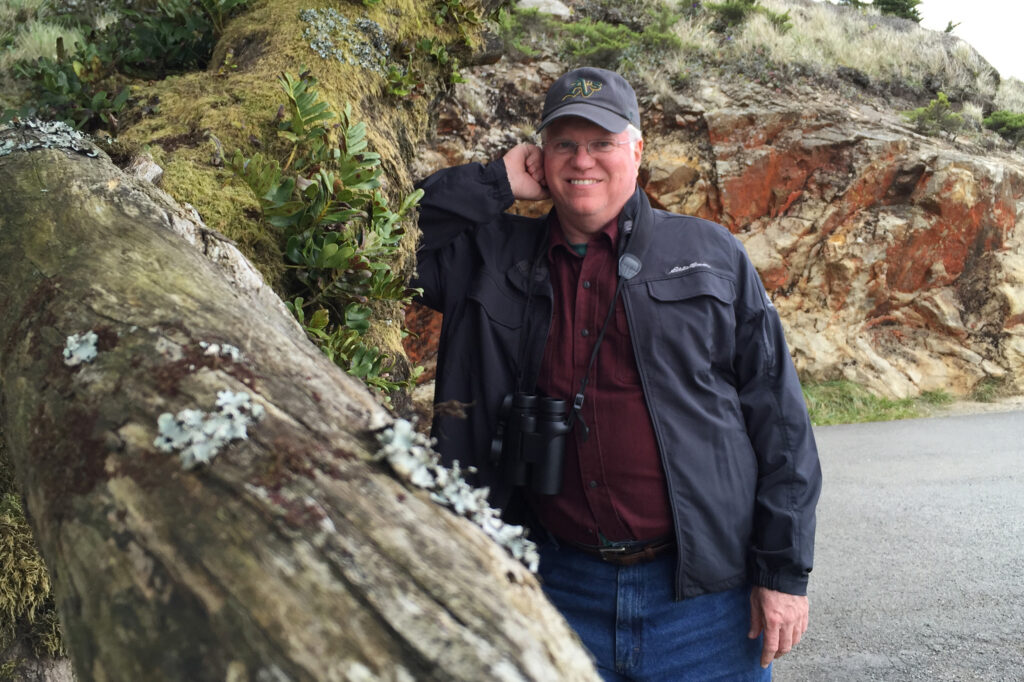
James Bruggers, whose decades of dogged reporting shined a light on polluting corporations, inadequate regulations and the people who fought against them for environmental justice, died Tuesday at a hospital in Louisville, Kentucky. He was 68.
The cause of death was a combination of thyroid cancer and pneumonia, said his wife, Chris Bruggers.
Bruggers’ journalism career stretched back to his high school newspaper in Saginaw, Michigan, and brought him to reporting jobs in Montana, Alaska, California and Louisville, where he was an environmental beat reporter for the Courier Journal from 1999 to 2018. He spent the final seven years of his career at Inside Climate News, where he covered the Southeast and focused much of his work on the impacts of coal mining, petrochemical development and plastics pollution. Bruggers retired last year but continued to
contribute stories to Inside Climate News through April.
Bruggers was driven by a love of nature, an innate sense of justice, compassion for his sources and the relentless pursuit of the story. His work won recognition from numerous organizations, including the National Press Foundation and the Society of Environmental Journalists.
Bruggers’ writing reached into the lives of the people he wrote about and those who read his work, and helped spur environmental cleanups and new limits on toxic pollution. Colleagues and friends said they will remember him above all for his kindness, generosity, good humor and dedication to the truth. He was as invested in the success of those around him as he was in his own, they said.
At the Courier Journal, Bruggers became known as a watchdog of Louisville’s air, water and land. One project exposed how hundreds of railroad workers had suffered brain damage as a result of chemical exposures while on the job. Another series detailed toxic air pollution in Louisville, especially around an industrial area known as Rubbertown. Soon after, the city adopted a new program to limit those pollutants that has
contributed to an 80 percent drop in toxic chemical emissions, according to the metro government.
The
series won the National Press Foundation’s 2003 Thomas L. Stokes Award for Energy and Environment Journalism.
Deborah Yetter, a reporter who worked with Bruggers at the Courier Journal, said he took on the complicated and often arcane issues that were important to Louisville’s environment, “and he had a good way of making them interesting.” His work gained him the respect of sources and readers alike, Yetter said. “He was just an all-around good guy.”
More recently, Bruggers dedicated years to
investigating the harms of plastic waste and probing the petrochemical industry’s dubious claims behind so-called “advanced recycling,” which companies argued could help alleviate the crisis of proliferating waste. The series revealed those claims to be speculative at best and highlighted the pollution caused by these plants and the impacts on the people who lived nearby.
“He was the tip of the spear on so many issues related to plastics,” said Judith Enck, president of Beyond Plastics, an advocacy group focused on eliminating plastic pollution, and a former regional administrator for the U.S. Environmental Protection Agency. “He did really pioneering journalism educating lots of people before anyone got to the issue.”
Vernon Loeb, Inside Climate News’ executive editor, said Bruggers “was the kind of reporter all the reporters on our staff wanted to be.”
“His death hit us all so hard because he meant so much to everyone in our newsroom,” said Loeb, who edited him for years. “Everyone loved him.”
Throughout his career, Bruggers’ work had impacts both sweeping and personal. His coverage of the environmental consequences of coal mining in Appalachia in 2020 won
an award for outstanding beat reporting from the Society of Environmental Journalists. The judges noted Bruggers’ use of “both grit and finesse in lining up a wide variety of sources inside and outside government. A nice human touch gave voices to coal miners, small town mayors and politicians from both parties concerned about whether a powerful senator was protecting miners’ pensions and black lung payments amid the transformation of an ailing coal country.”
Four years later, Lee Hedgepeth, a reporter covering Alabama for Inside Climate News, received a call from Bruggers: “Hey, there was a mine explosion near your house.” Not only was Hedgepeth unaware, but so were state mining regulators. The two reporters would go on to
investigate how methane had leaked from a mine underneath residences, detonating a home and killing a man. Their work prompted a federal investigation and state action.
The day before Bruggers died, Hedgepeth received a copy of the methane monitoring plan that the mine owner was forced to implement.
“Jim was one of the builders of this place,” said David Sassoon, publisher and founder of Inside Climate News. “A beloved colleague and one of the best environmental journalists to have graced the profession.”
Bruggers’ last editor, Jamie Smith Hopkins, said her regular check-in calls with him were a highlight of her week. “He was an absolutely lovely, gentle, collaborative human and a dogged investigative reporter who made a difference in many people’s lives,” Hopkins said.
Bruggers was born in 1958 and grew up in Saginaw. His father was an obstetrician-gynecologist and his mother a nurse, his wife said, and they made sure to join a church whose members were not all white. When Bruggers moved to Louisville, Chris Bruggers said, he did the same, finding a church with diversity that reflected the city he lived in and loved.
His family had a cabin deep in the woods of Northern Michigan surrounded by maple trees, and when the sap started running in the spring they would head north with friends in tow to tap the trees and boil their harvest into syrup.
These experiences helped shape a lifelong passion for the environment, social justice and the joys of life.
“He loved people. He loved the Earth. He loved music,” Chris Bruggers said, adding, “He loved a good restaurant, and he loved a good beer.”
This story is funded by readers like you.
Our nonprofit newsroom provides award-winning climate coverage free of charge and advertising. We rely on donations from readers like you to keep going. Please donate now to support our work.
Donate Now
The couple met when Bruggers joined the Society for Environmental Journalists in 1994, and he became a committed member of the group, serving 13 years on the board and three as its president.
Michael Kodas, a senior editor at Inside Climate News and longtime board member at SEJ, said Bruggers was “profoundly devoted to the organization. It’s almost impossible to estimate how many journalists he helped get into this beat.”
Journalists around the country counted Bruggers as a mentor. After joining Inside Climate News, he helped launch its regional reporting program, holding seminars with reporters from newspapers across the Southeast. Those programs helped journalists throughout the region deepen their climate reporting.
Bruggers was known to check in with colleagues before and during foreign reporting trips to make sure they were safe. When a colleague asked for tips ahead of a reporting trip to a Louisiana region Bruggers had covered, the veteran journalist offered not only a source but recommendations to listen to Cajun music on the radio. At annual retreats of Inside Climate News staff, it was Bruggers who organized outings to see live jazz, and even from his hospital bed last week, he talked about attending upcoming shows at Nashville’s storied Ryman Auditorium.
He retained a boyish sense of awe and ability to see beauty in the world, from Manhattan’s nighttime skyline, to spring training baseball in Arizona, to the majesty of the Colorado Rockies, where he and Chris Bruggers were married and would return with family.
In addition to his wife, Bruggers is survived by his brothers, Rick and Don; his sister, Carol; and two step-children, Joy and Jacob Rigel.
His faith inspired a thread of reporting exploring how religion drives people to fight for environmental justice and to find resilience in a changing climate. One of the last articles Bruggers published was an
interview of a Passionist priest in Louisville about hope in the face of environmental crises, noting the religious leader’s conviction that “narratives are what actually [bring about] change.”
Fittingly, Bruggers’ final article,
published in April, detailed ongoing environmental violations at an Ohio plastic waste processing plant, and how that was hanging over a proposal for a second location in Arizona. One month later, the company said it was suspending those operations at the plant.
About This Story
Perhaps you noticed: This story, like all the news we publish, is free to read. That’s because Inside Climate News is a 501c3 nonprofit organization. We do not charge a subscription fee, lock our news behind a paywall, or clutter our website with ads. We make our news on climate and the environment freely available to you and anyone who wants it.
That’s not all. We also share our news for free with scores of other media organizations around the country. Many of them can’t afford to do environmental journalism of their own. We’ve built bureaus from coast to coast to report local stories, collaborate with local newsrooms and co-publish articles so that this vital work is shared as widely as possible.
Two of us launched ICN in 2007. Six years later we earned a Pulitzer Prize for National Reporting, and now we run the oldest and largest dedicated climate newsroom in the nation. We tell the story in all its complexity. We hold polluters accountable. We expose environmental injustice. We debunk misinformation. We scrutinize solutions and inspire action.
Donations from readers like you fund every aspect of what we do. If you don’t already, will you support our ongoing work, our reporting on the biggest crisis facing our planet, and help us reach even more readers in more places?
Please take a moment to make a tax-deductible donation. Every one of them makes a difference.
Thank you,
<small>Source: Inside Climate News</small>