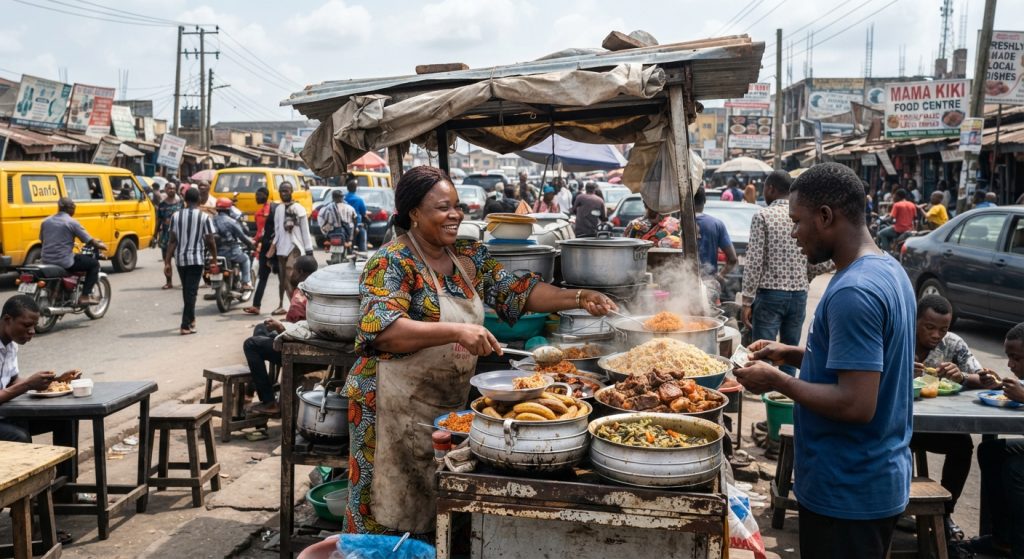
Roadside eateries in Nigeria’s major cities are now serving markedly smaller portions at sharply higher prices, a shift that vendors say is forced by soaring inflation, the removal of fuel subsidies, currency depreciation and rising transport costs. Customers who rely on these informal “buka” or “mama put” stalls for affordable meals are being compelled to tighten their food budgets, according to reports from Vanguard News.
The informal food sector has long been a lifeline for low‑ and middle‑income workers, offering hearty meals at modest prices. Today, that safety net is fraying as vendors scramble to stay afloat. Food inflation, while described as “slow in rate,” has accelerated the need for vendors to restructure their business models, cutting portions to avoid losses.
Customers describe the impact in stark terms. Emmanuel Osarumwense, a structural technician, told Economy & Lifestyle, “Before, N1,000 food from Mama Rukayat would fill my stomach completely… Now, I spend N1,500 and I leave the table still feeling hungry. I have to drink two sachets of water right after eating just to feel heavy. It is survival eating.” Bricklayer Sunday Agbonkhese added, “Before, you could get cooked beans and bread with N700 and be full. Now that N700 can hardly get you a loaf of bread. To get full now, you will need up to N3,000 for a meal of bread and beans.”
Vendors are equally constrained. Kudirat Adeyemi, who has run a popular food canteen for more than a dozen years, explained that a standard scoop of rice with beef cost N800 a year ago, but maintaining that quantity would now require N2,000. “The price is now N1,200, but the portion is nearly half of what it used to be,” she said, noting that her daily rice output has dropped from 25 kg to about 5 kg as sales decline.
Economists point to broader price spikes: a bag of rice now costs between N60,000 and N100,000, while cooking gas, tomatoes, onions and vegetable oil have all risen sharply. The surge has forced many food vendors to close, and those that remain rely on portion control as the only viable alternative to bankruptcy. Food‑truck owner Musa Ibrahim warned, “If the quantity of food on the plate is not reduced, food vendors will be cooking at a loss and we won’t have money to buy ingredients tomorrow.”
The contraction of portions is a visible symptom of Nigeria’s deeper macro‑economic strain. Until structural reforms in agriculture, security and other sectors take hold, both vendors and consumers are likely to remain trapped in a cycle of diminishing returns, with light plates serving as a daily reminder of the nation’s economic pressures.
<small>Source: Vanguard News — read the original story there.</small>