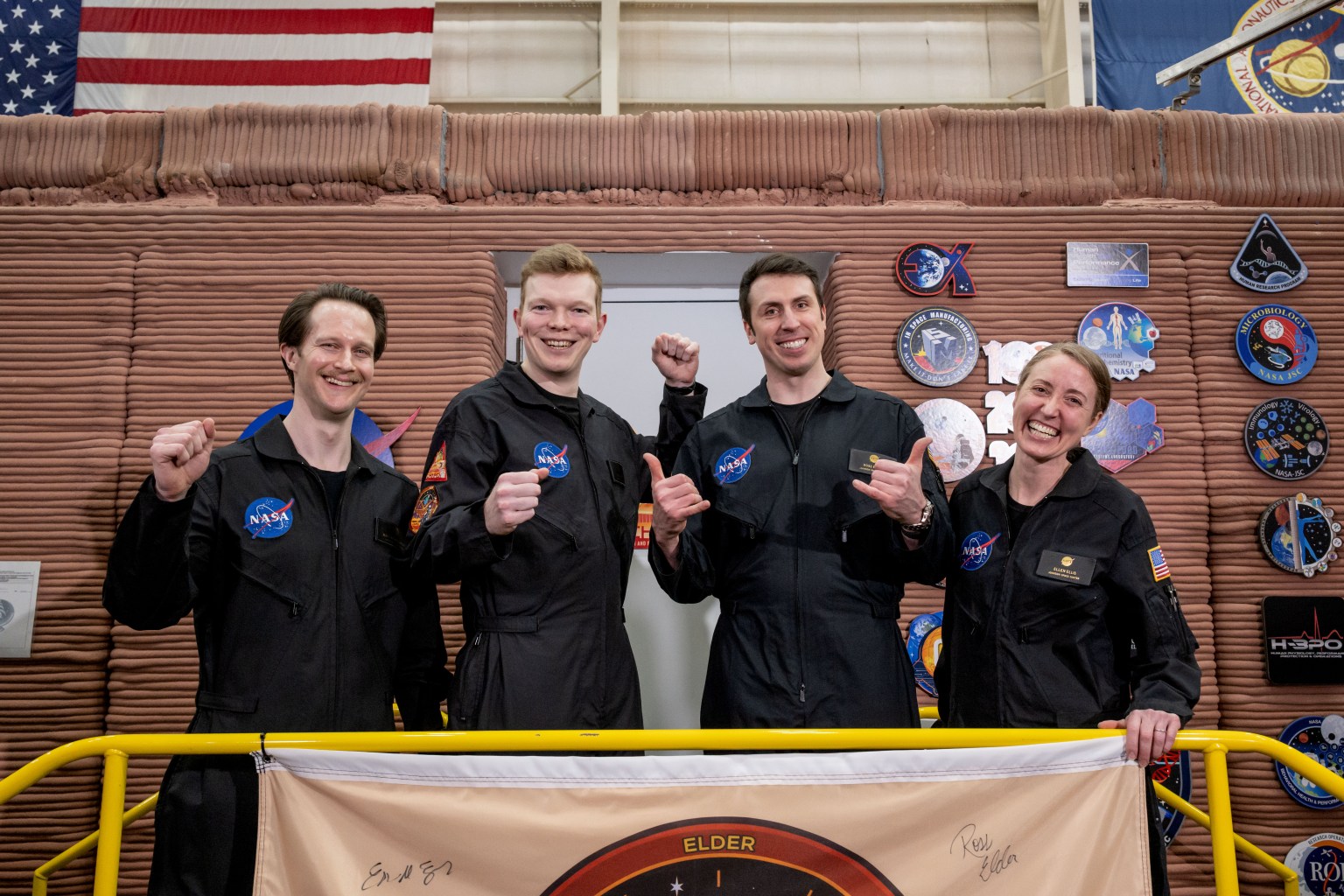
Four research volunteers—Commander Ross Elder, Medical Officer Ellen Ellis, Flight Engineer James Spicer and crew member Matthew Montgomery—exited NASA’s Mars Dune Alpha habitat on Oct. 31, 2026, concluding the agency’s second year‑long CHAPEA (Crew Health and Performance Exploration Analog) Mission 2 simulation at the Johnson Space Center in Houston.
The crew entered the 1,700‑square‑foot, 3D‑printed habitat on Oct. 19, 2025, and spent 378 days isolated from the outside world, without windows, real‑time communication, or external sounds. During that time they performed simulated Marswalks, operated a remote drone and rover, maintained habitat systems, exercised, and cultivated crops, all while coping with communication delays of up to 22 minutes each way.
“Their work means more than completing a mission,” Johnson Space Center Director Vanessa Wyche said at the crew’s egress. “It is about preparing for the challenges of human exploration beyond Earth, gathering the knowledge we need to protect crew health and performance, and paving the way for future missions to the Moon and, one day, Mars.”
“The reality of what you guys did here required immense physiological and psychological strength, teamwork, and human grit,” astronaut Jack Hathaway added. “While you were inside the habitat, I completed a 237‑day mission aboard the space station and returned to Earth. During that same period the Artemis II astronauts traveled around the Moon and set the record for the farthest humans have traveled from Earth.”
Commander Ross Elder, a former U.S. Air Force test pilot, likened the simulated Marswalks and robotic operations to flight missions, emphasizing the need for rigorous nutrition, exercise and rest to sustain long traverses. Medical Officer Ellen Ellis, a U.S. Space Force officer, coordinated biological sample collection and highlighted the “tactical creativity” required to follow disciplined procedures, noting that a future Mars crew will depend on a highly integrated ground support team. Flight Engineer James Spicer, with a background in satellite communications, kept the habitat’s systems running, managed consumables from dish soap to respirator filters, and described the experience as akin to living aboard a submarine where limited supplies shape daily decisions.
Supported by researchers and ground teams across NASA, the CHAPEA crew’s health and performance data will inform the agency’s preparation for longer‑duration human missions to the Moon, the International Space Station’s 25‑year continuous presence, and ultimately to Mars.
<small>Source: NASA — read the original story there.</small>