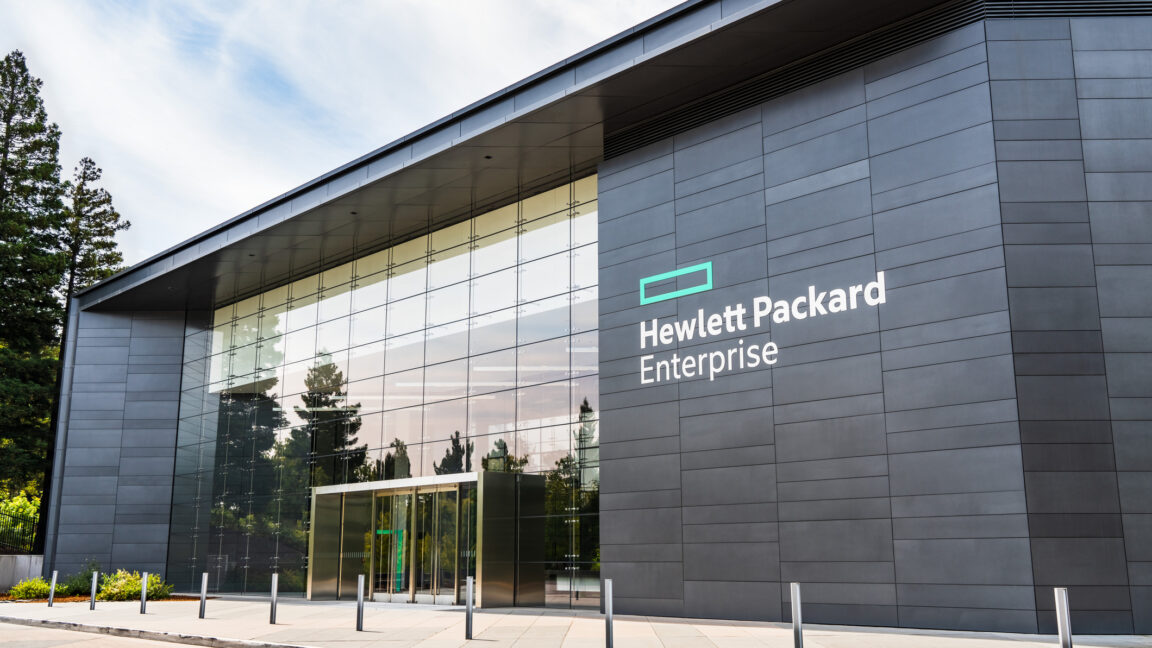
Hewlett Packard Enterprise’s (HPE) new virtualization software promotion will likely pique the interest of end users and resellers who are unhappy with Broadcom’s pricing of VMware.
During its HPE Discover event in Las Vegas this week, HPE announced that customers could use its “HPE Morpheus Software—VM Essentials” offering for free for “up to one year,” per a press release.
HPE’s website describes its virtualization platform as a “VMware alternative.” It includes a hardware virtual machine (HVM) hypervisor and unified management and lets users “manage VMware ESXi and HVM clusters from one console and migrate when you’re ready,” HPE’s website says.
“New VM Essentials customers can receive up to one free year of licenses for VM Essentials, a year of HPE Zerto for $1 to support non-disruptive migration to HPE virtual machines, and 0 percent interest on software through HPE Financial Services,” HPE’s announcement reads, referring to HPE’s group for helping IT teams manage funding.
Free for a year is cheaper than what Broadcom has charged for VMware vSphere since taking over.
VMware prices have skyrocketed due to VMware’s parent company eliminating perpetual licenses and bundling products into expensive packages. Notably, per its website, HPE recommends charging $600 per CPU socket per year for VM Essentials; Broadcom has controversially shifted vSphere licensing pricing to a per-core basis.
“Customers are feeling quite a bit of pain in the change that some of the virtualization companies have put there, specifically Broadcom,” Jeremiah Jenson, VP of HPE’s North American channel and partner ecosystem, told
CRN. The executive claimed that VM Essentials could bring up to 90 percent cost savings compared to VMware while also helping to “eliminate vendor lock-in and simplify hybrid IT.”
Broadcom declined to comment on HPE’s promotion to CRN.
From March 1 to June 30, HPE has
also been offering a free year of VM Essentials via rebate to customers who buy an AMD server and a one-year VM Essentials license.
VM Essentials is only available through channel partners, a stark contrast from Broadcom’s VMware approach, where the chip giant has
drastically reduced the number of resellers that can sell VMware products.
<small>Source: Ars Technica</small>