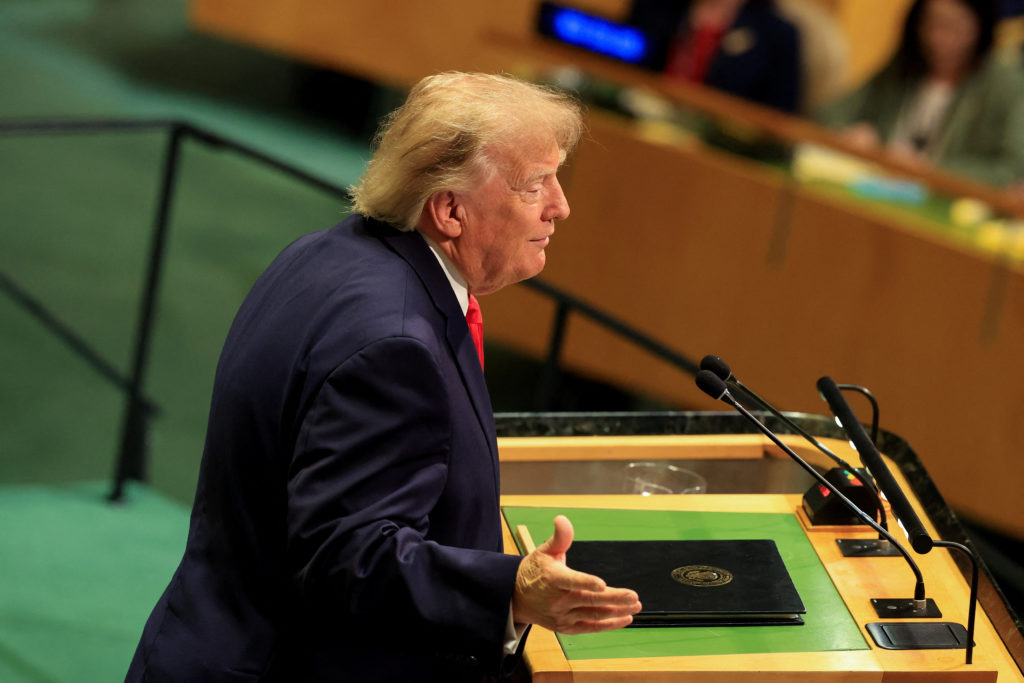
President Donald Trump addressed the United Nations on Tuesday, asserting that he is rebranding the term "artificial intelligence" to "super intelligence" because he considers the latter label to be "more accurate."
During his remarks, the U.S. President dismissed widespread global concerns regarding the rapid development of the technology and its potential impact on humanity. He stated that he does not intend to rein in the advancement of these systems, effectively rejecting calls for stricter regulatory oversight.
The comments come amid growing international debate about the safety and governance of advanced AI models. While many world leaders and tech experts have urged caution to mitigate potential risks, Trump’s stance highlights a significant divergence in policy approaches between the United States and other nations.
By adopting the term "super intelligence," Trump signaled a shift in how the administration frames the capabilities of emerging technologies. This rhetorical change underscores his administration's broader strategy of promoting technological innovation without what he perceives as unnecessary bureaucratic constraints.
The President’s address at the UN General Assembly drew attention to the geopolitical implications of AI development. As nations race to establish standards for autonomous systems, Trump’s refusal to impose limits on the technology positions the U.S. as a proponent of unrestricted growth in the sector.
Observers noted that the President’s comments were delivered with a tone of confidence in American technological leadership. He framed the rebranding not as a concession to fear, but as a recognition of the superior capabilities that modern AI systems are achieving.
<small>Source: PBS NewsHour — read the original story there.</small>