Your support makes our work possible.
Samy Magdy, Associated Press
Samy Magdy, Associated Press
Michelle L. Price, Associated Press
Michelle L. Price, Associated Press
Leave your feedback
CAIRO (AP) — Iran fired ballistic missiles and drones toward Bahrain and Kuwait that were intercepted early Saturday, Bahrain's government said, and called on Tehran to halt attacks on Gulf neighbors that test a fragile ceasefire in the Middle East conflict.
Iran said that it targeted American military assets in both countries, after the U.S. attacked surveillance facilities on Qeshm Island and near Sirik that Iran said were used to protect borders and "ensure the security of navigation in international waters." Tehran called the attack a ceasefire violation.
WATCH: Iranian strikes set Kuwait's largest airport ablaze amid fragile ceasefire with the U.S.
The latest exchange of fire came as the Trump administration presses Iran to make a deal to end the war, which has strained the global economy and threatened a hunger crisis in some of the world's most vulnerable countries.
Pakistan's interior minister, Mohsin Naqvi, arrived in Iran on Saturday as part of mediation efforts.
The U.S. military said it shot down several Iranian missiles and drones launched toward the Strait of Hormuz and Gulf Arab allies, and struck some of the Islamic Republic's coastal surveillance radar sites in response.
"The attack drones posed an immediate threat to regional maritime traffic," U.S. Central Command said.
Iran's Revolutionary Guard said it had targeted the Ali Al Salem air base, which hosts U.S. forces in Kuwait, and the U.S. Navy's 5th Fleet in Bahrain, according to the state-run IRNA news agency.
The U.S. military said there were no reports of harm to U.S. personnel.
READ MORE: There are supposed to be ceasefires across the Middle East. The fighting is worsening
Earlier in the week, Iranian drones heavily damaged a passenger terminal at Kuwait's main airport, killing one person and wounding dozens.
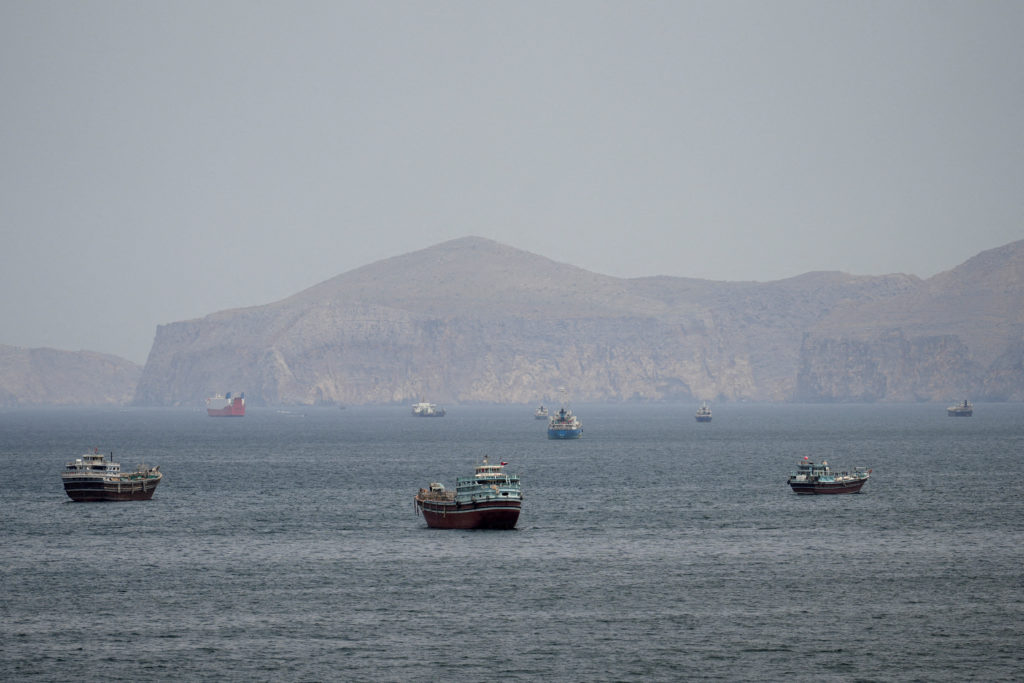
The U.S. military kept up its blockade on Iranian ports in response to Tehran's grip on the strait, a crucial corridor for global oil and natural gas shipments. Energy prices have spiked, posing political problems for U.S. President Donald Trump's Republican Party before the midterm congressional election.
Trump increasingly appears to be boxed in. U.S. and Iranian negotiators reached a tentative agreement a week ago to extend the ceasefire by 60 days and start a new round of talks on Iran's nuclear program. Trump, however, has called for unspecified changes, and Iranian officials have shown no public sign of agreeing to the deal.
The fighting in Lebanon, where Israeli forces have seized large swaths of the south while saying it targets the Iranian-backed Hezbollah militant group, also challenges efforts to end the Iran war and reopen the Strait of Hormuz. Iran has demanded that any lasting truce extends to Lebanon.
The Trump administration has touted the latest ceasefire agreed to earlier in the week by the Lebanese government and Israel after U.S.-brokered talks in Washington. However, Hezbollah has rejected the agreement.
Michelle L. Price reported from Bridgewater, New Jersey. Munir Ahmed contributed to this report from Islamabad.
Support trusted journalism and civil dialogue.
Support Provided By:
Learn more
Subscribe to Here’s the Deal, our politics
newsletter for analysis you won’t find anywhere else.
Thank you. Please check your inbox to confirm.
<small>Source: PBS NewsHour</small>