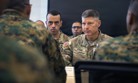
US Army to Conduct Counter-Drug Training Exercises in South America
The US Army is taking a proactive stance against drug-related crimes in the region by organizing a series of counter-drug training exercises in South America, according to General Joe Ryan, the Commanding General of the Western Hemisphere Command.
Speaking at the Annual Meeting of the Association of the United States Army (AUSA), General Ryan revealed that the Command is building up a "theater Army" to better address the challenges posed by drug trafficking and related criminal activities.
- The Western Hemisphere Command is aiming to strengthen regional cooperation and enhance the capabilities of partner nations in combating drug trafficking and related crimes.
- The training exercises will focus on improving intelligence-sharing, interoperability, and joint operations among participating countries.
- The initiative is expected to contribute to regional security and stability, as well as protect US interests in the region.
According to General Ryan, the training exercises will involve joint military operations, intelligence sharing, and capacity-building activities to strengthen regional cooperation and enhance the capabilities of partner nations in combating drug trafficking and related crimes.
The initiative is part of the US Army's broader strategy to support regional partners in addressing transnational threats, including drug trafficking, organized crime, and terrorism.
By strengthening the capabilities of local forces, the US Army aims to contribute to regional security and stability, as well as protect US interests in the region.
The exact locations and timing of the training exercises have not been disclosed, but sources indicate that several countries in the region have expressed interest in participating.
The US Army's counter-drug efforts in South America come amidst ongoing concerns about the impact of drug trafficking on regional security, economies, and social fabric.
The Western Hemisphere Command's initiative represents a significant commitment to regional cooperation and capacity-building, which could potentially have far-reaching effects on drug trafficking and related criminal activities in the region.
The training exercises are expected to enhance the capabilities of partner nations, improve regional security, and contribute to the overall stability of the South American countries involved.
<small>Source: Defense One — read the original story there.</small>