Understanding Dairy Milk Options
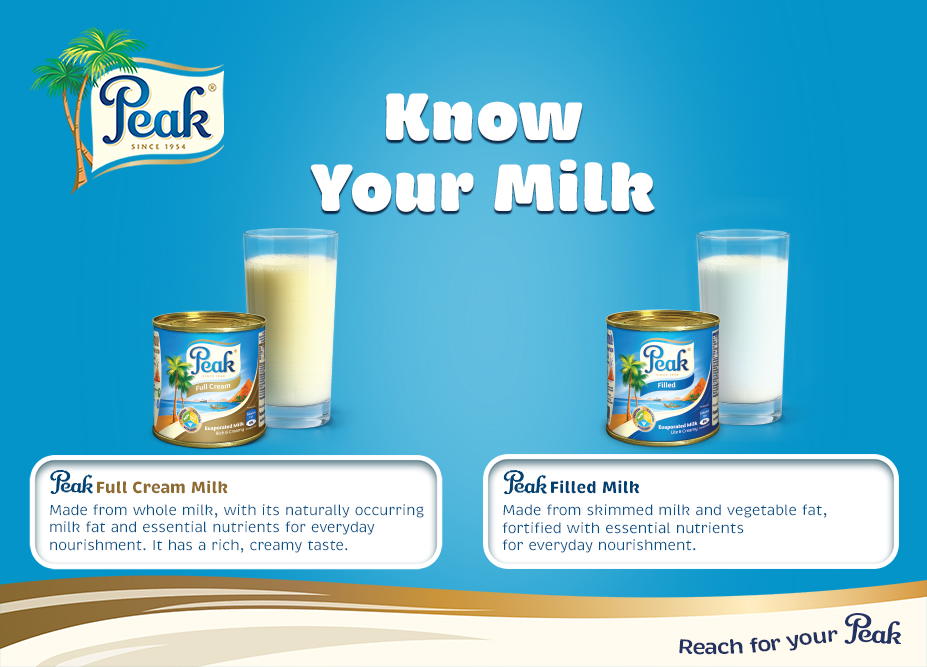
Full Cream Milk: Complete Nutrition for Everyday Use
When it comes to milk options, Full Cream Milk is often the first choice that comes to mind.
Full Cream Milk is made from whole cow's milk, which naturally contains milk fat, giving it the rich, creamy taste that many people enjoy. Additionally, it provides complete dairy nutrition, including high-quality protein, calcium, and a range of essential vitamins and minerals that contribute to bone health, muscle function, and overall wellbeing.
One example of this category is Peak Full Cream Milk, which comes in both powdered and evaporated formats. Its versatility makes it suitable for drinking, breakfast cereals, smoothies, tea, coffee, cooking, and baking, making it a practical choice for everyday family use.
Understanding Filled Milk: A Dairy Milk Product
Another popular choice among consumers is Filled Milk, a dairy milk product that is often chosen for its convenience.
Filled Milk is made from whole cow's milk, which naturally contains fat, providing the rich, creamy taste that many people enjoy. However, it has a lower fat content than Full Cream Milk. Filled Milk is designed to meet the nutritional needs of consumers who prefer a lower fat content in their milk.
For example, Peak Filled Milk is a popular choice for those looking for a lower fat content in their milk. It is available in carton format and is suitable for drinking, cereal, tea, coffee, cooking, and baking.
Deciding Between Dairy and Non-Dairy Milk Alternatives
As consumers become more health-conscious, they are increasingly exploring non-dairy milk alternatives. These products are designed to meet the nutritional needs of consumers who prefer plant-based options.
For instance, Peak Non-Dairy Milk is a popular choice for those seeking plant-based options.
The Importance of Understanding Milk Labelling
Understanding milk labelling is crucial when making informed decisions on what to buy.
- Full Cream Milk: This type of milk is made from whole cow's milk, providing a rich and creamy taste.
- Filled Milk: This type of milk is made from whole cow's milk, but has a lower fat content than Full Cream Milk.
- Non-Dairy Milk Alternatives: These products are made from plant-based ingredients, offering plant-based nutrition.
The Role of a Dietitian in guiding consumers
As a dietitian, it is often my role to help consumers navigate the milk aisle and make informed decisions based on their nutritional needs.
In this article, I will guide readers on the differences between Full Cream Milk, Filled Milk, and Non-Dairy Milk Alternatives.
In Nigeria, for example, Full Cream Milk is the most popular choice, followed by Filled Milk and then Non-Dairy Milk Alternatives.
Therefore, understanding the nutritional benefits and drawbacks of each option is crucial to making an informed decision.
The Role of a Dietitian in guiding consumers
As a dietitian, my role is to help consumers navigate the milk aisle and make informed decisions based on their nutritional needs.
In this article, I will guide readers on the differences between Full Cream Milk, Filled Milk, and Non-Dairy Milk Alternatives.
In Nigeria, for example, Full Cream Milk is the most popular choice, followed by Filled Milk and then Non-Dairy Milk Alternatives.
Therefore, understanding the nutritional benefits and drawbacks of each option is crucial to making an informed decision.
<small>Source: Vanguard News — read the original story there.</small>
