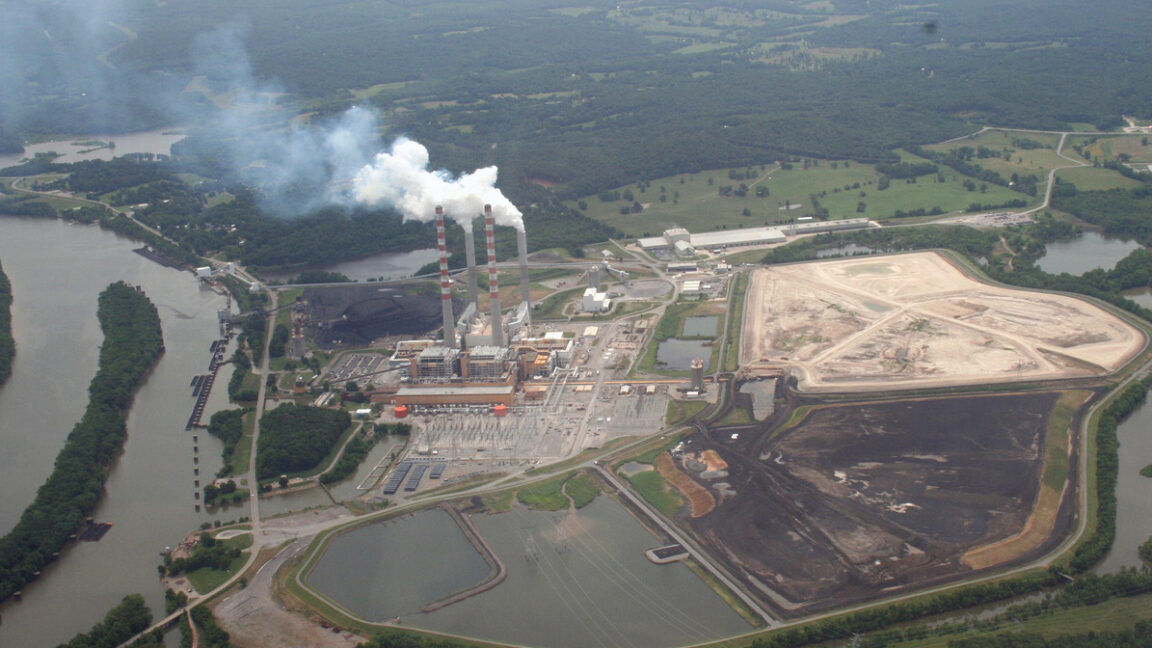
In 2023, after years of
pollution, equipment failures, and health concerns, the Cumberland Fossil Plant in Tennessee was slated to close within the decade.
The coal-fired plant had been part of a multibillion-dollar
settlement in 2011 after its operator, the Tennessee Valley Authority, failed to install pollution control technology a decade earlier. Regulators cited the plant for more air-pollution violations in 2017 and 2023. TVA said it would shutter Cumberland’s units in 2026 and 2028.
Then the Trump administration
replaced four of TVA’s board members, and the agency reneged on its retirement plan in February. Now, TVA has a federal pledge for $46 million to extend Cumberland’s lifespan— part of a nationwide push by President Donald Trump to keep older coal plants running.
Cumberland is one of at least three of the 12 plants receiving the Department of Energy grants that have been repeatedly cited for violating the Clean Air Act, the Clean Water Act, or both, an Inside Climate News review found. The other two are Grand River Energy Center in Oklahoma and the Roxboro Steam Electric Plant in North Carolina, cited for various environmental violations, such as releasing wastewater with excess pollutants, over the past decade.
For Angie Mummaw, a local organizer who lives eight miles from the Cumberland plant, the grant was like a “slap in the face.”
“I feel like it’s a step backwards when we should be investing in clean energy, in new technology, and moving away from the fossil fuel industry,” said Mummaw, who is the Middle Tennessee organizer for Appalachian Voices, an environmental group.
Maggie Shober, the Southern Alliance for Clean Energy’s research director, said retiring coal plants is “one of our primary ways” to combat pollution, climate change, and associated health harms. Extending their operations, she said, “will make climate change happen faster and will make it worse over the long-term.”
Multiple studies have also linked coal-plant air pollution to early death, with impacts reaching hundreds of miles from the facilities themselves. One study estimates that just one of Cumberland’s air pollutants, toxic fine particles, contributed to 1,000 deaths as far away as New York and Massachusetts from 1999 to 2020.
<small>Source: Ars Technica</small>