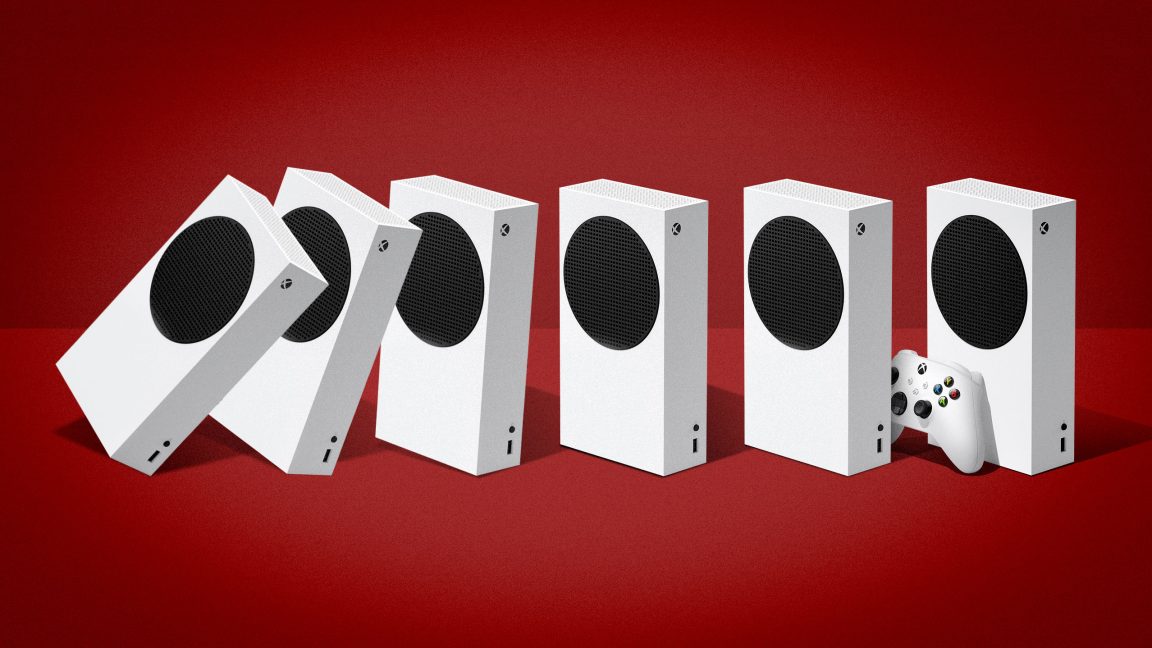
Just 100 days ago, when new Microsoft Gaming CEO Asha Sharma
replaced long-serving executive Phil Spencer, she said she’d work to “understand what makes [Xbox] work and protect it.” Now, Sharma and Xbox Studios chief Matt Booty have laid out the many things that are not working for the Xbox brand in a brutal self-assessment the they say necessitates a wholesale “Xbox reset.”
The message sent to Xbox employees and
shared publicly via Xbox Wire last night paints a grim picture for practically every facet of the Xbox division. That portion of Microsoft is currently only seeing a “3% accountability margin” (read: profit margin), down year over year and well below both the game industry average and the lofty 30% margins that Microsoft is reportedly seeking across the board.
It’s an underperformance, they write, born out of being “over extended” by moves like
the $69 billion acquisition of Activision. That mega-merger came on top of $20 billion in spending on other acquisitions, platform investments, and hardware subsidies over the last five years, the executives write. But despite the spending spree, Microsoft’s overall gaming revenues are down nearly $500 million compared to five years ago.
While Microsoft has over-invested in acquisitions and platform spending, Sharma and Booty also admit that Xbox has “not adequately funded” the company’s “industry-defining franchises.” That has been somewhat apparent to anyone paying attention to the steady stream of
studio-level layoffs and game cancellations coming out of Redmond in recent years. And the company now acknowledges that a “reliable pipeline of first- and third-party exclusives” is “critical to our success,” a notable change from the multi-platform strategy it was pursuing with gusto just a couple of years ago.
Hardware is hard
On the hardware side, Microsoft is facing the same surge in storage and RAM pricing as the
rest of the industry. But the Microsoft executives also say they “believe we have been impacted more greatly than many of our peers due to the choices we made over the last half decade,” a vague but worrying statement about Microsoft’s specific console supply chain issues.
<small>Source: Ars Technica</small>