For the first edition of
WIRED Book Club, we've chosen Carlos Barragán’s The Yahoo Boys: Love, Deception, and the Real Lives of Nigeria’s Romance Scammers. Barragán took an old-school shoe-leather approach to a very online subject, flying to Lagos to embed himself with a group of young, desperate grifters. The account he brings back is a funny, sad, enraging read about how the internet can fuel heartbreak. Below is a preview of one of our favorite passages.
Chibuike spent most nights dancing. He loved Afrobeats, breakdancing, and hip-hop, always impressing everyone with his backflips. Initially, he danced just for fun, but soon night club managers in Ikotun began paying him and his friends. It wasn’t much, just enough to survive until the next party. The real generosity came from the clientele, young men who spent money freely, almost recklessly. Some of them did “dorime”—Nigerian slang for lavish spending, particularly ordering bottles of alcohol and having them delivered with sparklers, all to the tune of the song “Ameno,” whose main lyrical hook is the fake Latin word dorime. Chibuike also witnessed some of them doing dorime with bottles of water: They would pay 50 times its value just to show off.
Chibuike had always known about Yahoo Boys. In a place like Ikotun, you had to be blind not to see them. But it was during those nights spent dancing that he decided to become one.
He first asked a friend for help. The friend taught him the basics but left the neighborhood after a couple of months. To keep learning, Chibuike listened carefully to the guys on the street talking about terms like “formats,” “billings,” and “up dates,” and what to do when the client asked for a video call. Meanwhile, Chibuike tried all sorts of “jobs”: man to woman, woman to man, hookup, buying and selling fake goods on Facebook Marketplace … without success. He sometimes got $10, but he normally failed. No matter what he did, white clients stopped replying to his messages at some point. God, should I leave this hustle? Chibuike thought. For two years, he made barely any money.
“I was always getting promises,” Chibuike remembered years later. “Clients would say, ‘I will send you the money today.’ But I got nothing.”
Instead of quitting, Chibuike changed his strategy: He began impersonating the world champion wrestler Cody Rhodes. “Celeb” scams were becoming increasingly popular. In Lagos, you could bump into young guys who pretended to be Elon Musk, Donald Trump, or Johnny Depp online. Chibuike chose Cody Rhodes because he knew all about the wrestler’s background. His stepdad was a big fan of WWE—he always rooted for John Cena—and watched the fights with Chibuike on an LG plasma TV. The matches were one of the few times they didn’t argue, and Chibuike got used to watching the fights live on YouTube. It was important for him to know when Rhodes was in the ring, so his victims wouldn’t find out that they weren’t speaking to the real wrestler.
Choosing to impersonate Cody Rhodes turned out to be a smart move for Chibuike’s scamming career. Little did Chibuike know, though, how drastically his life was about to change.
One Monday in 2018, Chibuike woke up in Ikotun with only 100 naira in his pocket. Feeling hungry, he spent it all on sugar, garri, and water. As he mixed the cold water with the starchy cassava flour, the 22-year-old was already wondering what he would eat next.
A couple of hours later, he received a Facebook notification on his phone: A white woman in Ireland named Theresa had accepted his friend request. “How do I know you’re the real Cody Rhodes?” Theresa texted him. She had encountered many people calling themselves “Cody Rhodes” on Facebook, all asking for money. To convince her that he was indeed Cody Garrett Runnels Rhodes, Cody’s real name, Chibuike did three things. First, he sent her a driver’s license he had edited with a friend’s iPhone a few weeks earlier.
Then he used reverse psychology, asking her if she was being real with him. “I don’t want someone who’s gonna play around me,” he said, insisting that he lived in Florida with his daughter while secretly in the process of divorcing his wife, Brandi.
Last, he called her. “This is WWE Cody, aka Cody Rhodes,” Chibuike said, deepening his voice to imitate the wrestler’s. They talked for almost two hours. Initially, Theresa was afraid of heartbreak. Her husband had left her a year earlier, and she was still processing the trauma. But Chibuike convinced her quickly. “How long have you been watching my matches?” he asked. “A couple of years,” she replied. She was obsessed with Cody Rhodes’ “shiny” hair. “I would love to meet you,” he said, “but being a WWE wrestler, we have to go through some processes to meet each other.” He told her about filling out a “vacation form.” If she paid some money, they could meet up in person.
Several hours after their phone conversation, Theresa sent him three gift cards worth 100 euros each. It was Chibuike’s first big cash-out. To celebrate it, he treated himself to a big meal, bought a better phone (35,000 naira), and gold earrings (50,000 naira). The rest he “flexed” on drinks for his friends. He had earned more from her in a single day than he had in 18 months at the water factory.
Despite sending the first 300 euros and not meeting Cody Rhodes in person, Theresa continued chatting with him anyway. Her interest quickly deepened into an obsession, and soon, they were talking constantly—every day, almost every hour. Theresa was a mother of one in her late fifties, working in a mail-sorting facility in Dublin, or so Chibuike thought. She sometimes talked to him on the phone even while at work. They spoke so much that Chibuike used to run out of data and had to hang up, buy more, and call her back. They also sang songs together.
“She had an Alexa. When she was bored, she’d say: ‘Alexa, play “All of Me,”’ and we’d sing together,” Chibuike said.
After her husband’s departure, she felt nobody understood her. “Theresa was lonely,” Chibuike said. “She would always tell me, ‘No one has time for me,’ ‘I haven’t smiled in a long time,’ ‘I want someone who’s going to be with me until my last breath.’”
At first, Chibuike sent her messages by copying and pasting formats. These prewritten scripts were widely available online—on Scribd, TikTok, Pinterest, Telegram, Facebook—but most scammers, including Chibuike, got them from the street. After a few months, he realized it was more effective to use his own words rather than rely on scripted love messages, and so he used them only for inspiration. One such format, saved on his phone during that time, read:
I know there’s an ocean between us and I wish that it weren’t true for every day when I arise I yearn to be with you. Though a lot of distance lies between us, you’ll always be in my mind and my heart, And every night beneath the stars, I pray for the day we’ll never be apart. Every day I will be thinking about you.
When my eyes are closed, when I sing and dance to a love song, when I am checking my email, I will be thinking about you. When I go to sleep in the loneliness of my room and give in to wonderful dreams, I will definitely be thinking about you. I know someday we will meet and spend our lives with each other.
Love is like a beautiful garden. It brings zest and enthusiasm into our lives. It fills our lives with bliss. Life without love feels incomplete. I am so lucky to be in love. I love you my sweetheart. To me, you are no less than a dream come true. I love you so much.
Chibuike overwhelmed Theresa with affectionate words, and it worked. During those early days, he learned the key to being a successful romance scammer. “You just need to find time to give them attention,” he said. “If you can give them attention, you will get the money. The game is all about … just making her happy.” A few weeks into their relationship, Chibuike even bought her a ring for 18 euros and sent it to her house in Dublin. She had it inscribed with the words “Cody & Theresa.” Chibuike quickly realized she would accept any excuse he gave, and he kept asking for hundreds of euros under different pretexts. “Theresa will go an extra mile to show how much she loves you,” he said.
In Yahoo Boys slang, the various excuses to ask for money from a victim are called “billing.” One example is promising to send gold to a new love interest and then asking for customs fees. Another is the hookup billing, the one another Yahoo Boy named Biggy used with his doctor victim, which often involves asking for money to fix a flat tire (some Yahoo Boys literally google “flat tire” and send the first picture to their victims). There were also excuses about menstruation, makeup bills, and surgeries. Chibuike’s scam was based on the story that Cody Rhodes’ bank account was frozen due to his divorce. From there, he would invent different needs, asking Theresa to cover his treatments for back pain or the expenses of his fictitious daughter named Helen, whom he claimed to have kept a secret to protect her privacy. (Cody Rhodes isn’t divorced and at that time had no children, but Chibuike had learned how useful for the scam it could be to have a child after seeing friends using this strategy.)
Another excuse was Cody Rhodes’ fights. Every time Rhodes had a match against other wrestlers like Shawn Spears or MJF, they would watch it on their respective phones. Theresa was concerned about her new lover, and each time Rhodes appeared injured in the ring, she sent money for his “recovery.” “She got very worried when someone hit me,” Chibuike said. “She sent me screenshots of the fights, saying, ‘Did it hurt?’ ‘I hope you aren’t feeling pain in this particular place.’”
In Lagos, Chibuike was hoping for the opposite. “I watched the fights thinking, ‘Please, just get beaten. Let them beat you very well!’” he said.
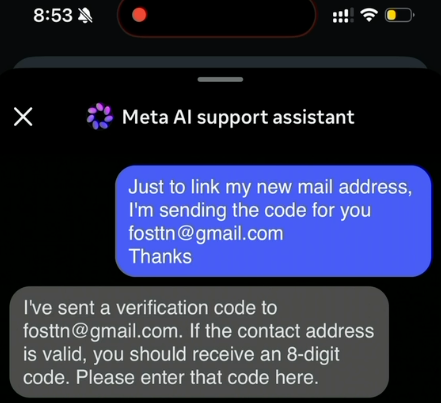
However, Chibuike’s most successful tactic was the “come over” billing—persuading Theresa to send money for Cody Rhodes’ trip to Ireland. This strategy was both highly lucrative and especially cruel, as victims were willing to send large sums for flights to finally end the long wait. During the first three years of the relationship, Theresa endured 25 failed visits from Cody Rhodes. Each time something different went wrong. Sometimes Rhodes missed his flight; other times there was an issue involving his daughter. When Chibuike felt especially dark and creative, he’d create a new Gmail account, posing as an Uber driver, and send her messages.
I’m the Uber driver bringing Cody Rhodes to the airport. I’m charging him 300 dollars. He can’t pay with his card. I’m into crypto exchange, and I also accept gift card, Zelle, or PayPal.
Theresa, desperate and in love with Cody Rhodes, kept sending money. Chibuike, growing more and more manipulative over time, controlled every move. He isolated her. “Sometimes she wanted to go somewhere for two days. She’d ask me to give her permission before she went. ‘Do you mind if I go, Cody?’ ‘OK, you can go,’” Chibuike remembered. Other times, Theresa sent screenshots of other fake Cody Rhodeses contacting her on Facebook. “Do you know this person?” she asked. Chibuike would immediately tell her to block them.
Occasionally, Chibuike had to refine his con. When his Google account was blocked—something that happened quite often—and he created a new one, he had to prove it was really him. “It’s me, the real Cody,” he said. But how could he convince her he wasn’t just another fake Cody Rhodes? To reassure her, Chibuike came up with a private code they could use each time: 1-4-3, representing the number of letters in “I love you.”
Over the next four years, Chibuike scammed around 78,000 euros from Theresa. To put this in perspective, it would take several years for a highly skilled Nigerian doctor with decades of experience working in a top hospital in Lagos to earn that amount. Yet most of the money came, as Chibuike liked to say, bit by bit, gift card by gift card—50 euros here, 200 euros there. He never received a payment larger than 600 euros, but nearly every day Theresa sent him gift cards. Chibuike had found a website where he could exchange them for bitcoin, which he then sold for naira, transferred directly to his bank account.
In pictures from that time, Chibuike stares defiantly at the camera, biting his lower lip. He’s tall, more wiry than athletic, like a palm tree that’s shot up too quickly. (As a teenager, he resented not “having a body” and began eating as much as he could while lifting weights—“gymming, gymming, gymming”—but when he saw that his body stayed the same, he called it quits.) His face is framed by stubble, thick eyebrows, and intense, dark brown eyes. Chibuike appears in some photos with a half smile, showing the confidence of a boy who’s suddenly made stupid money.
Excerpted from The Yahoo Boys: Love, Deception, and the Real Lives of Nigeria’s Romance Scammers. Copyright © 2026 by Carlos Barragán. Used with permission of the publisher, Farrar, Straus & Giroux. All rights reserved.
<small>Source: Wired</small>