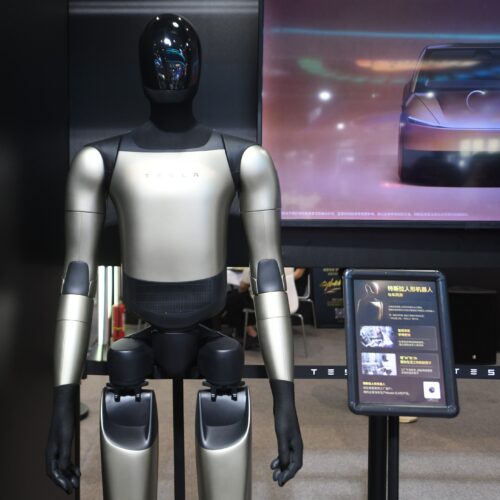
Tesla’s effort to replace assembly‑line workers with its Optimus humanoid robot has run into both technical and labor obstacles, as employees at the company’s Fremont, California plant resist training for the new machines, according to a report by The Information.
The difficulty stems in part from the complexity of the robot’s hands, which engineers say are far more intricate than those used in Tesla’s electric‑vehicle production. Workers, many of whom have been reassigned from building the Model S sedan and Model X SUV, have expressed dissatisfaction with the shift toward learning how to operate and maintain the robotic replacements.
Elon Musk, speaking on Tesla’s second‑quarter 2026 earnings call, described Optimus as “potentially the biggest product ever,” while also conceding that creating an autonomous humanoid capable of a wide range of tasks is “one of the hardest things to solve.” The remarks underscore the company’s high expectations for the robot despite the hurdles it faces.
In May 2026, Tesla halted production of the Model S and Model X at the Fremont facility and redirected both line workers and engineers to the Optimus program. The transition marks a significant pivot from the automaker’s traditional focus on electric vehicles to a broader bet on artificial intelligence and robotics.
Musk’s strategy places the future of Tesla increasingly on AI‑driven products, a move that analysts say could reshape the company’s identity if the technical challenges and workforce concerns are resolved. The ongoing internal pushback highlights the practical difficulties of scaling up a general‑purpose humanoid robot for mass production.
<small>Source: Ars Technica — read the original story there.</small>


