Right now, yours goes twice as far. Give now to help PBS News start our new fiscal year strong.
Mark Sherman, Associated Press
Mark Sherman, Associated Press
Leave your feedback
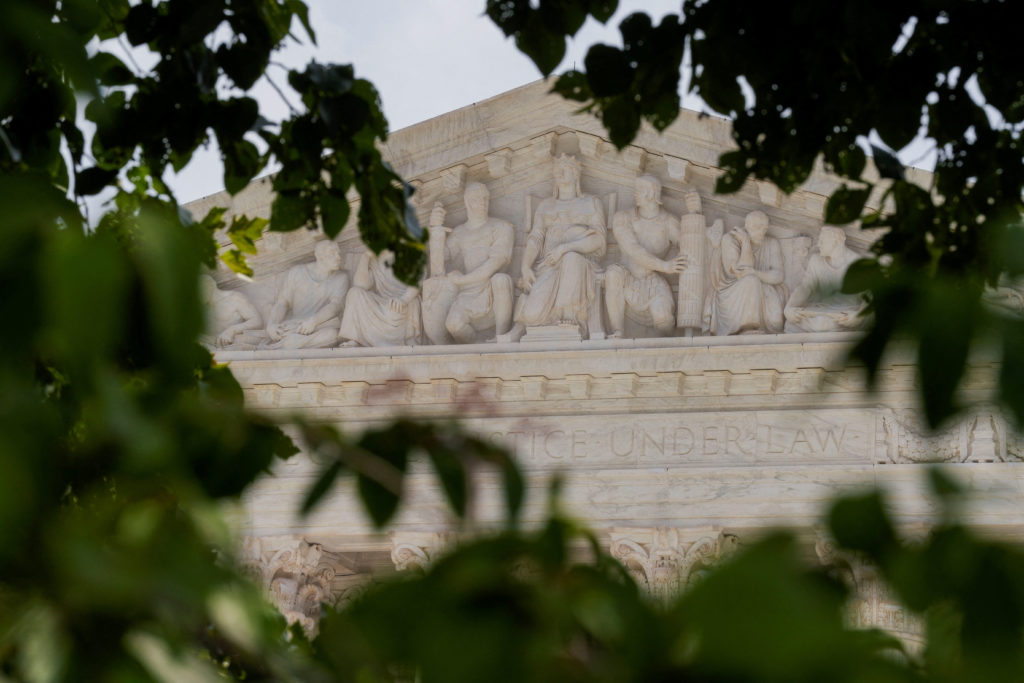
WASHINGTON (AP) — The Supreme Court on Tuesday upheld a broad conception of birthright citizenship, rejecting President Donald Trump's executive order declaring that children born to people who are in the United States illegally or temporarily are not American citizens.
The justices relied on a long-settled understanding of the 14th Amendment, adopted after the Civil War, and more recent federal laws in ruling that anyone born in the country, with very limited exceptions, is a citizen.
WATCH: Analyzing the arguments as Supreme Court hears birthright citizenship case
The Republican president's restrictions had been blocked by several lower courts and had not taken effect anywhere in the U.S.
Subscribe to Here’s the Deal, our politics
newsletter for analysis you won’t find anywhere else.
Thank you. Please check your inbox to confirm.
During arguments in April, both conservative and liberal justices questioned the order's legality in a momentous case that was magnified by Trump's unprecedented attendance in the courtroom.
The case framed another test of Trump's assertions of executive power that defy long-standing precedent for a court with a conservative majority and a robust view of presidential power that has largely ruled in his favor. In the notable exceptions when the court has not, Trump has responded with starkly personal criticisms of the justices.
READ MORE: Fact-checking Trump on birthright citizenship and birth tourism before Supreme Court hears arguments
The justices ruled on Trump's appeal of a lower-court ruling from New Hampshire that struck down the citizenship restrictions.
The birthright citizenship order, which Trump signed on the first day of his second term, is part of his administration's broad immigration crackdown.
Birthright citizenship was the first Trump immigration-related policy to reach the court for a final ruling. The justices previously struck down global tariffs Trump had imposed under an emergency powers law that had never been used that way.
Trump reacted furiously to the late February tariffs decision, saying he was ashamed of the justices who ruled against him and calling them unpatriotic.
READ MORE: Fact-checking the Trump administration's challenges to birthright citizenship
He also seemed to recognize the court was likely to rule against him on birthright citizenship, too, using his Truth Social platform to criticize "dumb judges and justices" and wealthy pregnant women from China and elsewhere who come to the U.S. to give birth so their newborns will have American citizenship.
Trump's order would have upended widely held views that the 14th Amendment confers citizenship on everyone born in the U.S., excluding only the children of foreign diplomats and those born to a foreign occupying force.
The amendment was intended to ensure that Black people, including former slaves, had citizenship, though the Citizenship Clause is written more broadly. "All persons born or naturalized in the United States, and subject to the jurisdiction thereof, are citizens of the United States and of the State wherein they reside," it reads.
In a series of decisions, lower courts have struck down Trump's executive order as illegal. The decisions have invoked the high court's 1898 ruling in Wong Kim Ark, which held that the U.S.-born child of Chinese nationals was a citizen.
The Trump administration argued that the common view of citizenship is wrong, asserting that children of noncitizens are not "subject to the jurisdiction" of the United States and therefore are not entitled to citizenship.
More than one-quarter of a million babies born in the U.S. each year would have been affected by the executive order, according to research by the Migration Policy Institute and Pennsylvania State University's Population Research Institute.
While Trump has largely focused on illegal immigration in his rhetoric and actions, the birthright citizenship restrictions also would have applied to people who are legally in the United States, including students and applicants for green cards, or permanent resident status.
Support trusted journalism and civil dialogue.
Support Provided By:
Learn more
<small>Source: PBS NewsHour</small>