Your support makes our work possible.
Kim Chandler, Associated Press
Kim Chandler, Associated Press
Leave your feedback
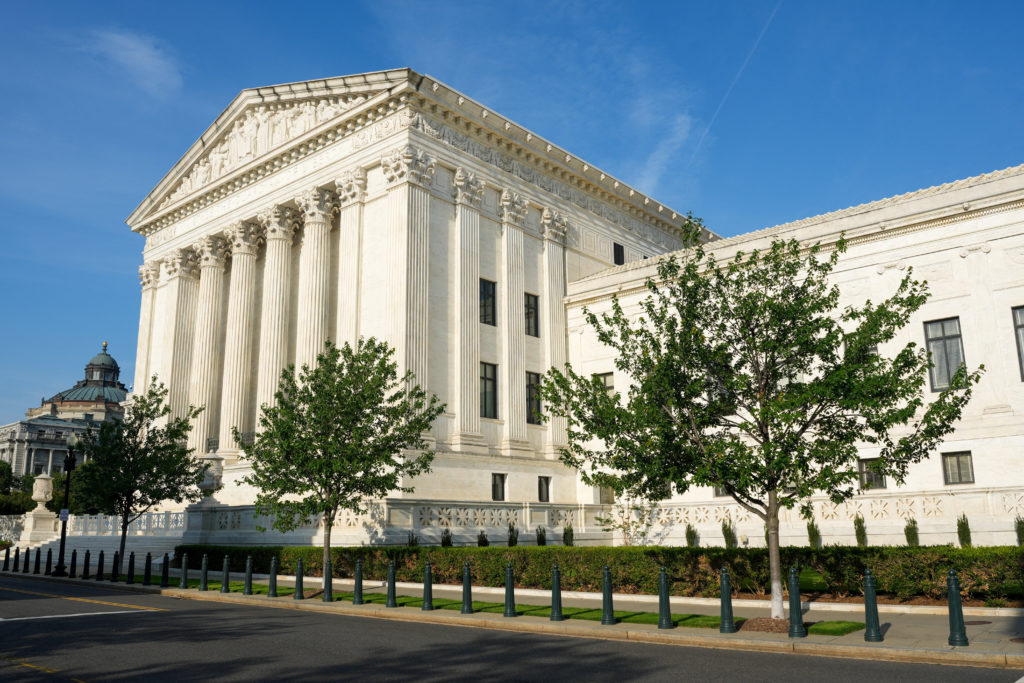
ATMORE, Ala. (AP) — An Alabama man facing the death penalty by nitrogen gas was spared Thursday as the U.S. Supreme Court refused to set aside a lower-court ruling that found the method is unconstitutionally cruel, issuing a brief order that came well after the hour originally planned to initiate Jeffery Lee's execution.
The justices decided not to lift an injunction blocking Alabama from carrying out what would have been the nation's ninth execution by nitrogen gas, rejecting a last-minute legal battle by the state as it sought to carry out the sentence in the evening. A spokesperson for the Alabama Department of Corrections said the execution was off for the evening and the state would not try another method.
Subscribe to Here’s the Deal, our politics
newsletter for analysis you won’t find anywhere else.
Thank you. Please check your inbox to confirm.
The high court voted 6-3 and did not explain its reasoning. Three of the conservative justices — Clarence Thomas, Samuel Alito, and Neil Gorsuch — said they would grant Alabama's request to lift the injunction and let the execution go forward.
In a statement the legal team for Lee, 49, hailed the decision and noted that his jury had voted for a sentence of life, which a judge overruled.
"His jury voted for life. Two courts ruled the method unconstitutional. Today, the Constitution prevailed," the statement said. "Now Governor Ivey can finish what the jury started: restore the jury's verdict of life without parole."
READ MORE: What to know about execution methods in the U.S. after judge blocks Alabama from using nitrogen gas
Alabama Attorney General Steve Marshall promised the families of the victims that authorities will continue to seek justice, saying in a statement: "The State is prepared to do whatever is necessary to see Mr. Lee's lawful sentence carried out."
"Tonight's ruling is a miscarriage of justice, not for us, but for Jimmy Ellis and Elaine Thompson, who Jeffery Lee brutally and senselessly murdered and left on the floor of their place of business," Marshall said. Tonight I am also keeping their families in mind, many of whom were prepared to witness the final act of justice be served."
WATCH: What's behind a recent rise in executions in America after years of decline
Prison officials said Lee did not request a final meal Thursday but had potato chips, Skittles, water and a Sprite in the hours ahead of his possible execution.
The ruling was at least a temporary, rare victory for opponents of capital punishment in a state that has had one of the busiest death chambers in the country. And it capped an extraordinary legal back-and-forth over the humaneness of nitrogen gas as an execution method.
Lee filed a lawsuit challenging Alabama's protocol as a violation of the constitutional ban on cruel and unusual punishment, and U.S. District Judge Emily Marks ruled the method constitutional in May.
But a three-judge panel from the 11th U.S. Circuit Court of Appeals reversed her decision Monday, saying the three minutes it could take for an inmate to lose awareness is an "intolerable" time frame "given the suffering that would likely take place under Alabama's nitrogen hypoxia protocol."
READ MORE: The U.S. is executing more people this year, and Florida is leading the way
Marks reevaluated the case and ruled again Tuesday saying Lee had shown "that the protocol constitutes cruel and unusual punishment in violation of the Eighth Amendment." The state appealed to the Supreme Court.
"If that ruling stands, it would be unprecedented in American history. Not only does it portend the first-ever permanent ban on a legislatively enacted method, but it would expand the concept of cruelty well beyond the bounds of the Eighth Amendment," lawyers with the Alabama Attorney General's Office wrote.
READ MORE: Man put to death for 1986 killing of grocery store owner in Florida's 2nd execution this year
Lee's lawyers asked the high court to keep the execution on hold, saying in a response that Alabama was asking it to intervene at the eleventh hour "to allow an execution that has been found unconstitutional to proceed."
The decision blocks Lee's execution in the immediate future, but it is unclear how long the reprieve will last. The state maintains that nitrogen is constitutional, and the lower-court order blocks only that method and other means of execution such as lethal injection and the electric chair, both of which are authorized in Alabama.
Alabama began using nitrogen gas to carry out some executions in 2024. The method involves strapping a respirator to a person's face and replacing breathable air with pure nitrogen gas, causing death from lack of oxygen.
Nitrogen has been used in eight executions in the United States — seven times in Alabama and once in Louisiana. Lee was scheduled to be the ninth.
READ MORE: U.S. at front of death penalty debate after Alabama execution uses nitrogen gas, the first ever
During the previous Alabama nitrogen executions, the inmates shook, pulled at the restraints and exhibited labored breathing. During the state's last execution by nitrogen gas, 30 minutes elapsed between Anthony Boyd exhibiting signs of being impacted by the gas and state officials closing the curtain to the viewing room to signal the execution was complete.
The state has maintained that the method is constitutional and causes no more suffering than other execution methods.
Lee, who is currently housed at William C. Holman Correctional Facility in Atmore, was convicted of two counts of capital murder for killing Ellis and Thompson while robbing a pawnshop on Dec. 12, 1998.
Prosecutors said Lee entered Jimmy's Pawnshop with a sawed-off shotgun and shot Ellis, the owner, and Thompson, an employee.
A jury voted 7-5 to give Lee a sentence of life imprisonment. However a judge overrode that and sentenced him to death.
Alabama ended the practice of judicial override in 2017 and no longer allows a judge to disregard a jury's sentencing decision in death penalty cases.
Bestselling author John Grisham called on Gov. Kay Ivey to honor the jury's decision and commute Lee's sentence to life without parole.
"The practice of a judge overriding a jury was declared unconstitutional and so indefensible that Alabama itself abolished it in 2017," Grisham said in a statement. "Jeffery Lee's jury made its decision, the Alabama Legislature later agreed that juries, not judges, should decide life or death sentences."
Ivey, for her part, said Thursday night: "While I am disappointed the Supreme Court did not allow the state to proceed with Lee's chosen method of execution, I remain committed to ensuring that justice is ultimately served for his victims."
Support trusted journalism and civil dialogue.
Support Provided By:
Learn more
<small>Source: PBS NewsHour</small>