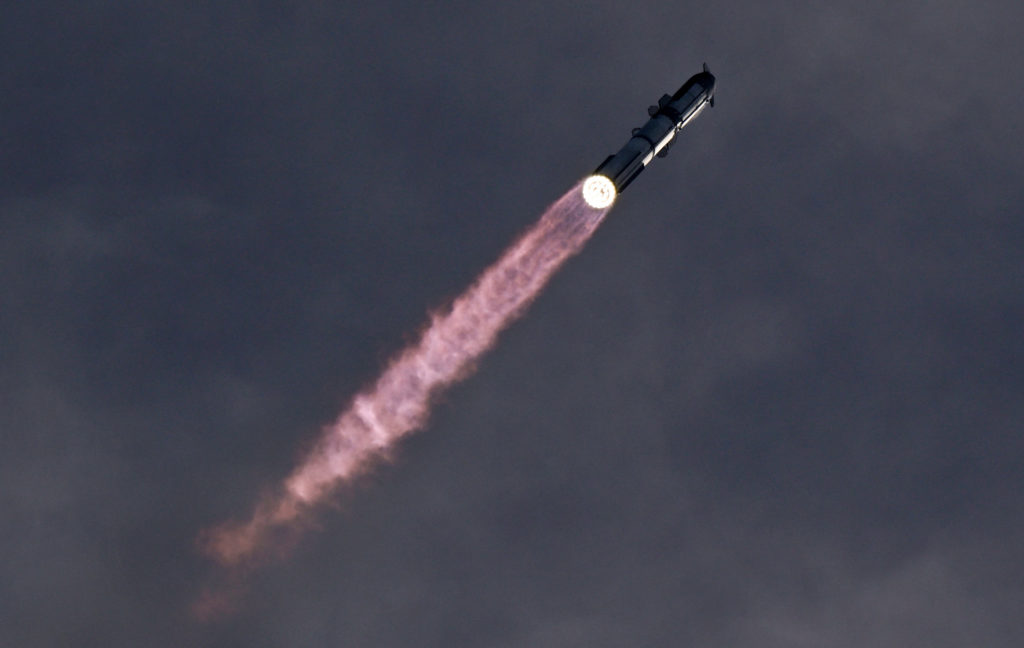
SpaceX’s supersized Starship vehicle completed its first flight into orbit on Thursday, reaching space despite a near‑miss when one of its engines shut down earlier than planned.
Starship, the company’s next‑generation, fully reusable launch system, is designed to be larger than any previous rocket and to eventually carry crew and cargo to the Moon, Mars and beyond. The test flight marked the first time the massive spacecraft achieved orbital velocity, a milestone that has been years in the making.
According to mission officials, the vehicle’s ascent was briefly jeopardized when an engine cut off prematurely. Engineers were able to compensate for the loss, and the remaining propulsion system carried the spacecraft through the rest of its trajectory, allowing it to complete the orbital segment of the test.
The successful orbit demonstrates that Starship’s core systems can survive and operate even when faced with unexpected hardware behavior. SpaceX has described the flight as a critical step toward validating the vehicle’s design for future operational missions.
Looking ahead, SpaceX plans to conduct additional test flights that will push Starstar further, including re‑entry and landing attempts, as the company works toward its broader goal of enabling human exploration of deep space.
<small>Source: PBS NewsHour — read the original story there.</small>