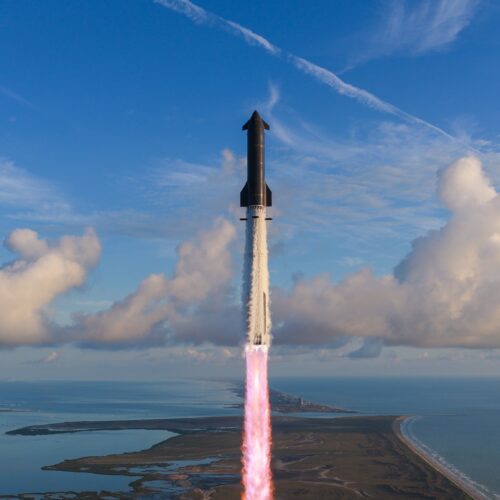
SpaceX’s Starship rocket launched from South Texas early Monday and successfully reached low‑Earth orbit, marking the first time the vehicle has completed a full orbital trajectory. The 14th test flight of the world’s most powerful launch vehicle carried 26 of the company’s newest generation Starlink broadband satellites into space.
During the flight, the Starship’s upper stage produced extra thrust from its Raptor engines, allowing the vehicle to accelerate to orbital velocity. This was a departure from previous test flights, which were deliberately limited to suborbital trajectories that would bring the rocket back down under Earth’s gravity.
SpaceX officials had decided that this launch should push the vehicle all the way to orbit after a series of successful suborbital missions. The decision was made to test the full capability of the Starship system and to validate its performance in a true orbital environment.
The payload bay of the Starship housed 26 flat‑packed, next‑generation Starlink satellites. Once the rocket reached orbit, the satellites were released one by one from a deployer that used pulleys and cables to eject them into space, a process compared to a Pez dispenser dispensing candy.
With this flight, SpaceX not only demonstrated the Starship’s ability to reach orbit but also showcased a new method of deploying large numbers of satellites that would not fit inside the company’s Falcon 9 launch vehicle.
<small>Source: Ars Technica — read the original story there.</small>

