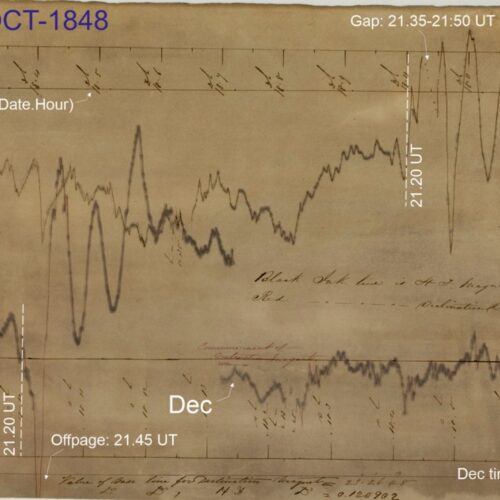
Scientists have clarified a long‑standing mystery about an early space‑weather incident that was thought to have disrupted railway service in Exeter, England, in October 1841. A new study published in the journal Space Weather argues that the 1841 date recorded in an 1871 Nature report is most likely a typographical error, and that the actual rail disturbance occurred several years later.
The original account, uncovered by scholars in 2013, described a “very intense magnetic disturbance” that halted train travel on the southern coast. If the 1841 date were correct, it would represent the earliest known technological impact of space weather, predating the famous Carrington Event of 1859, which famously knocked out telegraph lines across the globe.
Co‑author Jim Wild of Lancaster University explained the study’s implications: “Space weather is often discussed as a modern challenge because of our dependence on technologies such as satellites, communications systems and electricity networks. What this study shows is that society has been experiencing the effects of space weather on technology for almost as long as electrical technologies have existed. The Exeter train delay is a fascinating story because it sits right at the point where emerging technologies first began to encounter the realities of the space environment.”
The Carrington Event remains the most powerful geomagnetic storm on record, producing bright auroras that were visible worldwide and causing sparking, fires and even allowing telegraph operators to send messages using the induced auroral current alone. The telegraph, introduced in the 1830s, was one of the first technologies vulnerable to such solar‑driven disturbances.
By correcting the historical record, the new research underscores that the interaction between solar activity and human technology dates back to the earliest days of electrical infrastructure, offering a broader perspective on the long‑term challenges posed by space weather.
<small>Source: Ars Technica — read the original story there.</small>

