

Dr Robert Puschendorf used his expertise on the tropical rainforests of Costa Rica during the research
- Published
New research has found the Earth has millions more insects species than previously thought.
An international team of experts, including Dr Robert Puschendorf from the University of Plymouth, has estimated a minimum of between 14 and 30 million insect species on the planet - not six million as previously estimated.
The team analysed more than 1.6 million DNA-barcoded insects collected from Área de Conservación Guanacaste (ACG), a renowned UNESCO World Heritage Site in Costa Rica.
Puschendorf said: "Diversity is really hard to quantify, but what this new study shows is that we have completely underestimated the insects."
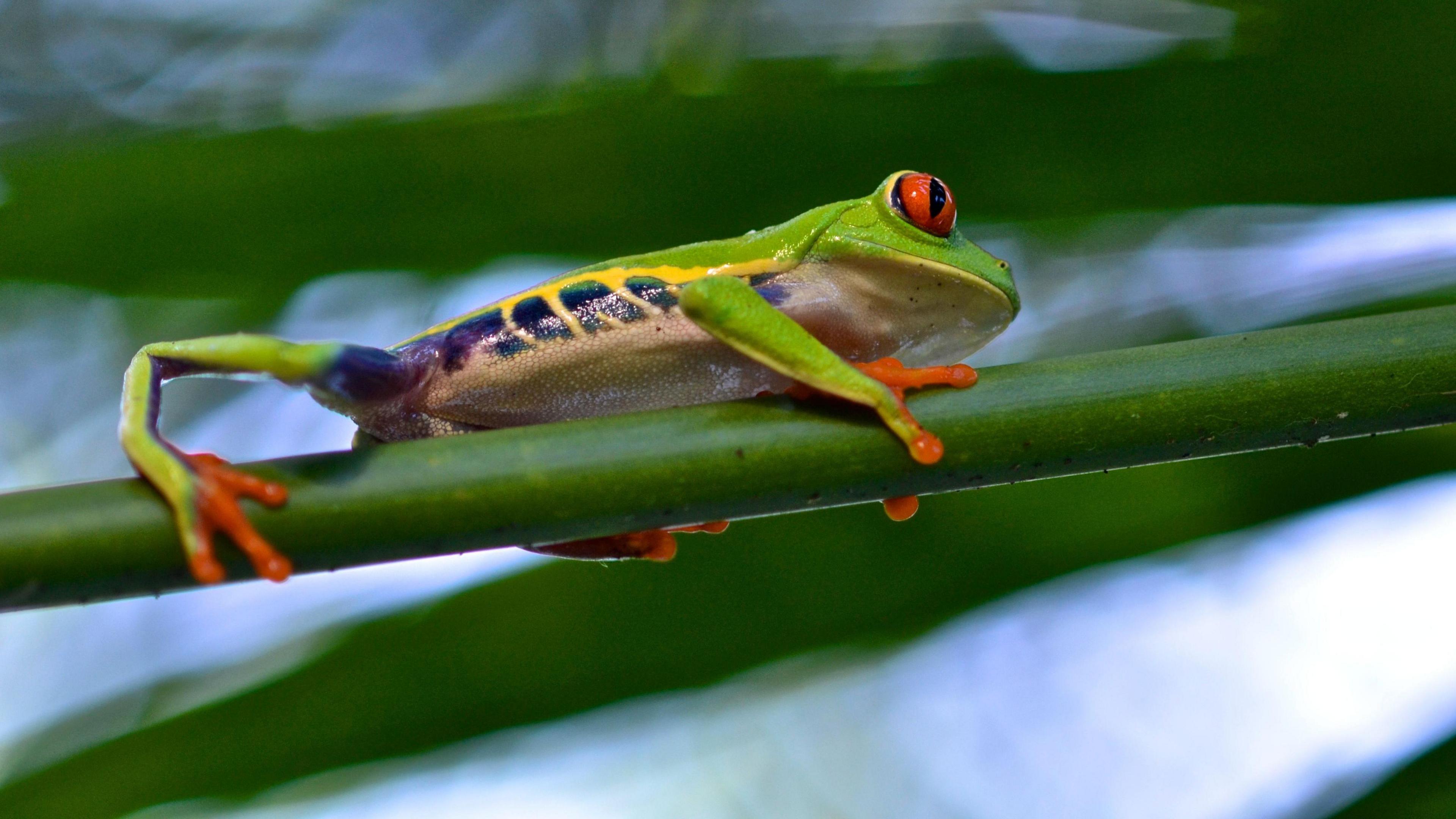
Research has also looked at how the lives of amphibians have changed
For the new study, the associate professor, who is originally from Costa Rica, highlighted how populations of amphibians had changed over recent decades as a result of issues such as climate change and deforestation.
He said there was "always a big debate about how much life exists on our planet".
"The argument we, as conservationists, make is that, if you do not know what you have, how can you manage it?"
"While it [the study] is focused on Costa Rica, a place very close to my heart, these same techniques can be applied anywhere in the world – including here in the UK.
"Only by doing that will we truly understand the species we share our planet with, the species we have already lost and how we can best protect the survivors going forward."
The researchers combined multiple collection techniques, ecological observations, DNA barcoding, and statistics with ACG estimates which were then cross-referenced to multiple different groups, including trees, amphibians and moths.
They found different methods consistently revealed an extremely large number of cryptic species which underscored how much biodiversity remained hidden.
The team's conservative estimate suggested between 93 to 97% of insect species remain nameless.
The research was led by scientists at the University of Cornell, University of Colorado and the University of Kentucky.
<small>Source: BBC Science</small>