• Nigerians say accommodation cost rendering millions homeless • Urban residents relocating to rural areas putting pressure on available houses
By David Onwuchekwa (Nnewi), Okey Sampson (Umuahia), Scholastica Hir (Makurdi), Lateef Dada (Osogbo) and Tony Osauzo (Benin)
Nigerians already weighed down by daily rise in the cost of living, general hardship, insecurity challenges, high increase in school fees and medical bills, among other expenses, now have another knot added to the financial noose tightening around their necks.
They are contending with the skyrocketing cost of residential rent. In some cities, rents are shockingly high. Correspondents in states present situation reports.
ANAMBRA
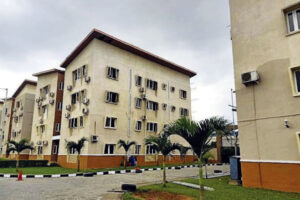
A poster example of the issue of astronomically high rent is the situation in Nnewi, where the Nnamdi Azikiwe Teaching Hospital is located. In one of the private lodges which provide hostel accommodation for students, the son of a Lagos-based family paid N550,000 for just one room. Granted the room has necessary facilities (bathroom with shower tray, water cistern toilet, kitchenette, back balcony, wardrobe and spacious enough to take a four-feet-by-six-feet bed and reading table), his father (identity concealed to protect both father and son) told Sunday Sun: “I was shocked when the estate agent mentioned the rent. I just could not understand the rationale for such high rent. Where I live in Lagos in a private estate, I pay N800,000 in a well finished three bedroom flat with spacious rooms, master bedroom, prepaid meter, two balconies, borehole, gatemen, sweepers, etc. Honestly, it was tough for me, but we had to take it for the sake of my son’s education.”
Rising house rents have become a major concern for residents of Nnewi. Tenants, students, traders and civil servants are struggling to cope with accommodation costs that have risen sharply over the past three years.
Across Otolo, Uruagu, Umudim, Nnewichi and other parts of the industrial town, annual rents have increased significantly since 2023, placing additional pressure on households already grappling with inflation and the high cost of living.
Many residents say the current rent levels are no longer in line with prevailing economic realities, as wages and business incomes have not increased at the same pace.
Apartments that previously attracted between N180,000 and N250,000 annually now cost between N500,000 and N800,000 in many locations, while newly built and well-finished apartments command even higher prices.
Property owners attribute the increases to rising cost of building materials, labour, maintenance, electricity and security. Tenants, however, maintain that the increases have become excessive, especially in view of the prevailing economic situation.
Many landlords also demand one or two years’ rent in advance, making it difficult for many prospective tenants to secure accommodation.
The situation is particularly pronounced around Okofia, Otolo Nnewi, where the Nnewi campus of Nnamdi Azikiwe University is located.
Accommodation costs around the campus have risen considerably, with one lodge apartment now costing between N600,000 and N700,000 per annum, excluding agency fees, caution fees and other charges. The development has made it increasingly difficult for indigent students to secure accommodation close to the campus.
Many students now seek accommodation in more distant communities where rents are relatively lower, while others share rooms with several occupants to reduce costs.
Some students also rely on financial assistance from parents, relatives, religious organisations and friends to remain in school.
Landlord defends lodge rents in Okofia
However, a property owner in the Okofia area of Nnewi, where many students of the Nnewi campus of Nnamdi Azikiwe University reside, Mr Jude Udegbe rejected claims that accommodation costs in the area are excessively high.
Mr Udegbe argued that annual rents of between N400,000 and N550,000 for student lodge apartments are justified, considering the rising cost of maintaining the facilities and providing essential services.
According to him, lodge apartments that charge N550,000 per year offer uninterrupted electricity throughout the year, with landlords spending heavily on diesel daily to power generators in line with their rental agreements with tenants.
“Those who do not provide electricity rent their apartments for about N400,000 per annum. So, charging between N400,000 and N550,000 is not excessive when you consider the cost of running the lodges,” he said.
Udegbe explained that many landlords make little or no profit after paying for diesel and carrying out routine maintenance, adding that the country’s economic realities have made property development and management far more expensive.
He noted that the soaring prices of building materials, especially cement, have made it difficult for prospective investors to construct new houses.
“When the economy was stable, cement prices remained the same for a long time, making it easy to prepare a realistic building budget. Today, cement may sell for N10,000 and rise to N12,000 tomorrow. The constant fluctuations make planning almost impossible, and many people can no longer afford to build new houses,” he said.
The landlord further argued that accommodation costs in the wider Nnewi area reflect prevailing market realities, claiming that a self-contained apartment in some parts of the town now rents for as much as N600,000 annually.
“In areas with high demand for student accommodation, the pressure is even greater,” he added.
He also dismissed the argument that landlords should keep rents low because housing is a long-term investment, insisting that maintenance costs have risen sharply.
“If a house develops a leaking roof today, the rent collected for an entire year may not be enough to replace the roofing sheets. You can only understand this if you are a landlord,” he said.
Udegbe added that rents for residential apartments in Nnewi vary depending on the age and location of the property. According to him, while some tenants pay as much as N1.5 million annually for a two-bedroom apartment, others pay N1 million or as low as N300,000 for older buildings whose owners may have long recovered their investment.
He maintained that the current rental rates are driven more by rising operating and maintenance costs than by profiteering on the part of landlords.
Families’ coping strategies
High rents have also affected family living arrangements. Some families now share flats with relatives to reduce accommodation expenses, while young couples increasingly remain in their parents’ homes because they cannot afford independent accommodation.
In some cases, friends and colleagues jointly rent apartments to spread the financial burden. Residents say these arrangements have become more common as housing costs continue to rise.
Many residents have adjusted their spending patterns to meet rising accommodation costs. Some have relocated to older buildings with lower rents, while others have moved farther away from the commercial centre in search of more affordable housing.
Many households now devote a larger proportion of their annual income to rent, leaving less money for education, healthcare, transportation and other basic needs. Some workers rely on cooperative societies, loans and personal savings to pay annual rents.
The increase in rent has encouraged many residents to relocate from the urban centre to neighbouring communities where accommodation is relatively cheaper. Although the move reduces housing costs, it often results in higher transportation expenses and longer commuting times. Estate observers say demand for accommodation in communities surrounding Nnewi has increased as more residents search for affordable alternatives.
As Sunday Sun learnt from residents and property agents, rents have generally increased by 50 and over 150 per cent in many parts of Nnewi since 2023, depending on location and the type of accommodation.
Areas close to commercial centres, markets and educational institutions have recorded some of the highest increases because of sustained demand.
The continuous rise in accommodation costs has widened the gap between household incomes and housing expenses.
Need for government intervention
Stakeholders believe government intervention is necessary to address the growing housing challenge.
They recommend increased investment in affordable housing, improved access to housing finance, incentives for private developers to build low-cost rental accommodation, expansion of student hostel facilities and improvements in road infrastructure to neighbouring communities.
They also advocate policies that encourage fairness in tenancy agreements while protecting the interests of both landlords and tenants.
With rents continuing to rise and incomes remaining under pressure, many residents believe that improving access to affordable housing will require coordinated efforts by government, private developers and other stakeholders.
The Anambra State government appears to have heard the people’s plea. Governor Charles Soludo alluded to this when he addressed traders at a popular market. He said the state government would look into the issue.
One immediate step is to enact and enforce laws that will check the excesses of exploitative landlords who impose arbitrary rent increases, outrageous agency fees and other unfair charges that place an unbearable burden on tenants.
“Beyond regulation, the government should invest in the development of affordable low-cost housing estates across the state, particularly for low and middle-income earners,” said a senior civil servant in the State Civil Service (who requested not to be named). He added that such projects would not only provide decent accommodation but also help moderate the cost of rent through increased housing supply.
“The state should also explore practical measures to reduce the high cost of building materials. This could include providing incentives for local manufacturers, supporting the production of alternative building materials, reviewing taxes and levies that contribute to rising costs, and encouraging public-private partnerships in the housing sector.
In addition to these, a resident of the town and real estate developer (name withheld) appealed to the state government to simplify land acquisition, improve access to affordable mortgage financing and strengthen urban planning, saying it would go a long way in making home ownership and decent housing more accessible to residents.
Together, these measures would help create a more balanced housing market while protecting citizens from exploitation and ensuring sustainable urban development.
ABIA
Aba, the commercial hub of Abia State, has always been known as a city that accommodates the poor in terms of its liberal economy that allows the rich and the poor to cohabit in a convivial manner. Artisans and the very poor in society can always find a decent house to live in because the rents were very affordable.
For instance in Aba and parts of Umuahia, the two most urbanised areas of the state, those that may be described as the very low in society, the low income earners, used to build their own houses and others live in decent apartments because economic value of land was low and house rents were equally very accommodating.
Aba once used to be known as a city in the South East one could come into empty handed and move on with life without much ado and within a short time might become a landlord.
However, those days have gone with the winds. The economic value of land in most parts of the state has risen beyond the reach of an average income earner, while house rents have astronomically high beyond the reach of the poor.
Take this as an instance, a certain plot of land that could have gone for N250 million some years back, was last year sold for N1b, an increment of over 300 per cent. With the cost of land rising, rents in the city have equally risen and skyrocketed. A two bedroom apartment that used to go for about N360,000 to N400,000, is now between N840,000 and 2miilion, depending on location and the state of the finishing.
The story is the same in Umuahia, where house rent used to be relatively higher than that of Aba. A plot of land in the outskirts of the city which used to be sold for between N8 million and N10 million now sell for between N25m to N30m, a 300 per cent increment.
This high change in house rent is having a telling effect on the people. Some families have started sharing flats, and those who cannot afford to pay even when the flats are shared, are moving to the outskirts of the city where rents are also increasing. Others relocate outright to the rural areas.
The major reason given by landlords for this sharp increase in house rent is the high cost of building materials. A landlord in Umuahia said a bundle of zinc he bought in 2022 for N90,000, is now sold for over N500,000.
According to him, things have gone out of hand in the housing sector that even if the prices of building materials come down without the price of land and other variables coming down, house rents will remain high.
He called on the Federal Government to take a holistic review of its economic policies with a view to reducing the rising cost of goods and services in the country as, according to him, no number of housing units built by the government could solve the problem.
BENUE
Residents of Makurdi, the Benue State capital, have raised concerns over the rising cost of accommodation, describing current house rents as suffocating, unaffordable and far removed from the economic realities facing many households.
Most of the tenants across the city, who spoke to our correspondent, lamented that securing decent accommodation has become increasingly difficult as rents continue to rise amid worsening economic conditions.
For Emmanuel Bem, finding a suitable apartment in Makurdi has become a daunting task. Prospective tenants are often required to pay agents consultation fees each time they inspect a property, only to discover that many of the available houses are below standard despite commanding high rents.
He noted that a single room in Makurdi without a toilet or kitchen now costs between N100,000 and N150,000 annually, while a “self-contained” apartment ranges from N200,000 to N400,000. One bedroom apartments cost between N300,000 and N600,000 while two-bedroom flats can go for as much as N1.5 million depending on location.
“The situation is compounded by landlords’ demands for advance payments,” Bem said, adding that some landlords insist on collecting two years’ rent upfront, a requirement many residents struggle to meet.
He warned that the increasing cost of housing is forcing many people to move to the outskirts of Makurdi and neighbouring rural communities where accommodation is relatively cheaper.
Another resident, Johnson Agada, described the rental market as one that has “skyrocketed” in recent years. According to him, a “self-contained” apartment now goes for between N250,000 and N350,000 annually, while two-bedroom flats range from N350,000 to N500,000 depending on location just as one room is between N96,000 to N170,000.
He explained that while many families are struggling to balance rent payments with school fees, feeding and other household expenses, many other residents now move “from pillar to post” in search of funds just to pay house rent.
He observed that while sharing accommodation has long been common practice among bachelors and spinsters, many families are increasingly relocating to semi-urban communities and developing areas to reduce housing costs.
Others, he added, have been forced to downgrade from flats to smaller room-and-parlour accommodation while landlords have a field day increasing rents almost every other year.
“The government should find a way to reduce the cost of building materials, possibly through price control. The struggle families go through to pay rents, school fees, provide feeding and other stuff has become overwhelming,” he said.
Sharon Elijah, another resident, described rent in Makurdi as “outrageously high” and beyond the reach of many low-income earners.
She urged the government to invest in affordable housing schemes across different parts of the city and introduce policies to regulate landlords and estate agents. According to her, such measures would help ease the burden on struggling residents.
Speaking on how she manages rent payments, Elijah said she saves money throughout the year instead of waiting until her tenancy expires. She revealed that she paid N350,000 for her two-bedroom apartment for nearly a decade before her landlord increased the rent to N500,000 last year.
Despite the increase, she considers herself fortunate, noting that similar apartments now cost between N800,000 and N1.5 million in many parts of Makurdi.
“Not many can afford rent in today’s Makurdi. It’s outrageously high. The government should invest in low income housing, which should spread across different locations of the city, and adopt necessary policies to check landlords and agents.
On the issue of relocation, Elijah confirmed that some residents are leaving the city for nearby villages where accommodation is cheaper, although rents in those communities are also rising. She cited the example of a former neighbour who relocated from Makurdi to his hometown in Otukpa after he could no longer afford rent in the state capital.
Mr Terma Agbir who resides in the High Level area of Makurd shared her experience: “It’s outrageously high. It’s tough, considering that the minimum wage is nothing to write home about. In the last three years, the rent has gone from N250,000 toN300,000 to N450,0000 currently.
Charles Ude, also resident in Makurdi, said the increase in house rent in Makurdi Metropolis is very high. He noted that Benue is essentially a civil service state, where there are no big industries that can generate revenue for people.
“Yet the rent has gone to a very high level that a lot of people are complaining while the income is far less than the expenditure level.
Ude urged the government to prioritise building of housing estates to curtail the trend, regulate rent by enacting or enforcing tenancy laws to checkmate the exploitative practices by landlords.
“To address housing deficits, the government should provide access to housing finance where people can get some funds to erect their own structures,” Ude said.
He noted that a lot of people have developed what he described as a “pay drift culture” which restricts them from extravagant spending on things that are not needed saying “this culture ensures that we save more money to address the rent and other challenges.”
He also disclosed that people are relocating to rural areas from the urban centres in order to have some relief in terms of reducing their expenditure. He said, “I know some family members who have taken their children to stay with their grandparents in the villages while they return to face the hardship in town.
“The changes in the price of house rent since 2023 have been very unaccommodating. A landlord will not do any renovation work on his or her property for a period of five to 10 years but will go ahead to increase rent by 100 per cent, so it has not been funny,” he said.
OSUN
In Osun State, particularly the state capital, there is lamentation over the very rent despite prevailing economic realities.
For many families, even a modest rented apartment is no longer affordable. As a result, many have resorted to “face me, face you” arrangements—contributing to a rise in rent for ordinary room-and-parlour residential buildings.
Although the state government pays N70,000 as minimum wage, it has reportedly become difficult for some civil servants to secure a befitting two-bedroom flat for their families.
Many tenants now find it hard to secure accommodation without the involvement of house agents. This reliance has, in turn, complicated the rent market and driven prices even higher. With rising unemployment, some graduates have also taken up work as house agents due to the lack of jobs.
In areas mainly populated by students, the rent for a self-contained room is said to range between N250,000 and N500,000 per annum, depending on the available facilities. In the city proper, a two-bedroom flat reportedly costs between N350,000 and N1.2 million, depending on the location and amenities. Even an ordinary room is said to range from N60,000 to N120,000 per year.
Some residents who were able to buy one plot of land or even a half plot have reportedly left the urban centres, especially after they have strived to complete roofing their houses and plastered the walls and fixed the windows. They move into them even without painting, to escape paying fresh rents. Others first of all build a small flat (boys quarters) and move into it.
However, even with this shift, transportation costs mean some people still remain in urban areas and continue to struggle to meet rental obligations.
Civil society groups and residents in Osogbo have protested what they describe as exploitative and fraudulent practices by house agents and caretakers. They urged the state government to regulate the activities of agents, arguing that while building materials may be expensive, agents’ high demands are excessive and must be checked.
Some youth corps members also claimed that they shared a three-bedroom flat for which they reportedly paid N900,000, with each of the three young men contributing N300,000 due to agent-related fees.
Findings showed that the Majority Leader of the Osun State House of Assembly, Hon. Kofoworola Babajide, proposed a bill to regulate real estate agency practice in the state.
The bill, according to reports, includes provisions to sanction unlicensed estate agency practitioners, establish monitoring teams for compliance, conduct inspections, investigate complaints and petitions against licensed estate agents, and compile data on property transactions.
Though the bill has been passed by the House of Assembly and assented by Governor Ademola Adeleke, people of the state are still waiting for the bill to take effect.
EDO
People in Benin City, the capital of Edo State are similarly feeling the heat of astronomical increase in rent. Rents on the popular one-room self-contained apartment just like the two-bedroom and three-bedroom apartments have all shot up like Elon Musk’s rockets with costs averaging N250,000; N500,000 and N700,000, respectively per annum in the densely populated part of the city whereas in the Government Reservation Area (GRA), the cost of the same type of accommodation is as much as N400,000; N1.2 million and N1.7million, respectively, per annum.
The increase in the cost of renting houses though has been attributed to more people chasing the few available houses. Again, the high cost of building materials in the last few years has accounted for the high rise in the cost of accommodation.
Unable to afford the steep rise in accommodation cost, many people are relocating to far flung suburbs of the city where they can find relatively cheaper accommodation while many, especially those who have lost their jobs and retired workers who cannot afford the high rents, are returning to their communities.
The solution to the issue of high cost of accommodation, Sunday Sun gathered from interactions with stakeholders, lies in governments at all levels investing in massive housing programmes, not the cosmetic or symbolic housing programmes the governments often embark on.
The post Outcry over skyrocketing house rent appeared first on The Sun Nigeria.
<small>Source: The Sun Nigeria — read the original story there.</small>
