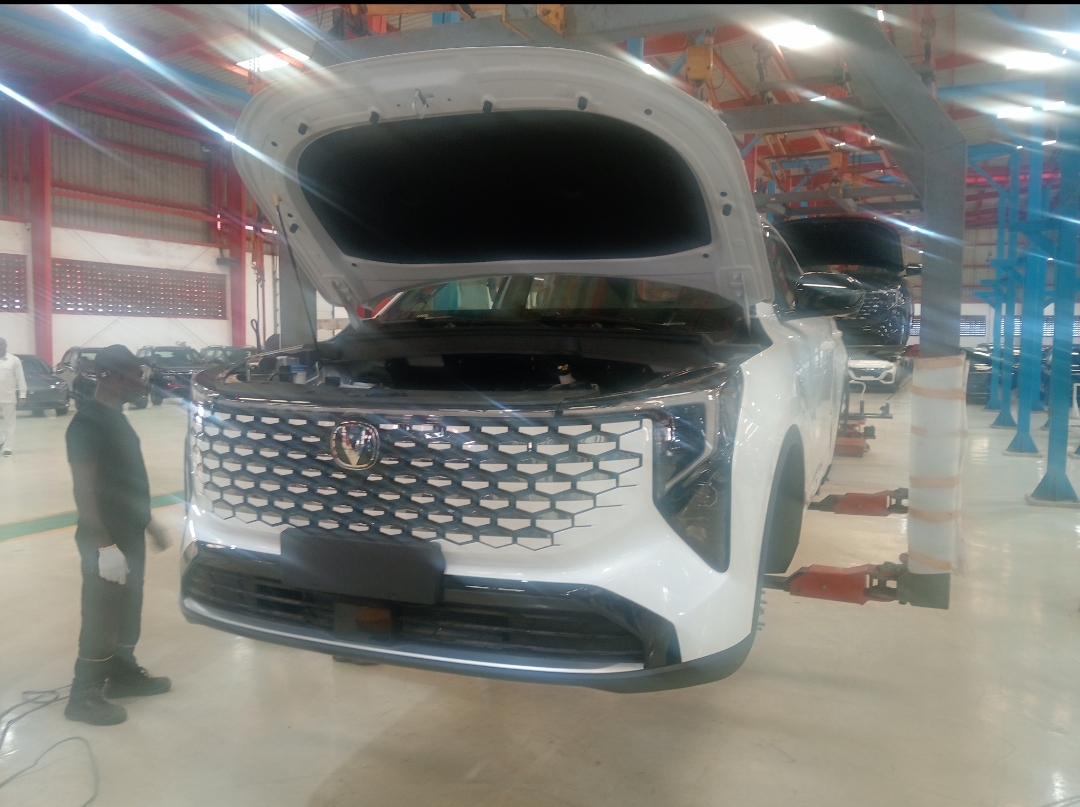
Mikano Motors, one of Nigeria’s fastest‑growing auto assemblers, said it intends to move from its current Semi‑Knocked Down (SKD) operations to a deeper, more technologically demanding Complete Knocked Down (CKD) manufacturing model. The announcement was made during an oversight visit by the National Automotive Design and Development Council (NADDC) to the company’s plant on the Lagos‑Ibadan Expressway in Warewa, on the outskirts of Lagos.
National Operations Manager Syam Abdulkadir told the visitors that Mikano can assemble between 15,000 and 20,000 vehicles a year, yet actual market demand falls short of that capacity. “We have 100 per cent capacity to meet the demands of consumers. One of the reasons is because we are engaged in consistent production daily,” he said, adding that the main constraint is inadequate patronage caused by economic challenges affecting many sectors.
Abdulkadir explained that the shift to CKD will give the company a larger production capacity and enable it to supply more vehicles to customers. “Right now, we have an SKD assembly plant. In the near future, we plan to do CKD. Once we have CKD, we will have a larger capacity to produce more vehicles for our customers,” he said.
To boost affordability and stimulate demand, Mikano is offering vehicle financing and a trade‑in scheme. The company can take back customers’ older vehicles, using the existing service and warranty histories to sell them in the used‑vehicle market. “We offer our own used vehicles… we are able to take that vehicle back… with the history of the vehicle, service history, the warranty and others. With this, we are able to sell to somebody who is looking for more affordable vehicles,” Abdulkadir explained.
Local content remains a priority. Mikano had previously manufactured high‑quality brake pads locally but had to stop production because imported alternatives were sold at about N2,400 compared with the N10,000 price of the locally made pads. “We will be more into local content production beyond the brake pads with future support,” Abdulkadir said.
During the visit, NADDC Director‑General Otunba Oluwemimo Joseph Osanipin highlighted the competitive pressure on local component makers, citing the brake‑pad example. He said the experience would inform the council’s work on an automotive industry bill and that measures to create a sustainable operating environment for local manufacturers were under consideration.
Chairman of the NADDC Governing Board, Chief Emma Eneukwu, praised the plant’s predominantly Nigerian workforce and called for stronger policy support for locally manufactured components and vehicles. He urged regulation of used‑vehicle imports, including age limits, to protect domestic assembly plants and said the board would use the information gathered to intensify efforts toward an automotive industry law that would provide a predictable policy framework for investment and local content development.
<small>Source: The Sun Nigeria — read the original story there.</small>