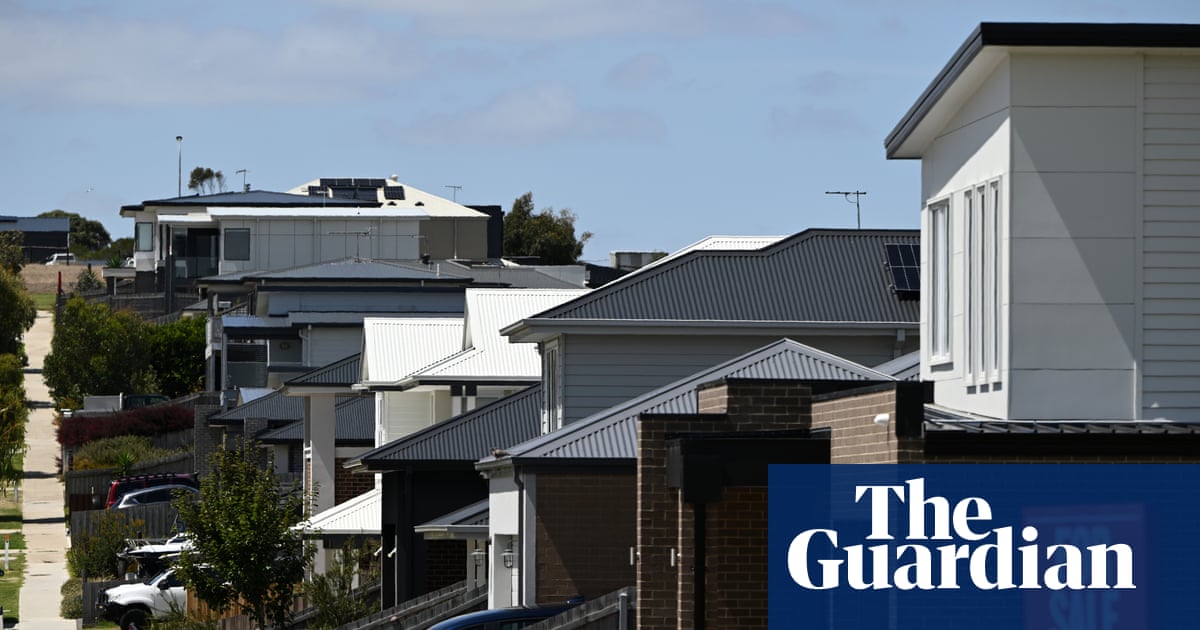
Fears that first-time buyers with tiny deposits will find their mortgages are worth more than their homes may be assuaged by new data showing falling prices are concentrated in the top end of the Sydney and Melbourne property markets.
Climbing inflation, interest rates and worries about the economic fallout from the Middle East conflict have helped
depress housing values in the country’s two biggest cities.
CBA economists caused a stir early this month when they
predicted values in 2026 would eventually fall by 6% to 7% in Sydney and Melbourne.
Australia’s
affordability crisis means first home buyers often borrow at the very limit of their capacities. It takes more than a decade to save a 20% deposit on a median home in Sydney, and new entrants typically find ways to buy with a smaller deposit (like the bank of mum and dad).
And since home prices began falling in Sydney and Melbourne, there have been concerns for potentially tens of thousands of first-home buyers who - often with the help of the government’s 5% guarantee scheme - may soon find they now owe more on the house than it is worth.
A series of Liberal MPs and senators have been quick to raise the alarm for young Australians who, in the words of Liberal MP
Andrew Hastie, “are leveraged up to their eyeballs” and are now “looking down the barrel of negative equity”.
Gerard Burg, Cotality’s head of research, played down these fears.
“It’s always difficult to know where first home buyers are making a purchase, but we do know that it’s most likely to be in the bottom 25% of the market, just from an affordability perspective,” Burg said.
Chart showing quarterly changes in dwelling prices in Sydney split by the bottom 25%, middle 50% and top 25% (in terms of price). The chart peaked in late 2025 and is now on a downward trend.
“This is evident in both Sydney and Melbourne, where [the cheapest] dwelling values in the three months to May were up 0.4% in Sydney and down 0.2% in Melbourne, considerably stronger than the trends for either the upper quartile or middle of the market.”
Burg said it was still possible that some recent purchasers may be in a situation where the value of their home is now worth less than their house, particularly if they had bought at close to the recently lifted $1.5m Sydney price cap under the 5% guarantee scheme.
“If we see a downturn similar to larger ones we have seen in the past, there is the risk that some buyers who bought at the peak of the market on the 5% deposit scheme could find themselves in negative equity.
“The question is how much of a risk is it? A lot of people talk about it as a large existential crisis with huge impacts. But it’s only a huge problem if you are forced to sell.”
A similar chart as above, but for Melbourne house prices. Prices also peaked in late 2025.
Burg said: “I certainly wouldn’t suggest it [negative equity] is a pleasant experience, and it would put you in a personal distress. But homeowners who have jobs should be able to withstand a period of negative equity, knowing that history suggests the downturn will be relatively short.”
Angus Moore, a senior economist at REA Group, agreed that the price falls have so far been experienced in the more expensive suburbs such as those Sydney and Melbourne’s eastern suburbs - not typical hunting grounds for first-time buyers.
While affordability concerns would likely support demand for lower-end properties, Moore said it was possible that the changes to CGT and negative gearing proposed in the recent budget could mean fewer bargain-hunting investors and weigh further on prices.
“A more important reason to think about negative equity is that it can limit people’s options,” Moore said.
“When people are having difficulty with their mortgages, that’s when you can run into trouble. Refinancing or selling and moving becomes harder when you’re in negative equity.
“The good news is that unemployment is very low and arrears rates remain quite low. Which means the risk of people being unable to pay their mortgage is not that high.”
<small>Source: The Guardian</small>