Iran says it has halted attacks on Israel after first exchange of fire since truce

Iran's armed forces say they have halted military operations against Israel, after the two countries exchanged strikes for the first time since April's ceasefire.
The Khatam ol‑Anbiya command said Iran had delivered a "painful response" to Israel and warned it against continued attacks, including in southern Lebanon, where Israeli forces are fighting the Iranian-backed group Hezbollah.
An Israeli official told Channel 12 that Israel had halted strikes on Iran at the US president's request, but that attacks on southern Lebanon would continue.
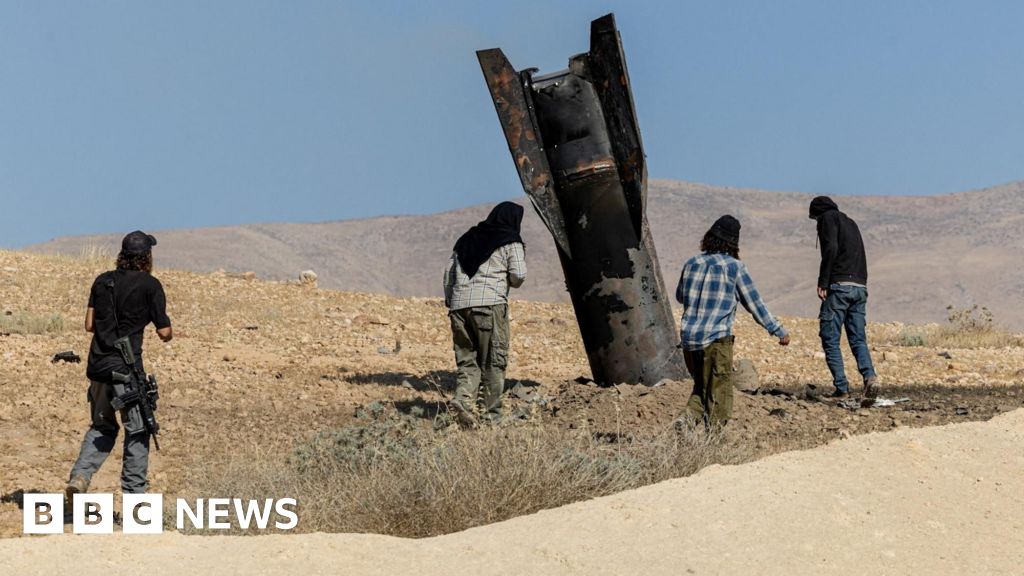
Iran launched about 30 missiles at Israel in retaliation for a strike in Beirut on Sunday. Israel responded by conducting two waves of air strikes in Iran.
US President Donald Trump told both countries on Monday to "immediately stop 'shooting'" because they were jeopardising negotiations on a deal to end the regional war.
"Israel and Iran... are looking to do an immediate CEASEFIRE! Final negotiations on 'Peace' are proceeding, subject to ignorance or stupidity getting in its way," he wrote on Truth Social.
The White House confirmed to the BBC that Trump called Netanyahu to discuss the crisis.
The war began on 28 February, when Israel and the US launched a joint attack on Iran, killing Supreme Leader Ayatollah Ali Khamenei and several other top officials.
The hostilities spread quickly across the Middle East, as Iran retaliated by launching missiles and drones at Israel and Gulf Arab states hosting US military facilities. Iran also effectively blocked the crucial Strait of Hormuz waterway, causing a surge in the price of oil.
Pakistan brokered a ceasefire that began on 7 April to facilitate negotiations on a comprehensive deal to end the war, but there have been sporadic US air strikes on Iran and Iranian drone and missile attacks on neighbouring states since then.
Lebanon was drawn into the conflict on 2 March, when Hezbollah launched rockets into Israel in retaliation for Khamenei's assassination. Israel responded with air strikes across Lebanon and a ground invasion of a significant part of the country's south.
The fighting continued after the US-brokered a ceasefire deal between the Israeli and Lebanese governments on 16 April. But in recent weeks, the US has been pressing Israel to scale back its campaign to allow room for a wider deal with Iran, which has demanded that it also cover the conflict in Lebanon.
Although Israel has insisted its war against Hezbollah is separate, it has limited its strikes on Beirut's southern suburbs - a stronghold of Hezbollah also known as Dahieh.
Last Wednesday, Israel and Lebanon agreed to renew their ceasefire and create a number of "pilot" security zones inside Lebanon in which Hezbollah operatives would be banned.
But Hezbollah rejected the deal, demanding a full Israeli withdrawal. Israel meanwhile said military operations would continue in southern Lebanon and threatened to strike Beirut if Hezbollah continued to attack communities in northern Israel.
On Sunday morning, the Israel Defense Forces (IDF) said its defences intercepted two projectiles launched from Lebanon into Israeli territory, which Hezbollah said had targeted Israeli artillery and troops over the border.
A few hours later, the IDF announced that it struck a Hezbollah command centre in Dahieh in response. Lebanon's health ministry said two people were killed and 20 injured.
Late on Sunday, Iran's top military commander accused Israel of "crossing all red lines" with the Beirut strike and warned of a "devastating" response.
Soon afterwards, the Islamic Revolution Guard Corps (IRGC) announced that it had launched ballistic missiles at targets in northern Israel, including Ramat David airbase, near Nazareth.
"Tonight's operation was a warning. If aggressions are repeated, the responses will be broader," it warned.
The IDF said two barrages of missiles were detected and intercepted.
Iran's parliamentary speaker and chief negotiator, Mohammad Bagher Ghalibaf, wrote on X that Israeli and US assets were "legitimate targets" because of hostile acts, including the "violation of agreements over Lebanon".
In the early hours of Monday, the IDF said dozens of its aircraft had struck military targets in western and central Iran in retaliation. It later identified them as aerial defence systems that had been deployed since the start of the ceasefire.
Iranian state media reported explosions in Tehran, Isfahan, Najafabad and Tabriz.
"The Iranian terror regime once again chose terrorism and is attempting to create a new equation," IDF spokesman Brig Gen Effie Defrin said on Monday.
According to the US news outlet Axios, the Israeli strikes were carried out despite Prime Minister Netanyahu being told not to retaliate by President Trump, who was already angry that his warnings not to attack Beirut had been ignored.
It cited a senior US official as saying that Trump told Netanyahu to hold off from striking Iran because "we are close to doing something good in terms of a deal".
Earlier,
he reportedly told the Financial Times that the Israeli prime minister would have to accept any deal that the US secures with Iran because he "won't have any choice". "I call all the shots. He doesn't call the shots," he was quoted as saying.
The Israeli ambassador to the US, Yechiel Leiter, wrote on X: "No self-respecting country in the world would tolerate such an attack, and neither will Israel."
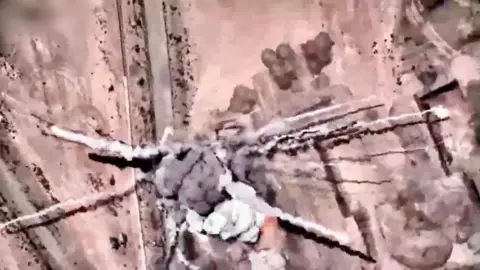
On Monday morning, Iran launched more missiles towards Jerusalem and central and southern Israel, according to Israeli authorities.
Israeli media reported that damage was caused to four buildings in an outpost near the Israeli settlement of Itamar, in the north of the occupied West Bank, as a result of a missile interception.
The IDF meanwhile said a second wave of air strikes targeted a petrochemical complex in the south-western Iranian city of Mahshahr, where an Israeli military official said chemicals used for ballistic missiles were being produced.
Iranian media reported that parts of the Karun Petrochemical Company's plant were damaged.
Yemen's Houthis, another ally of Iran, also announced a missile attack on Israel on Monday and declared a "total ban on Israeli maritime navigation" in the Red Sea.
The Israeli military official said two launches from Yemen were detected and that one of the missiles fell short before reaching Israel.
The Houthis joined the regional war in support of Iran in March but had not claimed a missile attack on Israel since the ceasefire began.
At least 3,468 people have been killed in Iran during the war, according to the country's Martyrs Foundation. Iran's Human Rights Activists News Agency (HRANA) has put the death toll from US and Israeli attacks at 3,636, including 1,701 civilians.
Another 3,613 people have been killed in Israeli attacks on Lebanon, the country's health ministry says. Its figures do not differentiate between combatants and civilians.
Israeli authorities say 20 civilians have been killed in Iranian missile attacks in Israel, while four Palestinians have been killed in the occupied West Bank. Thirty Israeli soldiers and four civilians have been killed on both sides of the Israel-Lebanon border during the fighting with Hezbollah.
Another 29 people have been killed in Iranian attacks on Bahrain, Kuwait, Qatar, Saudi Arabia and the United Arab Emirates, according to local authorities.
Thirteen US service members have been killed, seven of them in Iranian attacks in the Gulf.
<small>Source: BBC News</small>