Ghana is hosting a conference to advance the continent’s push for reparatory justice after the
adoption of the landmark United Nations (UN) resolution declaring the trafficking of enslaved Africans as the gravest crime against humanity.
Heads of state and government, ministers, civil society representatives, historians, researchers and legal experts representing more than 80 countries are converging in the capital, Accra, for the three-day event, billed
Next Steps, which starts on Wednesday. It is the first major gathering on the issue since the resolution was adopted.
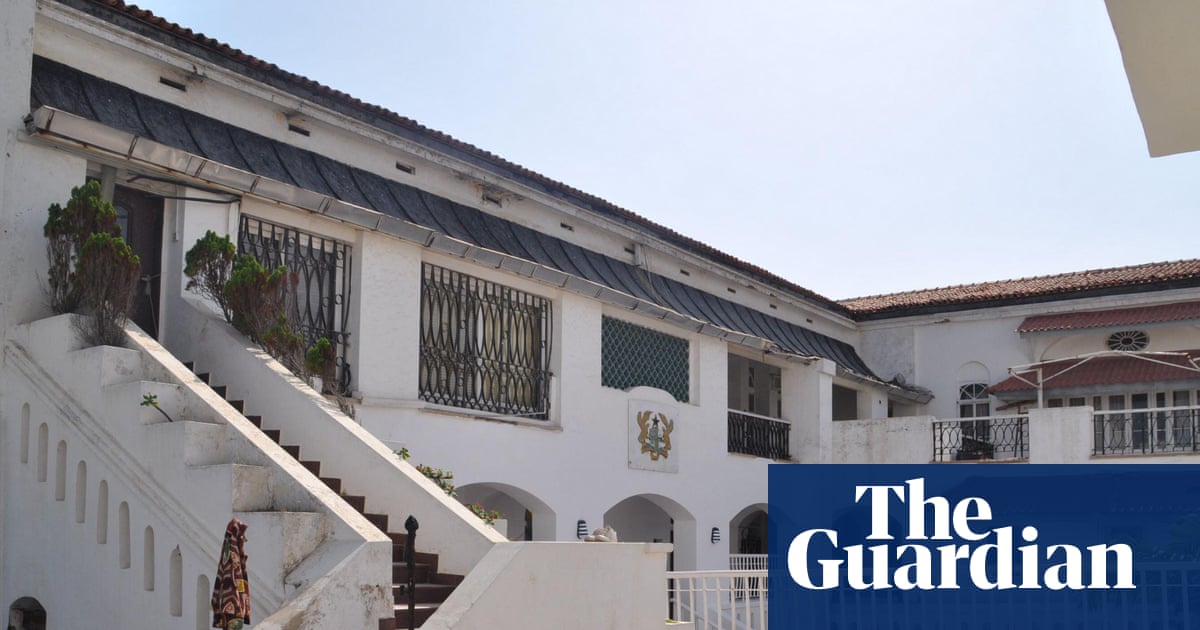
The conference will feature an event on 19 June at Osu Castle - a 17th-century fortress in the capital built by the Danish that served as a hub for the transatlantic slave trade - to honour Juneteenth, which marks the end of slavery in the US.
Expected speakers include the African Union commission chair, Mahamoud Ali Youssouf, prime minister Mia Mottley of Barbados and presidents John Mahama, Joseph Boakai, Netumbo Nandi-Ndaitwah, Bassirou Diomaye Faye and Emmanuel Macron of Ghana, Liberia, Namibia, Senegal and France, respectively.
Participants are engaging in dialogue around five objectives – including formulating a framework to advance the resolution’s objectives globally and establishing global panels on reparatory justice and restitution – to “transform political momentum into a common concrete institutional commitment for reparatory justice”,
organisers say.
The conference comes nearly three months after the UN general assembly
voted to adopt a proposal by Ghana on behalf of AU member states to recognise the trafficking of enslaved Africans and the racialised chattel enslavement of people from the continent as the gravest crime against humanity.
A total of 123 states voted in favour of the proposal while three – the US, Israel and Argentina – voted against it and 52, including the UK and all EU member states, abstained.
The transatlantic slave trade lasted about 400 years – from the early 16th century to the late 19th century.
Many previous initiatives by African countries to redress decades of injustices, such as the forced enslavement of their people, had been largely fragmented. The resolution marked a watershed moment for the continent’s campaign for reparative justice, after efforts including
the Abuja Proclamation of 1993 that demanded reparations for colonialism and the transatlantic slave trade and helped lay the groundwork for the campaign.
Ghana
says in its concept note for the conference: “This [resolution] represents a fundamental departure from the international community’s response to the transatlantic slave trade, replacing commemorative gestures with the pursuit of historical truth and dialogue, aimed at reconciliation and justice.”
The decision recognises that the legacies of enslavement continue today and calls for UN member states to have “inclusive, good-faith dialogue” on reparatory justice and “prompt and unhindered” restitution of cultural and other properties that are of value to their countries of origin.
The Accra conference seeks to expand on the UN success by deliberating on mechanisms to turn the resolution’s potential into actionable commitments.
The decision has had some knock-on effects. Last month, Macron
called for France to address its role in the enslavement of Africans, notably using the term “reparations”, which previous French heads of state have avoided. Also last month, Pope Leo XIV made a historic apology for the Vatican’s role in legitimising slavery and for its delay in condemning the practice.
Kyeretwie Osei, the head of programmes at the Economic, Social and Cultural Council, the AU’s civil society policy organ, said the global discourse on reparatory justice was gathering momentum and at its most promising, adding that the conference offered an opportunity “to leverage this particular moment”.
“There is this slow but really substantive movement towards some sort of global reckoning on this issue,” he said. “This conference is really going to allow Africa to ensure that it has the structures that would be necessary [and] the political will that we’ve seen to be properly leveraged and channelled to ensure that we are able to best give practical meaning to this particular point in time.”
The conference has representatives from outside Africa, the Community of Latin American and Caribbean States, the Caricom Reparations Commission, the Congressional Black Caucus and the National Association for the Advancement of Coloured People.
Liliane Umubyeyi, the co-founder and executive director of African Futures Lab, a nonprofit that works to raise awareness of racial injustices, said the event presented an opportunity for the reparative justice movement to become a broader coalition involving other countries outside Africa and the Caribbean, another region with a growing reparations movement.
“This would significantly accelerate the reparations agenda, especially if other international institutions that have previously been hesitant to engage with the issue begin to do so,” she added.
The Guardian’s connections to enslavement: can an institution atone for its history?
On Thursday 2 July, join Maya Wolfe-Robinson, Ebony Riddell Bamber, Prof Verene A Shepherd and Ahmad Ward in
this free event for a wide-ranging discussion on the Guardian’s Legacies of Enslavement programme. Book tickets here or at guardian.live
<small>Source: The Guardian</small>