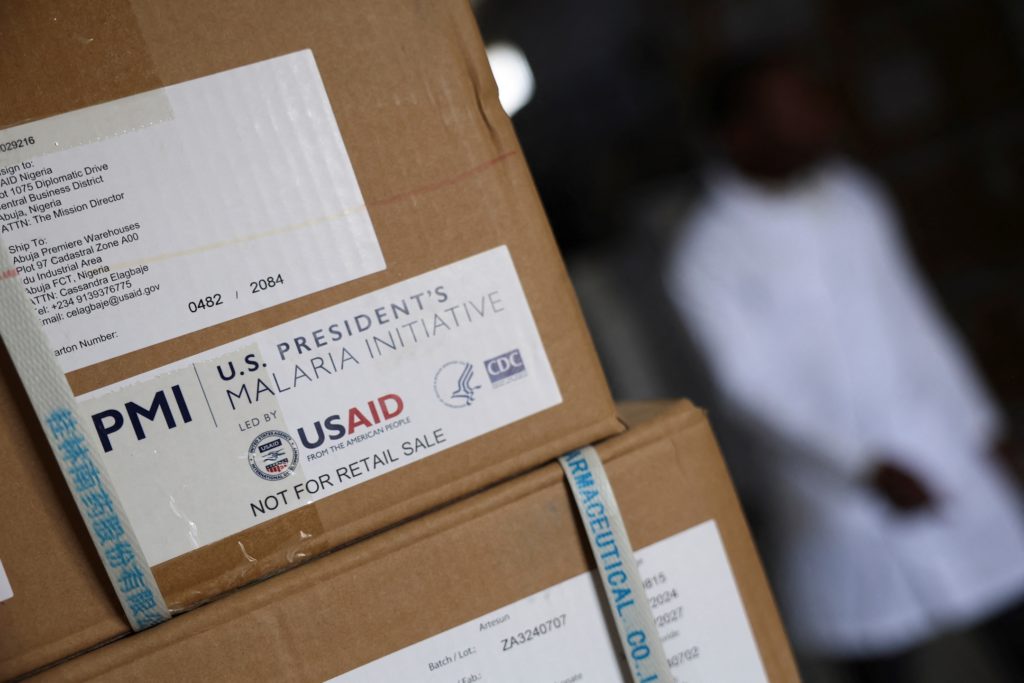
Wednesday marks one year since the Trump administration dissolved the United States Agency for International Development as an independent agency. USAID was a central tool of American foreign policy, delivering humanitarian aid, fighting disease, responding to disasters and advancing U.S. interests. Geoff Bennett discussed more with Samantha Power, the last confirmed administrator of USAID. Geoff Bennett: Today marks one year since the Trump administration dissolved the United States Agency for International Development, or USAID, as an independent agency, folding what remained of its foreign assistance work into the U.S. State Department. For more than six decades, USAID was a central tool of American foreign policy, delivering humanitarian aid, fighting disease, responding to disasters, and advancing U.S. interests around the world. The administration called the move a necessary overhaul. Critics called it the dismantling of one of America's most important instruments of global influence. For perspective, we are joined now by Samantha Power, the last confirmed administrator of USAID under former President Biden. She previously served as the U.S. ambassador to the U.N. during the Obama presidency. Ambassador Power, welcome to the "News Hour." Samantha Power, Former USAID Administrator: Thank you for having me. Geoff Bennett: You have said the dismantling of USAID amounts to soft power suicide. A year later, where do you see the clearest consequences, not just in fewer aid programs, but in diminished American leverage and influence? Samantha Power: "The Lancet" estimated that 14 million people would die, including 4.5 million kids under 5, by 2030. It is hard to quantify day by day the deaths that are ensuing, but Boston University ran a tracker and documented 800,000 deaths by February of this year. So people are dying because they don't have access to medicine, they don't have access to clean water. The cuts were done not on a glide path, as one would do if one had conducted a reasonable review of programming, but it was a cliff. And by cutting off resources on a cliff, you do the most human harm possible. The cost to the 15,000 people who worked at USAID, patriots, public servants, people who volunteered to serve most often in crisis zones, whether war zones, the scenes of natural disasters, really difficult living environments, they did so because they were motivated by just the cause of trying to help vulnerable people and advance U.S. interests in so doing. And they were escorted out often by security guards, given 10 minutes, 15 minutes to pack up their offices. But this just -- it's like taking away one of the great brands that America has ever projected into the world, created by John F. Kennedy, like a Nike, a Coca-Cola, something that really engendered respect and influence all around the world, and destroying that why? In just almost a fit of absent-mindedness, without any thoughtfulness, without any previous ideological axe to grind. Geoff Bennett: Critics on the right, as you know, say the agency was bloated, that it was slow, that it was captured by contractors who absorbed a large share of every dollar before it ever reached anyone in need. Looking back, is there a version of reform that you would have supported, or was the agency's scale important in and of itself? Samantha Power: Marco Rubio has said that U.S. assistance needs to move at the speed of relevance, and that is one of the few things in the context of discussions about foreign assistance that I agree with Marco Rubio on. It absolutely should move at the speed of relevance. And I also think what the Trump administration is doing, which is moving more money through governments, that is something we also began to push really hard on under President Biden. What was hard were a set of congressional requirements, compliance requirements that were very well intended, but that added up over the years to ensure that these resources went exactly where Congress and USAID intended them to go. And what that meant was a ton of red tape, a ton of red tape that actually slowed down USAID's ability to move money from Washington out to the field and actually created distance between some of the incredible public servants who did this work and the communities that they came to USAID to serve. So I think that could easily be cleaned up, and you could see a kind of risk management approach embraced, rather than a risk-avoidance approach, which is impossible in war zones and places like that. Geoff Bennett: Well, as the U.S. retreats, who gains? Do you see a China or a Russia, for instance, trying to convert America's withdrawal from the -- from the world stage into a geopolitical advantage? Samantha Power: No question that authoritarian actors benefit. When you commit soft power suicide, who is going to be the biggest beneficiary? Of course, your largest geostrategic competitor, and that is China. So when the United States is pulling the rug out from public health programming, it's not as if China's coming in and saying, here's some malaria bed nets for your people. Look, we can run this programming too. That's not their thing. They are not about giving grants and doing significant humanitarian work in the world, but they are about using their media platforms to amplify the deaths and the harms caused by the United States closing down these programs in such an abrupt and deadly manner. Geoff Bennett: Has this experience changed how you would make the case for foreign aid, less as moral obligation and more as hard-nosed self-interest? Samantha Power: Well, I have long made the case in both ways, because -- not to cater to any particular audience, but because I think both things are true. It's an amazing thing for Americans to know that, for the equivalent of $10 a month for each of them, we are saving, the United States was saving three million lives a year. It's an incredible thing for them to know that 92 million lives were saved between 2001 and 2021 because of the work USAID did in the world. And that's not propaganda. That's a peer-reviewed academic study that shows the good the taxpayer resources did. At the same time, I think Americans know intuitively that American farmers, who are not having an easy time of it these days for a whole set of reasons, tariffs, climate change, the works, it matters a lot when USAID buys $2 billion worth of American farm commodities, wheat and corn, and uses it to feed really hungry people around the world. It matters a lot when the United States and the USAID is contributing to growing middle classes in many developing nations, middle classes that will then buy American products and services. And it matters a huge amount when we think, especially in the wake of COVID, the fact that we had this crack outbreak response infrastructure built that the taxpayers had invested in over so many years, and that we had gotten so good at smothering these outbreaks before they became pandemics, and that we would destroy that, again, it's an own goal of epic proportions. Geoff Bennett: Ambassador Samantha Power, thank you for joining us this evening. We appreciate it. Samantha Power: Thank you so much.
<small>Source: PBS NewsHour</small>