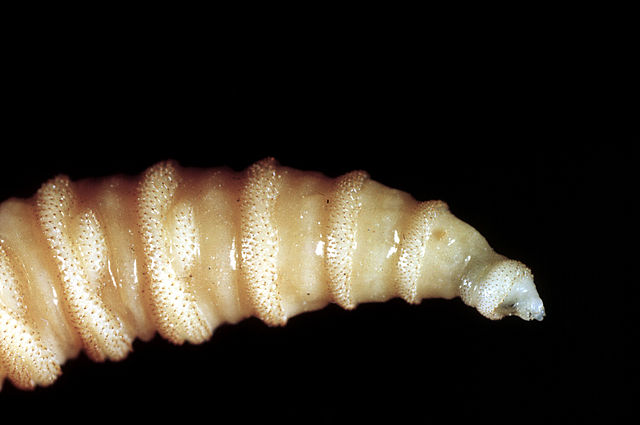
A case of New World screwworm has been reported in South Texas. If confirmed, it would be the first detected breach of the US-Mexico border by the
ravenous flesh-eating flies, which have been making their way up through Central America for the past several years.
In
a social media post Wednesday afternoon, the US Department of Agriculture said a “sample is now at USDA’s National Veterinary Services Laboratories (NVSL) in Ames, lowa for confirmatory testing. We will provide updates the moment results are available.” It added that “We have already activated personnel on the ground and are working with local partners.”
Chatter of a screwworm detection had already been building this week, rattling the US cattle industry.
Although many animals, including humans, can be victims of the parasite, the screwworm is especially dangerous to livestock. Female screwworms lay hundreds of eggs in the wounds and openings of warm-blooded creatures, allowing their larvae to feast on the living animals, causing deep, festering, life-threatening wounds. Although the screwworm was once endemic to the US, it was eradicated amid a yearslong control effort in the 1960s. The USDA estimates that keeping screwworms out of the US has
saved the livestock industry $900 million each year.
But the fly has broken through control efforts in Central America and has been inching closer. On May 28, a case was found 25 miles from the border in a 5-year-old goat in Coahuila, Mexico, according to the USDA. The case was one of many detected in recent days, including a case in a calf just 39 miles from the border, also in Coahuila.
Disputed detections
In a media call on Tuesday, Agriculture Secretary Brooke Rollins said, “There is no doubt that this is a very, very serious threat to our livestock.” But she also made disputed claims that the fly is closer or even already in the US.
<small>Source: Ars Technica</small>