Failing sea defences 'disaster' for nature reserve

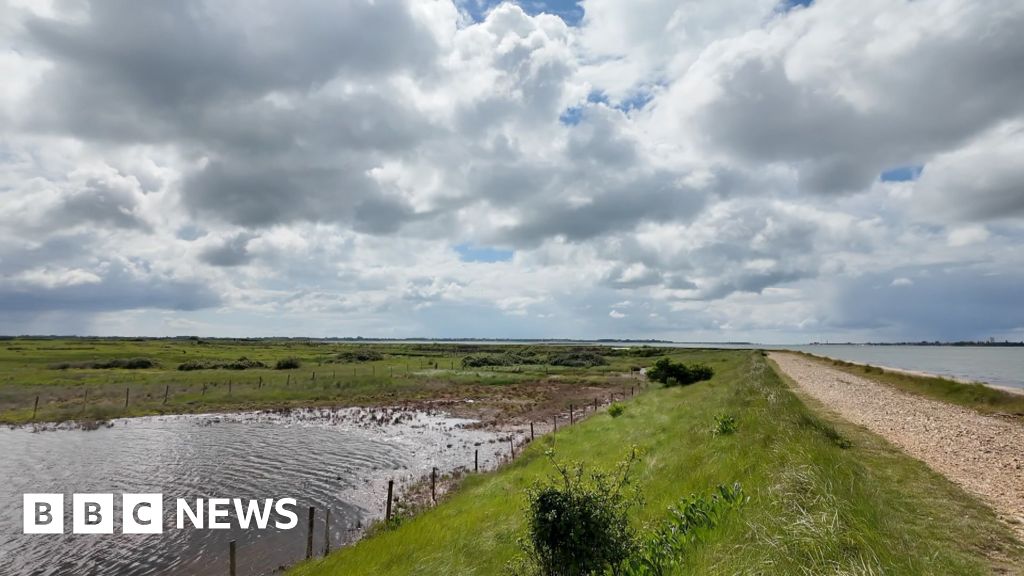
An internationally-important nature reserve faces "disaster" after being flooded by seawater because of failing coastal defences, conservationists have said.
The 120-hectare (300-acre) Farlington Marshes Nature Reserve near Portsmouth is designated as a Special Protection Area (SPA), Special Area for Conservation (SAC) and Ramsar site.
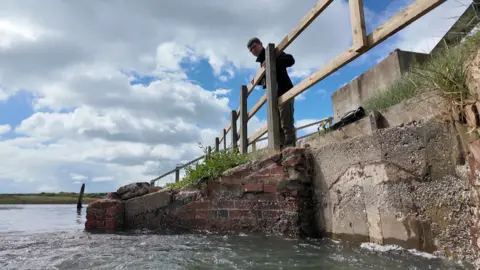
Hampshire and Isle of Wight Wildlife Trust has highlighted a failing tidal valve and crumbling sea wall which are letting salt water flood grazing marshland and wash away birds' nests and reed beds.
The Environment Agency (EA) said it was working to find a permanent fix but estimated it would cost about £90m to replace the entire 2-mile (3.5km) sea defence.
The site is home to bird species including bearded tit, avocet, redshank and lapwing.
Jamie Marsh, director of land management for Hampshire and Isle of Wight Wildlife Trust, said: "This is a bit of a disaster", with eight hectares of reed bed already lost.
"We have a tidal flap that's not sealing off properly and we're seeing water flooding into the site.
"The elevated sea levels have flooded out a lot of these areas and consequently flooded out a lot of the nesting areas. So nests have been lost."
Birds have been forced to move to higher ground to renest and rebreed.
The tidal flap first broke in the spring of 2024. A temporary repair was put in place by the EA which is responsible for the sea defences.
Earlier this year, engineers installed a permanent replacement valve but that too has since failed.
Marsh said it had left the situation "back to square one".
"Habitats that were recovering are now back under threat and under pressure again."
Areas of salt marsh and marsh grazing like Farlington are incredibly important and rare habitat in the south of England.
Not only does it provide a unique home for wildlife but coastal fringes act as both a natural flood defence and a carbon sink.
But with rising sea levels due to climate change such sites are getting squeezed out.
Development and hard infrastructure - in Farlington's case, the A27 - means there is nowhere for the marshes to retreat inland. In the future, unless action is taken, there is a real risk they will be lost altogether.
But finding areas of land to recreate lost salt marsh on a large scale is a near impossible task on an already crowded coast line.
Dr Stefanie Carter, coastal eco systems scientist at the UK Centre for Ecology and Hydrology, described it as a "declining habitat".
"It is possible to create salt marshes and restore some of the marsh we've lost but it probably won't be possible to do this at the scale."
"It's similar to peatland where in the past they've been regarded as wastelands. In the past they were dried out for agriculture and now they're realising peatlands are really important."
"And it's the same for saltmarshes. We're realising how important they are so we're trying to prioritise restoring them."
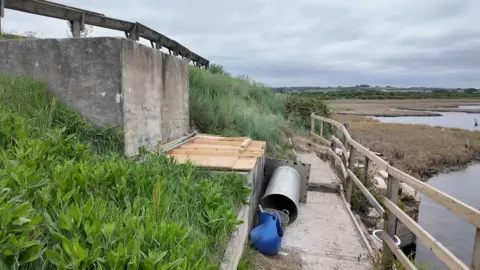
Back at Farlington Marshes Nature Reserve, the EA has put in another temporary fix to stop sea water overwhelming the site.
More changes to the water control unit are due to be made later this month.
A statement said: "These sea wall assets are nearing the end of their operational life, and we have spent hundreds of thousands of pounds and officer time in recent years to keep them working until we can find a longer term solution.
"We fully recognise the importance of Farlington Marshes to the community in terms of flood protection, recreation and as a wildlife haven, and remain committed to resolve the issue as quickly as possible."
<small>Source: BBC Science</small>