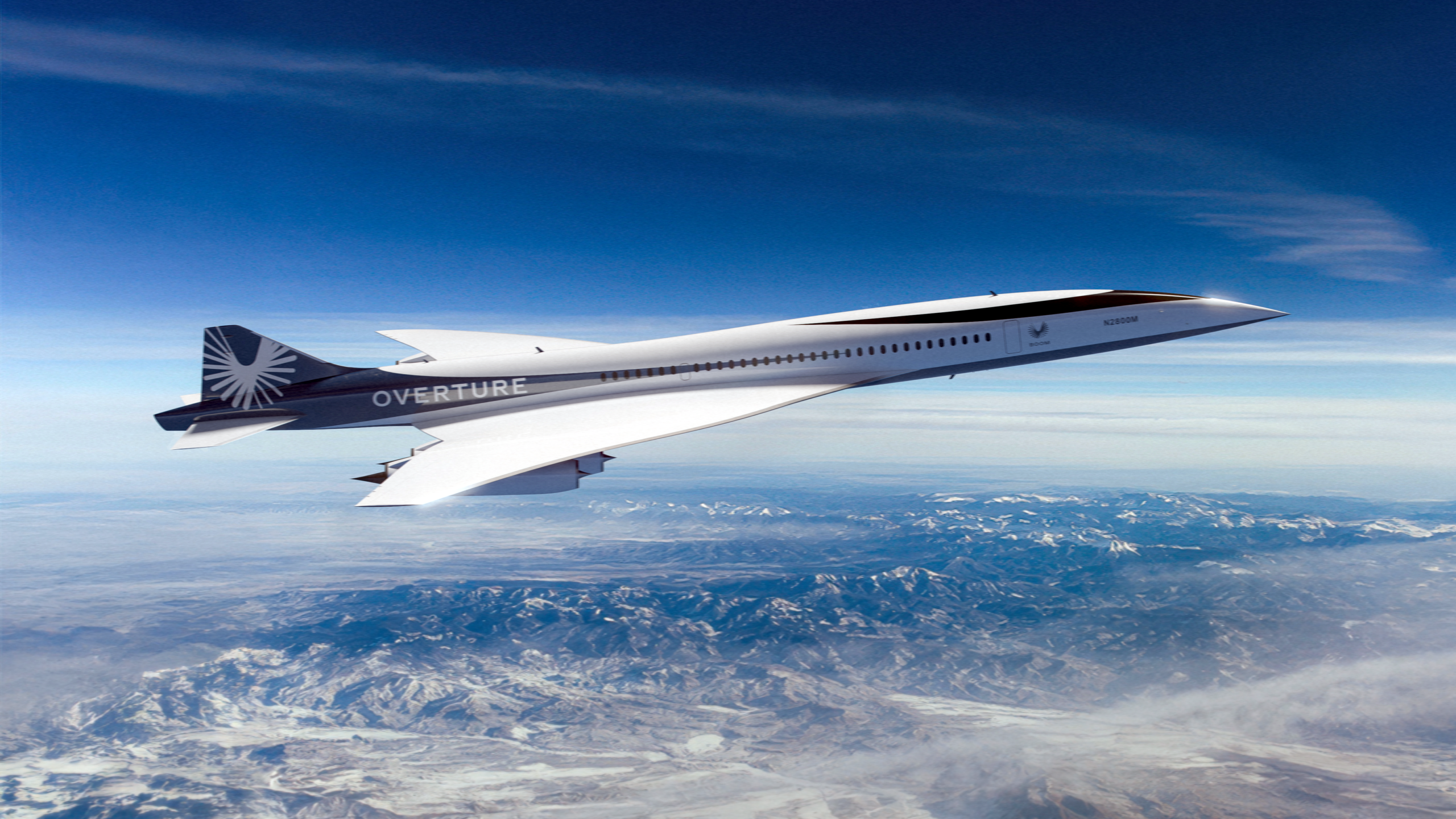
A long-standing ban on commercial supersonic flights over the United States would be overturned in a new rule proposed by the US Federal Aviation Administration. That could pave the way for the possible return of commercial supersonic airliners—as long as such aircraft can reduce the ground-level impacts of their sonic booms.
The FAA originally banned overland supersonic flights by civil aircraft in 1973, following US military tests involving supersonic flights over US cities such as Oklahoma City, Chicago, and St. Louis in the 1960s. But the
Trump administration has championed the repeal of the ban to pave the way for supersonic airliners that could operate without disruptive sonic booms. So the FAA’s new rulemaking action on June 30, 2026, follows the direction of an executive order issued by President Trump on June 6, 2025.
The newly
proposed rule would replace the 53-year prohibition with an interim “noise-based” certification standard requiring any sonic boom overpressure at the surface to be kept below 0.11 pounds per square foot. That proposed standard is based on the Colorado-based startup Boom Supersonic having demonstrated quiet Mach cutoff flights with its XB-1 aircraft—harnessing specific atmospheric conditions while flying just beyond supersonic speeds at higher altitudes so that the aircraft’s shockwaves are refracted upward into the atmosphere rather than traveling to the ground.
For comparison, the Concorde supersonic airliner that flew commercial transatlantic flights between 1976 and 2003 created a sonic boom overpressure equivalent to 1.94 pounds per square foot when flying at a speed of Mach 2 at an altitude of 52,000 feet.
A
NASA fact sheet suggests that “some public reaction could be expected between 1.5 and 2 pounds” but rules out damage to buildings and other structures at one pound of overpressure. It further explains that humans have experienced sonic boom overpressure between 20 and 144 pounds without injury when supersonic aircraft flew at altitudes below 100 feet.
However, not everyone is sold on this proposed standard for allowing overland supersonic flights.
Dan Rutherford, senior director at the nonprofit International Council on Clean Transportation, told Aviation Week that the overpressure metric was previously discarded by United Nations experts in 2014 because “it doesn’t actually measure loudness or annoyance.”
<small>Source: Ars Technica</small>