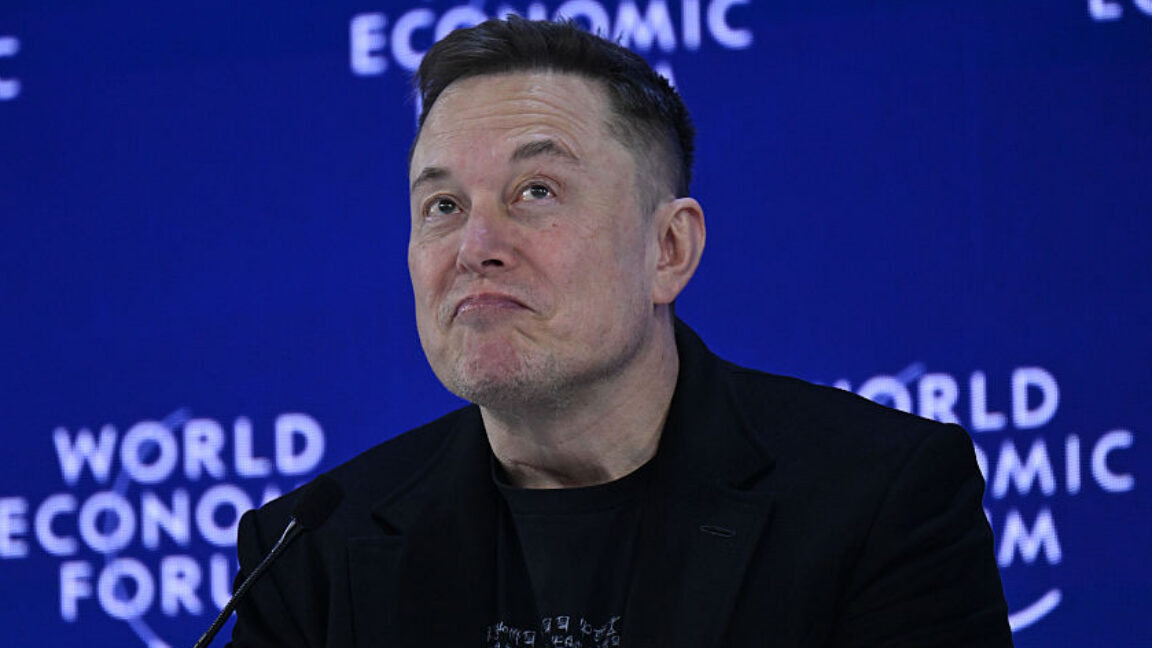
Critics hope to keep Elon Musk from escaping a strict data-privacy order imposed by the Federal Trade Commission (FTC) shortly before he took over Twitter.
The FTC order placed restrictions on X’s data use for 20 years, while requiring regular independent audits and granting the agency authority to request documents as needed to ensure compliance.
The FTC’s action came after Twitter voluntarily disclosed that between May 2013 and September 2019, a coding error accidentally allowed phone numbers and email addresses that users shared for two-factor authentication purposes to be used for targeted advertising aimed at those same users. In a settlement that came just months before Musk’s 2022 takeover, Twitter agreed to pay $150 million and to allow the FTC to monitor the platform’s data-handling practices until 2042 in order to protect user privacy.
Musk
tried and failed to get the order revoked in 2023. At that time, Musk accused the FTC of aggressively increasing the number of investigative demands. He claimed that the order was improper and should be terminated because the agency was “tainted by bias.”
In
response, the FTC pointed out that Musk’s takeover of Twitter raised genuine questions about the company’s ability to comply with the order, particularly after he terminated key staff who for years had ensured compliance. One engineer confirmed in a deposition that layoffs and other “cost-cutting pressure and decisions” impaired X’s ability to “put technical restrictions and controls in place… around the company’s use of contact data to make sure that it was being used… for the purpose that the particular contact data was collected,” the agency’s filing said.
“No one was responsible for about 37 percent of X Corp.’s privacy program controls,” the FTC argued.
Also raising red flags for the FCC were Musk’s demands that
journalists get access to internal systems for the “Twitter Files” as well as a text from Musk insisting that an executive assistant gain access to systems “immediately,” threatening that “anybody standing in the way” would “be fired.” In 2024, the agency claimed that X security staff sometimes had to pointedly disobey Musk in order to remain in compliance. As Twitter’s functionality became spotty through steep layoffs, the FTC argued that it had “every reason to seek information about whether these developments signaled a lapse in X Corp.’s compliance.”
<small>Source: Ars Technica</small>