Elon Musk becomes world's first trillionaire as SpaceX soars in stock market debut

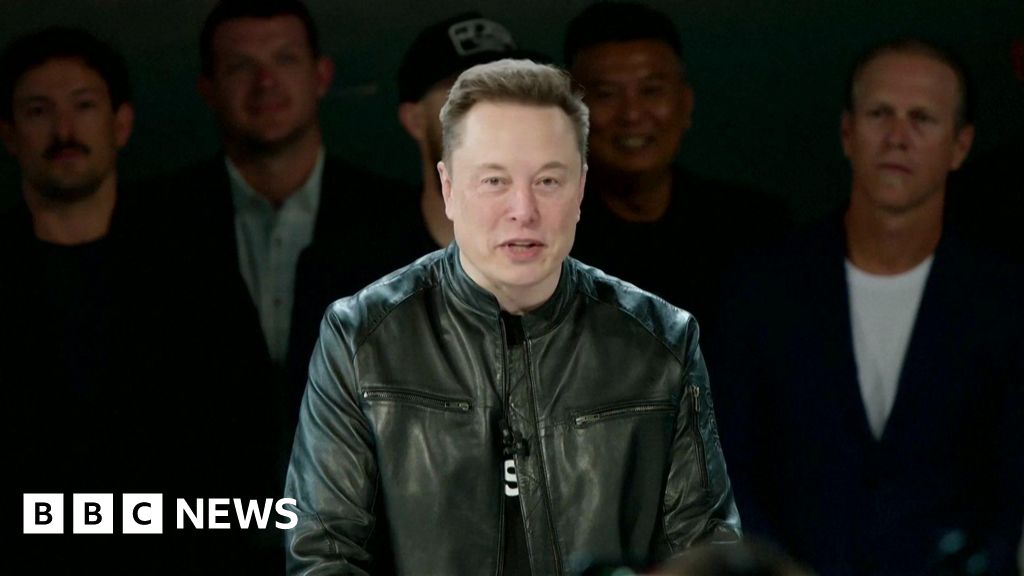
Elon Musk on Friday became the world's first trillionaire after shares in his SpaceX rocket company soared during the biggest-ever stock market debut.
The Tesla and SpaceX founder comfortably cemented his status as the world's richest man, with his total net worth standing at $1.11tn (£828bn) according to the Bloomberg rich list.
It came as the rocket, telecommunications and artificial intelligence (AI) company listed on the Nasdaq stock exchange with a value of $2.2tn.
The company said its shares would be offered at $135 each, but trading opened at $150 and briefly reached $176.50 in a show of investor enthusiasm for potential business related to space and companies associated with Musk.
SpaceX shares closed on Friday at about $161.
The initial public offering (IPO) of SpaceX raised $75bn from investors and underwriters of the deal before shares of the company hit the open stock market on Friday.
Musk's 42% ownership stake in SpaceX gives him essentially unilateral control over everything it does. He can spend the money being invested however he likes.
According to Bloomberg his shares in SpaceX were worth $752.3bn at close of trade, and he has another $53.8 in SpaceX options. He also has $168bn in Tesla shares, and a further $116.4bn in Tesla options.
World's first trillionaire
Musk's status as the world's first trillionaire immediately sparked debate about wealth inequality. His wealth is now similar to the entire economic output of Poland or Switzerland.
Such unheard of wealth has already turned Musk into a powerful and divisive figure in global politics.
He gave hundreds of millions of dollars to the re-election campaign of US President Donald Trump after criticising the country's leadership, and for several months last year, Musk led the Department for Government Efficiency (Doge).
Through drastic cuts to government spending, Musk was responsible for the closure of the US Agency for International Development (USAID).
Such cuts could cause more than 14 million additional deaths by 2030, according to a warning published by researchers in the Lancet medical journal.
He has also criticised leadership in the UK and elsewhere, often on topics of immigration and promoting of racial divisions.
Democratic US senators Bernie Sanders and Elizabeth Warren were among a slew of politicians to condemn the thrillionaire milestone. Warren said it should be a "wake up call" and argued it underlines the need for wealth taxes.
However, Musk is a trillionaire only on paper, as it is almost entirely tied to the value of his stockholdings in Tesla and Now SpaceX. He is unable to sell any of his SpaceX stock for at least a year.
SpaceX's public listing is also expected to have made millionaires of more than 4,400 of its current and former staff through the shares in the company they had been given as part of their pay.
SpaceX's valuation is largely based on optimism about its potential future earnings, as opposed to financial results it has demonstrated so far.
It is currently not profitable, meaning it loses more money from its operations than it makes.
The company lost more than $9bn in 2025 and 2026 so far, according to its financial filings, due to its huge spending on AI and other infrastructure investment.
The biggest focus of its business is the manufacture and launch of rockets with reusable parts.
SpaceX also manufactures and launches Starlink internet satellites, and through this year's acquisition of xAI, another company Musk owned and operated, SpaceX entered into the AI business, too.
SpaceX has said it will use the money to "fuel its growth strategy" around rockets, satellites for its growing Starlink internet service, and AI, including speculative plans to build data centres in orbit.
Nancy Tengler, who heads Laffer Tengler Investments and put in an order to buy shares of SpaceX, called the company's AI business a "cash incinerator" despite Musk's ambitions for the segment.
"It's important to take some of the projections with a grain of salt," Tengler said.
Nevertheless, she is buying into the company for its long-term potential.
"Our investment horizon is three, five, and even ten years," Tengler said.
She is also expecting SpaceX to merge with Tesla in the next two years, potentially creating a company worth more than either one on its own.
But the ambitions of SpaceX are currently more lofty than satellites or mergers.
As stated in its IPO prospectus, the mission of SpaceX is: "To build the systems and technologies necessary to make life multiplanetary, to understand the true nature of the universe and to extend the light of consciousness to the stars."
SpaceX even said that its future growth and success is based in large part on building what it refers to as the "lunar economy."
Essentially, such an economy would entail getting people and cargo to the moon and Mars, something that would need to be a regular occurrence for a true economy to develop around it.
SpaceX admits that it is unsure such a thing will ever succeed.
"Many of our initiatives… involve significant technical complexity, unproven technologies or technologies that do not exist, and such initiatives may not achieve commercial viability," the company wrote in its prospectus.

This level of uncertainty did not seem to trouble investors on Friday.
Susannah Streeter, chief investment strategist at asset manager Wealth Club said the share price jump was "indicative of huge interest in Elon Musk's vision".
"He has long been reaching for the stars with his extra-terrestrial ambitions, and it appears plenty of investors share his enthusiasm for the future," she said.
But she warned Friday's rally was "being driven as much by hype and scarcity as fundamentals".
While many individual investors were eager to be a part of SpaceX's listing and snap up stock, many had expressed concerns about the number of investors who will be exposed to the company perhaps unintentionally.
Pension pots and savings accounts often invest in index-linked funds, which buy into the biggest firms and will be affected by expected fluctuations in the company's share price.
Where the price of SpaceX goes from here will be the biggest concern for such investors.
"The question on SpaceX is less about the immediate trading after IPO," said Samel Kerr, who leads equity capital markets research for Mergermarket. "It's more about how the price holds over the longer term."
<small>Source: BBC News</small>