Lindsay Whitehurst, Associated Press
Lindsay Whitehurst, Associated Press
Fatima Hussein, Associated Press
Fatima Hussein, Associated Press
Leave your feedback
WASHINGTON (AP) — The Supreme Court is handing down major opinions at a rapid clip, but even with some of the biggest decisions yet to come there are signs of tension between the justices.
One highly unusual exchange for the restrained and traditional atmosphere came Thursday, as the members of the nation's highest court took the bench as usual to read a short summary of their decisions. Those rulings included two major immigration wins for President Donald Trump.
Subscribe to Here’s the Deal, our politics
newsletter for analysis you won’t find anywhere else.
Thank you. Please check your inbox to confirm.
After conservative Justice Samuel Alito finished his reading of the majority's ruling limiting how people can seek asylum at the southern border, liberal Sonia Sotomayor spoke up to read from her strident dissent.
She traced the difficult journey many asylum seekers face and outlined a painful chapter in the country's history: When the U.S. and other countries turned back a ship full of Jewish refugees attempting to flee persecution in Nazi Germany in 1939. About 250 of those passengers later died in the Holocaust.
Sotomayor said the majority's opinion would allow the Trump administration to block people from applying for asylum at the border, which would result in more deaths. The decision "regrettably and tragically extinguishes the light of the torch of the Statue of Liberty."
WATCH: Analyzing the Supreme Court decisions on immigration, gun control and Monsanto
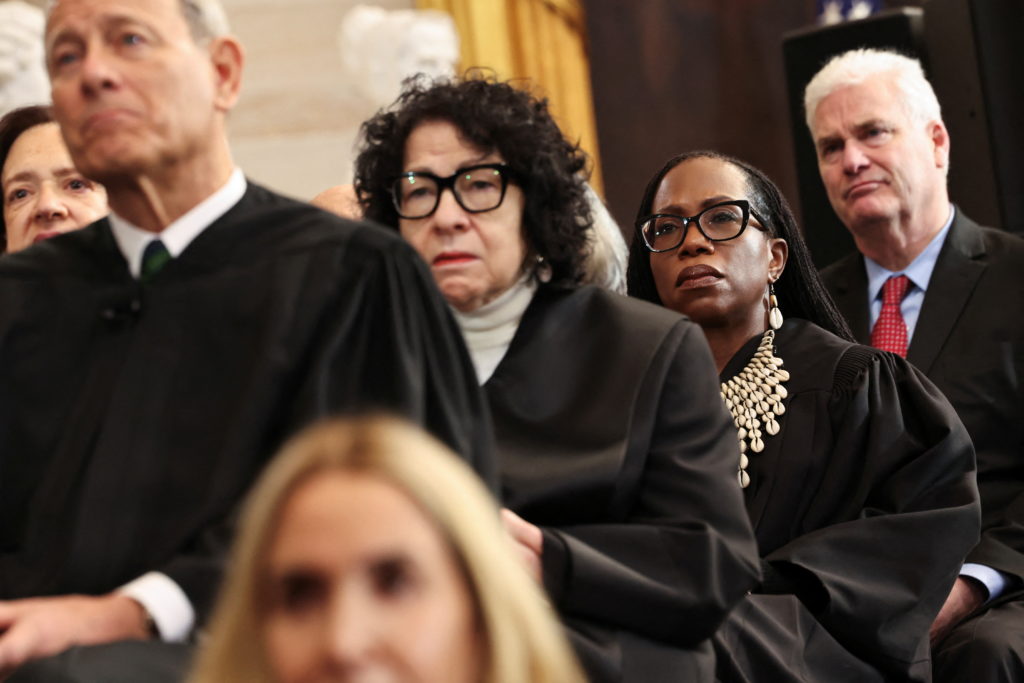
Justice Brett Kavanaugh watched her intently as she spoke, while Justice Ketanji Brown Jackson looked straight ahead.
Majority opinions are always read from the bench and dissenters can speak up as well to underscore their objections, which typically happens in few cases every term. More rulings are expected on Monday.
Sotomayor's spoken dissent, however, appeared to be a surprise for Alito. In a very rare move, he spoke off the cuff. He sounded surprised and frustrated, saying he would have added more detail to his summary if he'd known about plans to speak.
WATCH: How the Supreme Court immigration rulings could impact asylum in the U.S.
For the conservative majority, the case was about whether border officials can delay asylum seekers' entry into the U.S. "until they can be processed in a safe and orderly way."
Out loud, Alito defended his opinion by noting that the policy at the center of the case had been used under both the Obama and Trump administrations. "I won't add anything more to that," he said.
READ MORE: whirtSupreme Court clears way for Trump administration to revive restrictive immigration policy
The exchange comes during the court's busiest time of the year, as the justices prepare to release opinions next week on some of the biggest issues of the term, and Trump's presidency so far. Those include his push to restrict birthright citizenship and expand the president's power to fire board members at independent agencies.
Supreme Court justices have spoken publicly about their cordial working relationships and regular lunches as a group where they set aside cases to talk and share each other's company. And while there are ideological splits between the court's conservative majority and its liberal wing, they also decide many cases unanimously, including one this month about the Second Amendment rights of marijuana users.
Still, it isn't the first time unusual tensions have surfaced this term. Sotomayor issued a rare public apology in April to another justice, Brett Kavanaugh, for what she termed "hurtful comments." She had said during a law school talk that a colleague "probably doesn't really know any person who works by the hour."
In another public appearance in March, Kavanaugh and Justice Ketanji Brown Jackson sparred over the many emergency orders the court had issued allowing Trump to move ahead with key parts of his agenda.
Support trusted journalism and civil dialogue.
Support Provided By:
Learn more
<small>Source: PBS NewsHour</small>