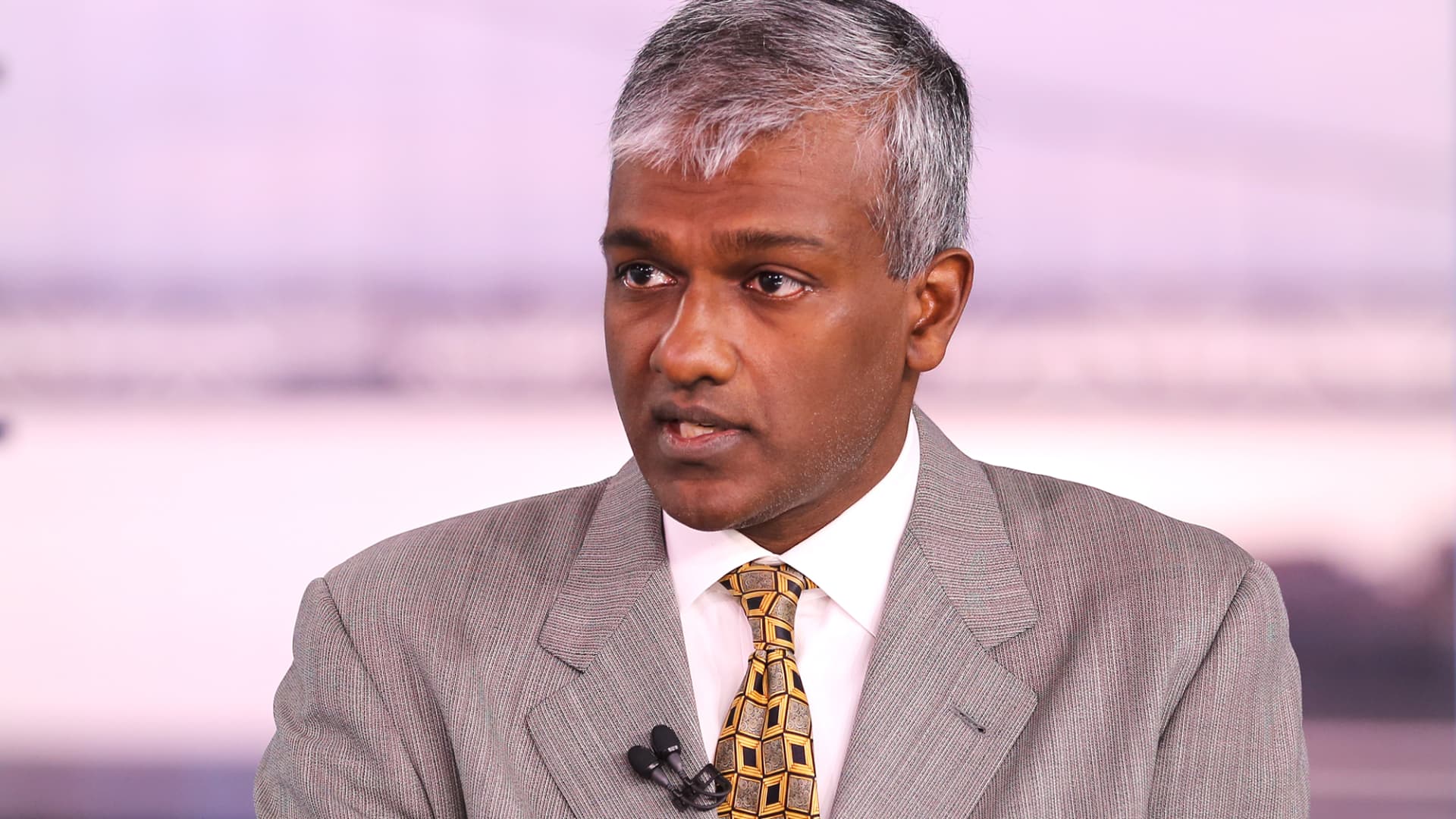
Tech investor Dan Niles is trimming his exposure to "Magnificent Seven" companies, saying the high cost of artificial intelligence is about to present a near-term setback for the hyperscalers — as well as for chip stocks. "What I'm doing right now is I'm backing away from a lot of the hyperscaler type names that we talked about, and saying, 'okay, the chip stuff, that's where they're spending all this money,'" the founder of Niles Investment Management told CNBC's " Squawk on the Street " on Monday. "But even there, with the stocks doubling, I'm just going ahead and trimming back some of that exposure." The recent bifurcation within tech stocks have troubled investors. Just on Monday, practically all Magnificent Seven companies were under pressure, even as semiconductors continued to rally. Google-parent Alphabet was a prominent decliner, falling more than 6%, while Micron Technology popped 4%. Part of that difference can be explained by the concerns around capital expenditures. Investors are worried that the hyperscalers, which are spending massively on AI infrastructure, won't be able to get a return on their investment. More recently, those fears have been compounded by a perceived shift to token minimization from token token maximization. Companies initially encouraged employees to use tokens — the small pieces of data that AI models process and bill for — in a bid for greater productivity. Now, however, there's fear that those same businesses will cut back on their AI use, or find cheaper models, once they see the high cost of the bill — a development that could hurt revenues for the hyperscalers that spent the most on building out AI infrastructure. "If you're routing things to cheaper models, well, what are your September guidance look like?" Niles told CNBC. "And that's where I kind of see a speed bump coming." To be sure, chip stocks that are beneficiaries of AI spending could continue to rise. But even here, Niles said he's reducing his exposure after the recent gains. Micron, as an example, is up more than 300% this year. MU YTD mountain MU year to date
<small>Source: CNBC</small>


