China’s
missile test in the Pacific did not comply with international law and was conducted with “insufficient notice” to nearby countries, official in the US and Australia have said, amid growing international condemnation.
But a Chinese government spokesperson claimed the test was “safe” and part of “routine” military training, telling critics to “not over-interpret it.”
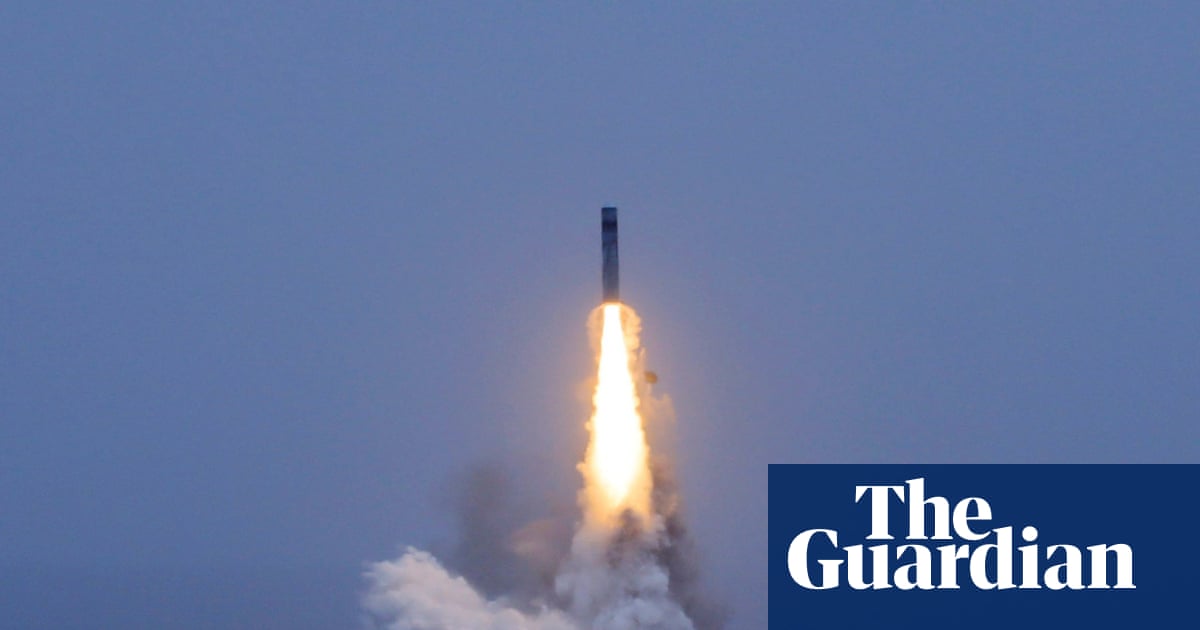
China’s state news agency Xinhua reported the test involved “strategic missile carrying a dummy warhead” launched from a “strategic nuclear submarine of the navy”.
China’s foreign ministry spokesperson Mao Ning, according to a translated version of remarks posted on an official government website, said the test launch “is a routine part of China’s annual military training, in accordance with international law and practice, and is not directed against any specific country or target.”
“Relevant countries were notified in advance, and it complies with international law and practice. The launch activity was conducted safely, systematically, and professionally throughout. We hope relevant countries will not over-interpret it.”
But Tommy Pigott, a US state department spokesperson, said the US wanted China to “engage in meaningful arms control discussions” and commit to a “regularized notification arrangement for all intercontinental-range ballistic missile and space launches”.
“Beijing’s rapid and opaque nuclear weapons buildup is of great concern to the region and the world,” Pigott said in a statement.
The Australian cabinet minister, Pat Conroy, minister for both defence industry and Pacific Island Affairs, pushed back on China’s claims. Asked in an ABC radio interview about China’s statement that the launch complied with international law, and whether he thought that was a correct summary of the incident, Conroy said: “no it’s not, to be honest.”
“This has been a destabilising event and certainly has drawn criticism from countries in the Pacific and Asia. Secondly, it’s not consistent with The Hague Convention on ballistic missile testing, which would require more notice and greater information provided to countries,” he said.
“We would continue to call on China to abide by The Hague convention, which provides sort of instructions or guidance on how to do these sorts of tests.”
Conroy wouldn’t say whether Australia had raised objections with China at the ministerial level, but said the countries have “communicated”.
He also criticised China for what he called “insufficient notice” of the test, confirming that notice came only hours before the launch was confirmed. Australian government ministers Penny Wong and Richard Marles gave public confirmation of the warnings from China only a short time before the launch occurred.
Xinhua reported the PLA navy’s statement that the missile was launched “toward relevant high seas of the Pacific Ocean” and that it “landed precisely within the designated waters”, but did not give a specific location.
Joseph Wu, secretary-general of Taiwan’s national security council,
posted on social media a map purporting to show the missile’s path travelling south-east of China, going over the Philippines and passing Micronesia and Palau, landing south of Nauru.
“It’s a provocation that destabilizes the IndoPacific. China just proved itself again to be a bully on the block,” he wrote.
Marles declined to say what Australia’s information was about the location of the missile test, but conceded it was “not particularly close” to Australia. He also raised concerns about China’s capabilities.
“What we’re seeing here is a long range missile test from China, which China itself has said, is nuclear capable. It’s been launched from a submarine, which also has implications here,” he told ABC TV.
“This is China demonstrating a much greater range in terms of being able to deploy a nuclear weapon.”
“Our fundamental issue in relation to China is that we have seen a very dramatic military buildup by China without that strategic reassurance. There really isn’t an explanation as to why they are building the capabilities that they are, and that is fundamentally destabilising.”
<small>Source: The Guardian</small>