Give now to help PBS News start our new fiscal year strong.
Rob Gillies, Associated Press
Rob Gillies, Associated Press
Leave your feedback
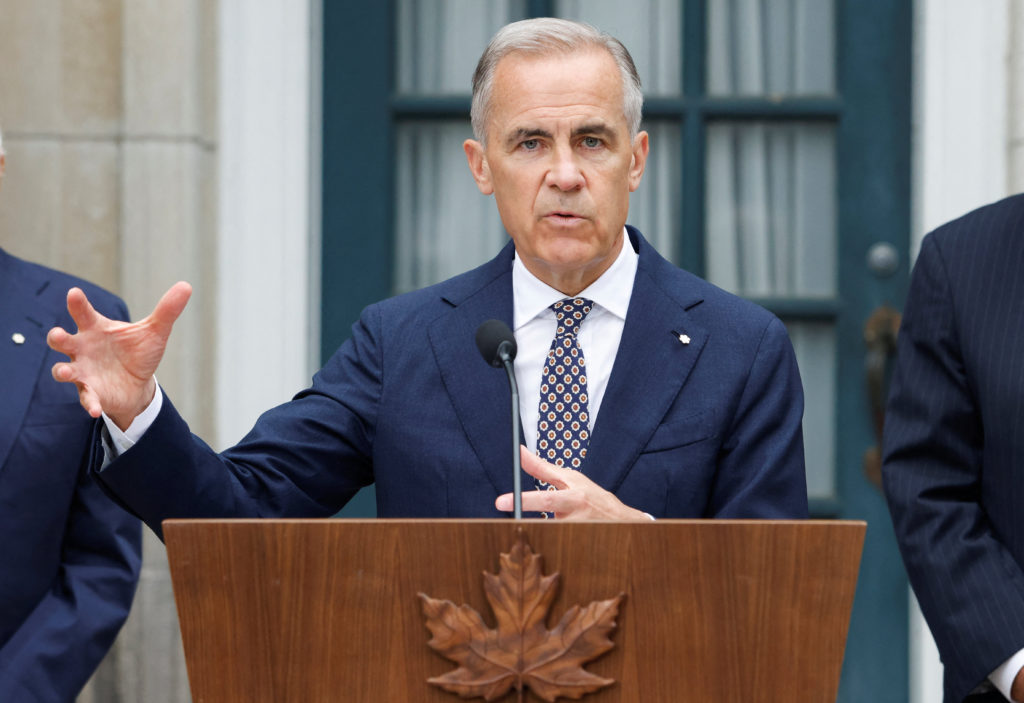
TORONTO (AP) — Canada on Monday named Germany's ThyssenKrupp Marine Systems as the preferred supplier for up to 12 submarines in what Prime Minister Mark Carney called the country's largest-ever military procurement.
The decision came before Carney headed to this week's NATO summit, where allies face pressure to back higher defense spending with concrete plans.
Subscribe to Here’s the Deal, our politics
newsletter for analysis you won’t find anywhere else.
Thank you. Please check your inbox to confirm.
Carney said the procurement will be "the largest in Canadian history" and that the TKMS platform is optimal for Arctic waters and for NATO.
"The submarine is proven and capable. It is used widely by our allies. TKMS provides submarines to over a third of the NATO alliance, and is the leading submarine provider to navies around the world," Carney said at a military base in Halifax, Nova Scotia.
Carney named TKMS as the preferred supplier and will now enter into further negotiations.
The German company beat out South Korea's Hanwha Ocean. ThyssenKrupp said its submarines would strengthen interoperability because many NATO allies already operate its conventionally powered vessels.
READ MORE: Trump won spending promises from NATO allies last year. This week, he'll try to enforce them
Canada has pledged to sharply increase military spending after years of lagging behind NATO targets. Carney has pledged to raise defense spending to 5% of gross domestic product by 2035 after Canada reached NATO's previous 2% spending target this year.
He said Canada's fiscal framework has already budgeted to achieve 4% of GDP in total spending by 2030, ahead of NATO's timetable.
Carney said the German and Norwegian governments have offered to make available some of their slots in production so Canada can receive submarines earlier. He said the expectation is that Canada will have four submarines by 2034.
The new fleet will replace Canada's four aging Victoria-class submarines, which were purchased secondhand from the United Kingdom in the late 1990s.
No U.S. company bid because the United States builds only nuclear-powered submarines, while Canada sought conventionally powered diesel-electric vessels.
Support trusted journalism and civil dialogue.
Support Provided By:
Learn more
World
Apr 30
<small>Source: PBS NewsHour</small>


