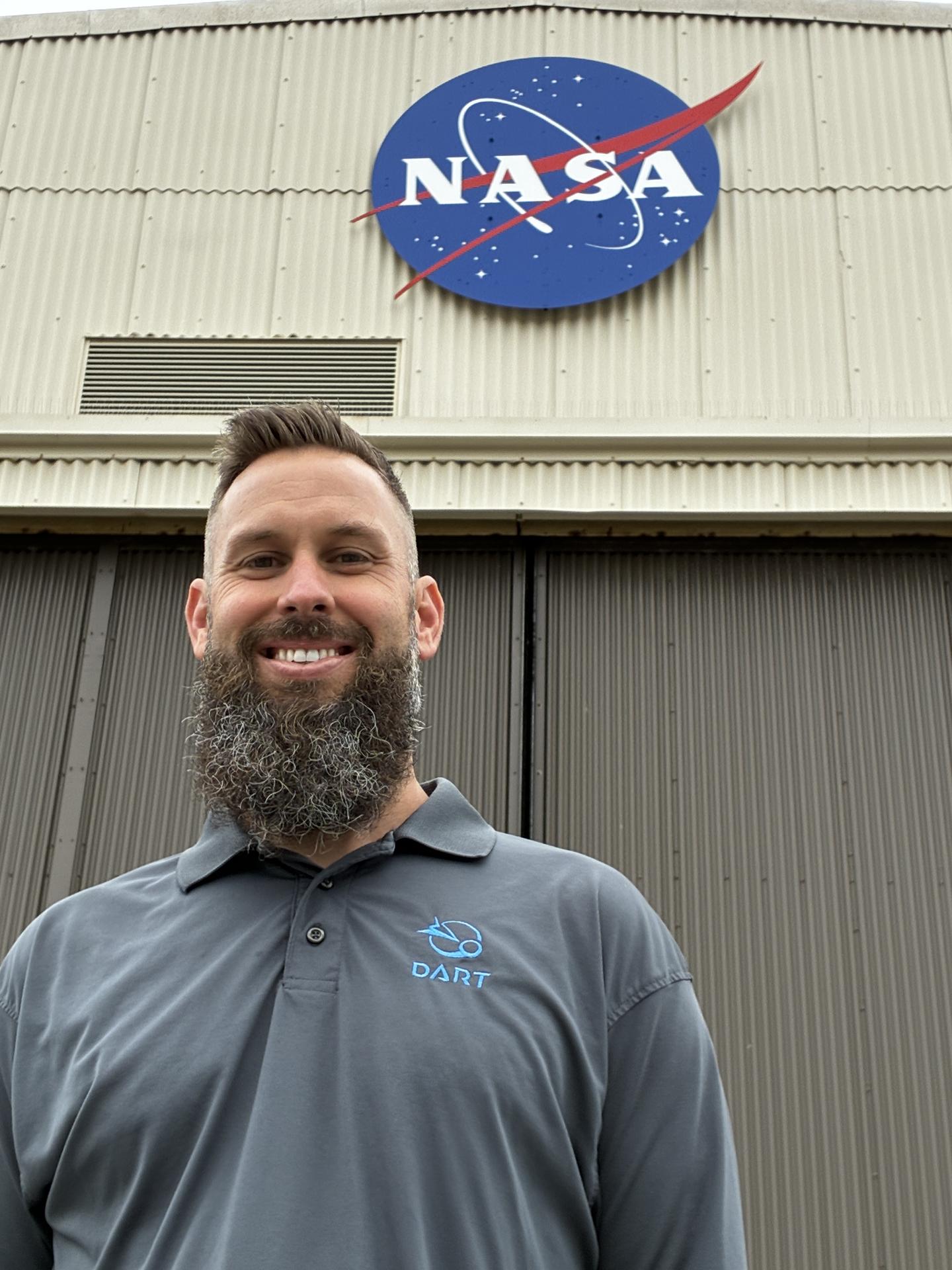
Growing up on the central California coast, watching rocket launches with his father was part of Eric Fernandez’s childhood routine. Fernandez had posters of rockets on the wall, but despite being fascinated by them, he never imagined one day this would be his career. Because both of his grandparents had served at Vandenberg Air Force Base (later renamed to Vandenberg Space Force Base), he assumed that the launches from there were for the military. NASA didn’t cross his mind. The space agency seemed very far away from a place like Orcutt, California, a small town situated among rolling hills covered with farms and vineyards.
Fernandez had been part of a painting crew for several years after high school. While it paid the rent, it wasn’t what he wanted to do with his life. However, he found something he enjoyed. He had started at his future father-in-law’s appliance store, working as a technician, repairing and installing appliances. He excelled at the work and planned to stay there with the goal to eventually run the small business.
Then he got a call.
It was from a friend about an opening for something called telemetry. Fernandez wasn’t sure what that meant. He was happy with his current career path. He nearly declined the offer, but after some persuading, he decided to go for the interview at a NASA building on the military base.
“I walked in the telemetry lab, and I see oscilloscopes, screens with squiggly lines, lots of blinking lights, and things I didn’t know about at the time,” Fernandez recounted. “I was very curious about it, so I was asking a million questions as we toured the lab, and they were asking about me. They really liked my background, especially my electronics experience, my troubleshooting skills, and my ability to solder.”
He received an offer for a technician position from a company that provided support to NASA under the Expendable Launch Vehicle Integrated Support, or ELVIS, contract. Fernandez had to make an important decision about his future.
“I prayed about it and met with my father-in-law,” said Fernandez. “I decided to change career paths and start a new career as a contractor working with NASA, supporting its Launch Services Program.”
That was 17 years ago, and he has been working there ever since, advancing to telemetry engineer in 2019. He has contributed to 27 launches for NASA, supporting scientific and robotic exploration missions. He’s also supported hundreds of launches for the U.S. military and commercial sector, as part of the agency’s efforts to work with its partners to understand the capabilities of the commercial rocket fleet.
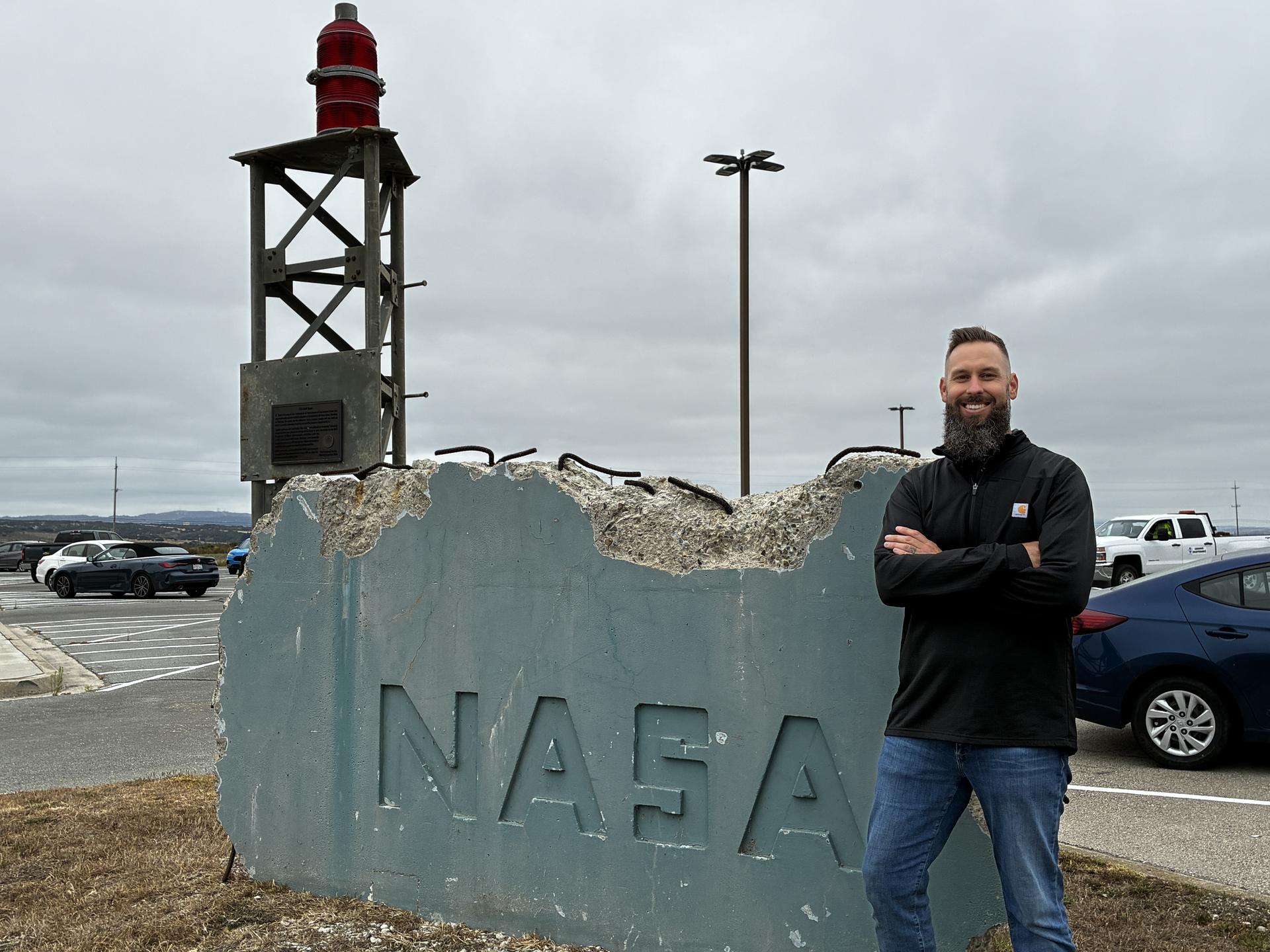
While Fernandez wasn’t planning on making additional changes, a new opportunity presented itself earlier this year. The agency decided to strengthen its core capabilities by bringing mission-critical positions into the civil service.
When he had the opportunity to join the civil service at NASA, Fernandez applied. On June 15, he swore in at Vandenberg bringing his knowledge and experience to the agency, ready to become an official part of a group he already considered family.
“Telemetry is the collection of remote measurements that let us know the rocket is healthy when it’s fueling on the pad, when it’s in flight, and when it’s placing a spacecraft into the proper orbit,” said Fernandez. “It’s our job to make sure decision makers have all the right data to make the right calls in real time. We can’t afford to give them bad data.”
Fernandez’s team has multiple ways of getting the data when a rocket is on the launch pad, including ground data streams and radio frequencies link. Each data path is carefully tested beforehand using tools like bit-error-rate tests, called BERTs, that send pseudo-random patterns to help determine the health of the networks. Once the data is received, the team verifies it using frame sync patterns and word counters, sequenced data embedded in the stream. During ascent, they rely on ground tracking stations and dedicated satellites to relay data. All of it is recorded for posterity and post-flight review. The entire process requires extensive planning, coordination, and constant learning as the industry continues to innovate.
“You’re going to be humbled because the technology is always moving forward, and a new challenge is going to arise,” Fernandez said. “But there’s nothing we haven’t conquered, and there’s not a problem we haven’t figured out yet.”
He credits his teammates. He described his team as “iron sharpening iron.”
Today, Fernandez still lives in Orcutt, seven houses down from where he grew up. His children go to the same schools and play in the same parks he did. He still watches rocket launches, but now he does it with his children when he’s not supporting a launch for the agency.
While he spends his days at work looking ahead to the future, as part of a team that explores the Moon, Mars, and beyond, he hasn’t forgotten where he came from.
“I just wish I could go back and tell little boy Eric, you’re going to love every aspect of working here,” he said. “You’re never going to be bored, because you’ll always be learning new processes and technologies to deliver all these important missions to space.”
<small>Source: NASA</small>