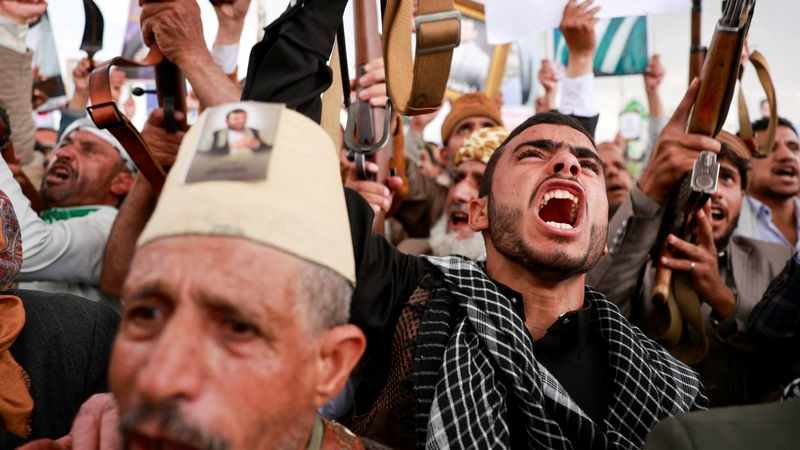
Saudi Arabia is receiving military and diplomatic backing from Turkey and Pakistan as Houthi attacks continue to threaten the kingdom’s security and the flow of oil through key regional routes. The three nations’ military chiefs are set to convene to coordinate support for Riyadh, a move framed under the Mecca Joint Defence Agreement signed in August. This escalation comes as the broader Middle East conflict, which began with US and Israeli strikes on Iran in late February, intensifies in Yemen and disrupts global energy supplies.
The Houthis have launched repeated strikes against the Saudi-backed government in Yemen and fired projectiles into Saudi territory, disrupting oil flows from the world’s largest energy exporter. On Thursday, Houthi forces announced they had fired dozens of missiles and drones at Saudi targets, while Saudi authorities reported intercepting six ballistic missiles. In response, Saudi Arabia’s Grand Mufti called on soldiers to be prepared to defend the nation until the Houthi group is removed from power.
Simultaneously, economic pressure on Iran has tightened following new US "secondary sanctions" targeting third-country entities that do business with Iranian firms. Iraq further curtailed Iranian flights on Friday, with three additional airports joining Baghdad in suspending services to and from Iran. This follows similar bans imposed by the United Arab Emirates and Oman on Thursday. A sustained flight ban could deepen Iran’s isolation and exacerbate its economic crisis, which is already compounded by a US blockade of its seaports.
Iranian officials have reacted strongly to the restrictions. Mohammad Mokhber, an adviser to Iran’s supreme leader, accused regional countries of aligning with the United States by blocking flights. “If Iran does not have the possibility to fly and receive airport services, then no country in the region will have this possibility either,” Mokhber stated in a social media post. The threat of retaliation underscores the rising tensions as diplomatic efforts remain stalled.
In New York, amidst the UN General Assembly, Iranian Foreign Minister Abbas Araqchi revealed that Tehran had conveyed a proposal to the US via intermediaries. The plan suggests reopening the Strait of Hormuz if specific conditions are met, including the end of hostilities on all fronts, the lifting of the port blockade, the release of frozen funds, and the waiver of oil sanctions. Araqchi noted that the strait would be reopened on the final day of a seven-day ceasefire, after which talks on other issues, including Iran’s nuclear program, would commence.
Despite the potential for a truce, the economic impact of the conflict remains significant. The Houthis have disrupted ship traffic at the mouth of the Red Sea, while Iran has limited tanker traffic at the Strait of Hormuz, a conduit for 20% of the world’s oil exports prior to the war. The number of ships transiting the Strait of Hormuz dropped to nine on Thursday, half the 10-day average. However, oil prices fell on Friday as markets weighed the possibility of a diplomatic resolution, even as the conflict has already killed thousands and added to global inflationary pressures.
<small>Source: Yahoo News — read the original story there.</small>