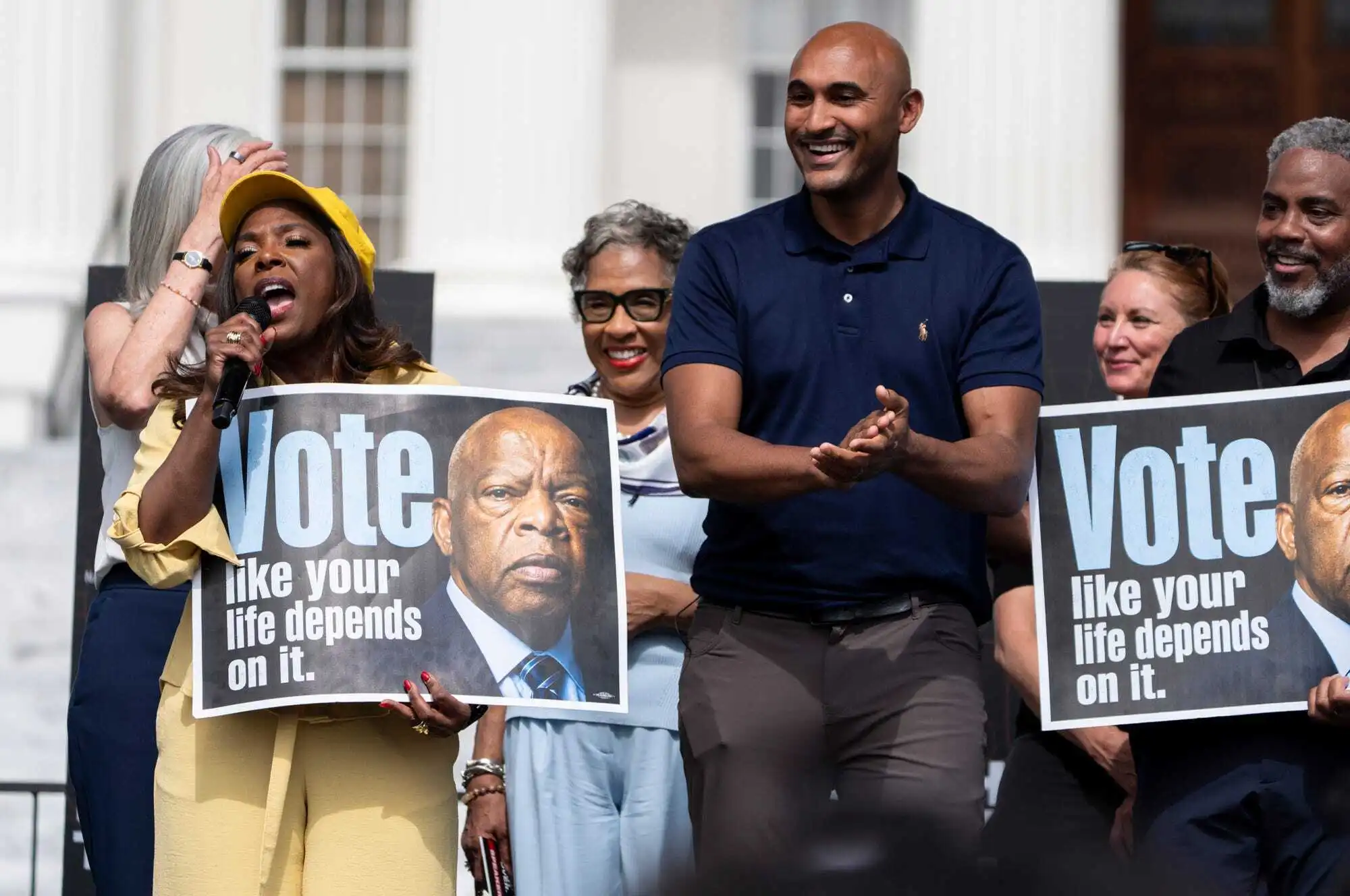
The U.S. Supreme Court’s recent decision to further weaken the Voting Rights Act has raised concerns that it could accelerate a decline in Black representation in Congress. The ruling is seen by analysts as a key factor that could pave the way for a record drop in the number of Black members of the House of Representatives.
Despite the potential for a sharp decline, a mid‑term “blue wave” – a surge in Democratic support during the latest election cycle – has temporarily held the numbers steady. The wave helped keep the current count of Black representatives from falling further in the immediate term.
Historically, the Voting Rights Act has been a cornerstone of protecting minority voting rights in the United States. The Supreme Court’s latest ruling is viewed as a setback to those protections, raising questions about future electoral outcomes for Black communities.
While the mid‑term results have stalled a further decrease, the long‑term impact of the weakened Act remains uncertain. The situation underscores the fragile balance between legal safeguards and electoral dynamics in maintaining diverse representation in Congress.
<small>Source: NPR — read the original story there.</small>