Judy Woodruff
Judy Woodruff
Leave your feedback
When the year began, I set out to talk to a cross-section of people across the country, alongside some historians, to understand what it means to us to be an American at the two-and-a-half-century mark.
The "America at a Crossroads" team explores that idea and how it has evolved as the country looks back on what the Founding Fathers created.
Here are three things we learned.
Watch the segment in the player above.
The founders created something magnificent — a democratic republic where "all men" were seen as "created equal." And yet, that promise left out women, Native Americans, and Black people. The contradiction, among others, is part of the identity of America, where slavery was legal for another 90 years.
"Even those that are very much in favor of ending slavery are not in favor of granting them equal treatment at all," historian Joseph Ellis told PBS News. "The failure to end slavery means in the end, the Civil War is inevitable."
Subscribe to Here’s the Deal, our politics
newsletter for analysis you won’t find anywhere else.
Thank you. Please check your inbox to confirm.
Lindsay Chervinsky, historian and director of the George Washington Presidential Library at Mount Vernon, said founders understood there were problems they were "sweeping under the rug."
"They could not figure out how to solve the issue of slavery," she said. "They also knew that there were problems they couldn't possibly foresee because they didn't have the ability to predict the future."
READ MORE: How Americans are marking the country's big 2-5-0
The founders' hope, Chervinsky suggested, was that even if the U.S. Constitution didn't survive forever, "the republic would survive because each generation was willing to embrace that challenge to try and make the nation just a little bit better."
From one corner of the country to the other, I found people giving their time to their communities and people in need.
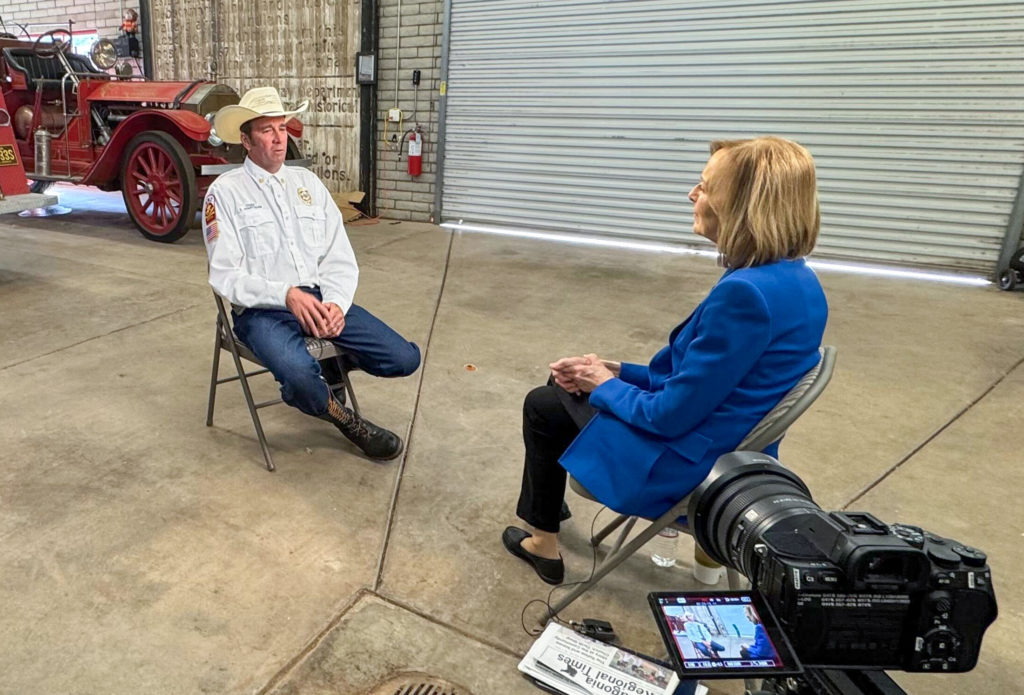
Historian Elisabeth Clemens described how at the nation's founding, Benjamin Franklin had already established a volunteer fire department. At one such fire house in Patagonia, Arizona, chief Zay Hartigan explained what motivates his team.
"You find a lot of volunteers, just — they look and they say, 'Someone ought to do that.' And then they say, 'Well, I'm someone, I'm going to do it,'" he said.
Hartigan's colleagues were in tears explaining why they do what they do.
In tiny Circleville, Ohio, we followed volunteer Matthew Lucas around as he located the graves of Revolutionary era soldiers who moved West after that war. Lucas said he wanted to join the project to pay respect to these soldiers by finding their final resting places and marking them.
"It's permanent record, then forever, that you can look up and see, 'Wait, that's my five-times great-grandfather and I know exactly by GPS where they're buried at,'" he said.
Lucas said he still gets butterflies whenever he finds a grave.
The earliest Revolutionary battles were fought in Boston, where a century later, the city exploded over forced busing to end school segregation.
I heard from a Black mother and daughter caught up in that struggle 50 years ago about their anger at the injustice of the time. Denise Pruitt, then 13, described a moment when she faced angry white parents while walking into school from the bus. At one point, a white friend's grandmother spat in her face. Denise's mother, Earline, who'd been a plaintiff in a federal lawsuit to desegregate Boston's public schools, said she got a job at the high school to protect her children.
When I asked both what it means to them today to be an American, they told me they couldn't imagine living anywhere else.
This was a theme even among protesters at a recent "No Kings" rally in the Minneapolis-St. Paul area, who were unhappy with what they saw as Trump administration overreach.
What motivated many: "Democracy. I mean, that's what this country was founded on," Katelyn Thomas told us. "And I love this country. I don't want to see that go away."
Miguel Hernandez said citizen action, as seen in the "No Kings" rallies, has kept America from "tilting too far in the direction of authoritarian government."
"It should always be that way," he said, "and our government should listen to the people."
Everywhere we look, American stories continue to unfold as the Crossroads team continues its reporting through the rest of this 250th year.
Support trusted journalism and civil dialogue.
Judy Woodruff is a senior correspondent and the former anchor and managing editor of the PBS News Hour. She has covered politics and other news for five decades at NBC, CNN and PBS.
Support Provided By:
Learn more
Nation
Jun 10
<small>Source: PBS NewsHour</small>